

This article contains affiliate links. If you buy through these links, we earn a small commission at no extra cost to you.
The Eminence in Shadow Light Novel vs Anime — Key Differences
The whole premise is that Cid Kagenou is delusional. He built a secret organization around a conspiracy theory he invented on the spot, and the conspiracy turned out to be real. The comedy is that he never finds out. The anime plays this straight and it works — but it plays it a little too straight. Strip out Cid’s internal narration and you get a competent power fantasy with ironic framing. Keep the narration and you get something else: a story that’s genuinely laughing at its own protagonist while also, somehow, caring about him. That’s the difference between the light novel and the anime in one paragraph.
TL;DR
The Eminence in Shadow anime adapts Volumes 1-4 across two seasons (S1 covers Vols 1-2, S2 covers Vol 3 and half of Vol 4). A movie covering the rest of Vol 4 has been announced. The light novel’s defining advantage is Cid’s extended internal monologue — plus the Shadow Garden POV chapters and Beta’s novelist subplot that the anime drops entirely. The series has moved 7.8 million copies across LN and manga. The anime captures the spectacle. The LN captures the joke.
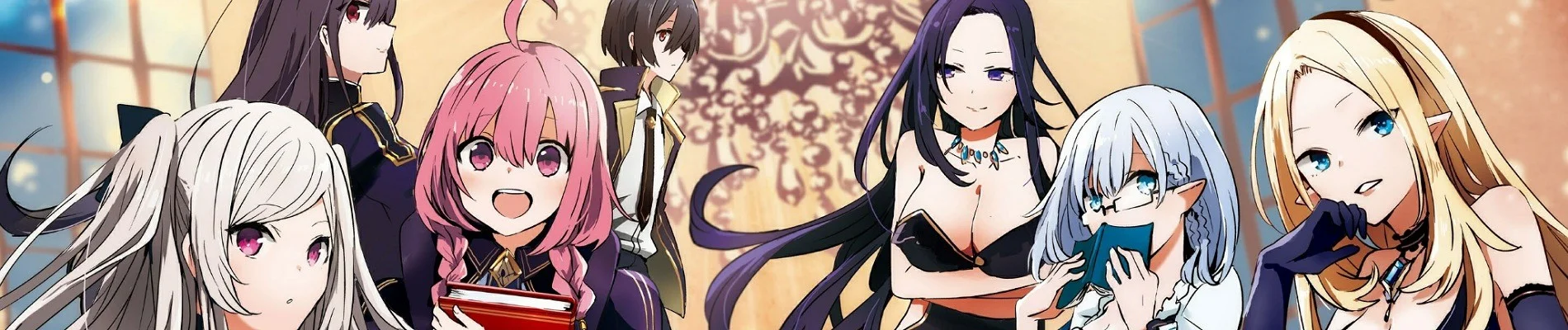
| Light Novel | Anime | |
|---|---|---|
| Volumes / Episodes | 6 volumes in English (Yen Press, ongoing); Vol 7 delayed in JP | Season 1 (20 eps, 2022) + Season 2 (12 eps, 2023) + Movie (TBA) |
| Studio | N/A | Nexus |
| Coverage | Vols 1-6 (unadapted material from Vol 5 onward) | S1: Vols 1-2; S2: Vol 3 + first half of Vol 4; Movie: rest of Vol 4 (Earth Arc) |
| Cid’s internal monologue | Extended first-person narration throughout | Compressed; key ironic layers often absent |
| Shadow Garden POV chapters | Full chapters from Alpha, Beta, Delta POV | Absent; loyalty reads as uncomplicated devotion |
| Setting aesthetic | Medieval fantasy | Adds trains, steampunk-adjacent modern feel |
| Beta’s novelist subplot | Volumes 2-3; she’s secretly a bestselling author | Brief hint only |
| S2 pacing | N/A | Vol 3 + half of Vol 4 compressed into 12 episodes (vs S1’s 20 eps for 2 vols) |
Which Volumes Does the Eminence in Shadow Anime Actually Cover?
Season 1 covers Volumes 1 and 2 across 20 episodes. Season 2 compresses Volume 3 and the first half of Volume 4 into just 12 episodes. A movie has been announced to cover the rest of Volume 4’s Earth Arc, with Season 3 expected afterward.
Season 1 is a generous adaptation. Twenty episodes for two volumes means the story breathes. Most of what happens in Volumes 1 and 2 makes it to screen, and director Kazuya Nakanishi collaborated closely with author Daisuke Aizawa to expand material rather than just compress it. The result is an anime that LN readers actually praise for elevating certain sequences beyond what the source provided.
Season 2 is where the math stops working. Twelve episodes for Volume 3 and half of Volume 4 means significant cuts. A top comment in a 339-upvote thread put it bluntly: “The second season had no filler actually, but it was just too rushed. So many details and story elements were omitted or shortened.” Even anime-only viewers felt it. Episodes that should have had room to develop the Oriana succession crisis and Diabolos Cult politics got compressed into plot-functional exposition.
As of early 2026, Volumes 5 and 6 are completely unadapted. That’s substantial. The LN is currently two full volumes ahead of where the anime stops, and those volumes deepen Beta, Gamma, and the broader Shadow Garden hierarchy in ways the anime hasn’t touched. Vol 7 hasn’t even released in Japan yet, delayed by the creative team’s focus shifting to the mobile game. The community is not thrilled about this. One commenter’s take: “They should really get their priorities straight and stop wasting time on that boring ass gacha game.”
Was the Season 1 Finale Fight Actually in the Light Novel?
No. Season 1 Episode 20’s climactic fight was almost entirely anime-original. The confrontation exists in the LN, but not as a 15-minute extended battle sequence with callbacks to every prior arc. Director Nakanishi personally served as key animator for the best scenes.
This is one of those rare cases where the anime adds something the source material genuinely didn’t have. In the LN, the confrontation at the end of Volume 2 happens, but it doesn’t span into the kind of full-production spectacle that Episode 20 delivers. Character reappearances, Rose meeting Alpha, the extended choreography — all anime-original. A post with 139 upvotes confirmed: “A large part of Episode 20 of TEIS was completely anime original. In the source material, there was no massive fight.”
And it works. That’s the interesting part. Nakanishi’s team didn’t just pad runtime. They built a season finale that retroactively justifies everything that came before it. The fight functions as a thesis statement for the anime’s interpretation of the series: Cid as genuinely cinematic, Shadow Garden as genuinely cool, the irony secondary to the spectacle. It’s a valid reading. It’s not the LN’s reading. But as an adaptation choice, it’s the best original content the anime produces across both seasons, and the community response backs that up.
What Does Cid’s Internal Monologue Actually Add in the Light Novel?

Everything. The internal monologue is the joke. Without it, Eminence in Shadow is an isekai where a strong guy beats everyone. With it, it’s a sustained comedy about a man who is incapable of noticing reality. One reader compared Cid to Jack Sparrow: strong from the start, delusional, not growing much himself, but enabling everyone around him to develop.
Here’s the thing about Cid’s delusion that the anime struggles to communicate: it’s not that he’s oblivious in a cute way. He is elaborately, architecturally oblivious. The light novel gives you full access to his reasoning at every step, and his reasoning is internally consistent. He has a whole framework. The Diablos Cult is a convenient fiction he invented to give his Shadow Garden something to fight, and the reason we know it’s fiction in Volume 1 is precisely because we’re inside his head when he makes it up.
The anime conveys this through Cid’s tone of voice and a few smirks. That works for surface comedy. What it can’t carry is the ongoing irony of watching Cid encounter actual evidence of the Diablos Cult in Volume 2 and find ways to rationalize it away, because admitting it might be real would threaten the purity of his fantasy. His refusal to believe is active. The anime makes it look like obliviousness. The novel makes it look like commitment to a bit that has long since escaped his control. As one reader put it: “You get a bigger insight to Cid and his inner thoughts, removing a bit of his mystery and replacing it with slightly cringe but humorous chunni moments.”
The training and preparation sequences in Volumes 1 and 2 are another area where this matters. Cid’s explanations of why he makes the choices he makes — the false mediocrity, the specific level of “just strong enough to be noticed but not enough to be the main character” — are detailed and stupid and hilarious. The anime cuts most of this because there’s no plot-efficient reason to keep it. The novel keeps it because that’s what the novel is about.
How Does Each Version of The Eminence in Shadow Feel Different?
This is one of the rare series where all three mediums are genuinely distinct experiences, not just the same story in different formats. The manga leans hardest into comedy. The LN goes deepest into world-building and internal monologue. The anime prioritizes atmosphere, music, and fight choreography. A thread with 35 upvotes summed it up: “They are all so different yet f*ing great at the same time.”
The differences show up in specific character work. Alpha in the LN and anime is serious, composed, formal with Shadow. Manga Alpha is casual, comedic, more relaxed even around other Shadow Garden members. That’s not inconsistency. The manga team made a deliberate choice to lean into comedy across the board. Community consensus: “The manga in general is more casual and more focused on comedy. LN Alpha is pretty serious just like the anime version.”
Pre-isekai Cid is another split. The manga makes him enormously muscular before his truck-kun death, and it’s a recurring visual gag. The LN and anime both portray him as more average-looking, which fans noticed: “With that level of training he did, I am not surprised. What I am surprised about is the LN — he looked twink.” The manga really sold the physical comedy of someone who trained that obsessively.
The anime also changes the setting’s aesthetic. The LN portrays a fairly straightforward medieval fantasy world. The anime adds trains and gives everything a steampunk-adjacent modern feel. One commenter: “The anime even changes some things regarding the setting, such as adding in trains and the next arc being more akin to a steampunk theme than the medieval town portrayed in the manga.” It’s a production choice that gives the anime its own visual identity, separate from both the LN and manga.
The recommendation I keep seeing, and I agree with it: try all three. “Want more comedy? Read the manga. Want super extensive world building and high quality writing monologues between characters? Go for the light novel. Want the dark atmosphere and cool direction with S-tier music? Go for the anime.” Not many series earn that kind of endorsement across all formats.
What Does Alpha’s Perspective in Volume 3 Change About Shadow Garden?
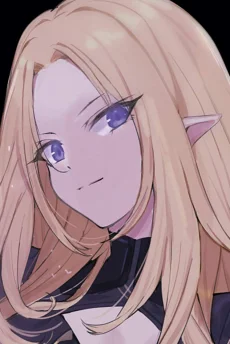
Alpha’s Volume 3 interlude reframes Shadow Garden from a comedy prop into an actual organization run by people who have real stakes. It’s the moment the series becomes something more than a one-note parody. The LN describes her as Cid’s “greatest fangirl,” but her POV chapters reveal someone far more complicated than that label suggests.
Alpha knows. This is the thing the anime doesn’t give you clearly enough. She knows that “Shadow” is probably not what he claims to be. She’s seen him operate. His intelligence on the Diabolos Cult has been suspiciously accurate. Her interlude in Volume 3 doesn’t confirm or deny her suspicions, but it shows you how she thinks about them: with pragmatism layered over genuine loyalty — and something that reads more like professional respect for someone she doesn’t fully understand. In the LN and game, Alpha calls Cid by his name and acts as a genuine partner. She scolds him when he destroys evidence or goes too far. None of that dynamic survives the adaptation.
What changes: the Shadow Garden stops being a punchline. These are women who survived genuine trauma. Built an actual resistance organization. Now fighting a real war against a centuries-old cult. They’re doing all of this while their supposed leader is over there thinking it’s an elaborate LARP. Alpha’s perspective makes that tension explicit. The anime plays the Shadow Garden’s devotion to Shadow as earnest and a little funny. The LN plays it as earned and complicated.
How Does the Rose Arc Differ Between the Light Novel and the Anime?

Alexia’s internal reasoning is far more developed in the LN. The anime gives you the plot beats of the Rose arc; the novel gives you the specific emotional logic behind why Alexia makes the choices she makes, which changes how her dynamic with Cid reads entirely.
The Rose arc spans Volumes 3 and 4 and involves Alexia Midgar — second princess, political liability, someone who has learned to read the game around her extremely well. The anime condenses her arc significantly, partly because Season 2’s 12 episodes had to cover this alongside other material. You get enough to understand that she’s not the person she presents herself as and that her relationship with Cid is one of the few places she drops the performance. What you don’t get is the extended internal reasoning that makes those beats land harder in the novel.
Specifically: the LN shows you how Alexia processes Cid. She correctly identifies that he is not a real commoner. She correctly identifies that he is playing a role. What she doesn’t correctly identify — what nobody in the series correctly identifies — is which role. She has him pegged as a high-ranking noble maintaining cover, not as a delusion-addled reincarnate running a genuine secret war. That misread is present in the anime but underdeveloped. In the novel, it’s a running thread that gives all her scenes more texture.
How Does the Light Novel Handle Beta and Shadow Garden’s Internal Culture?
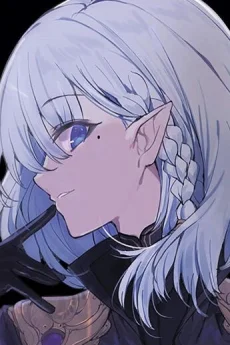
Beta’s double life as a bestselling author writing fictionalized versions of Shadow Garden’s real missions is expanded meaningfully in the LN. It’s one of the series’ best running jokes and the anime barely scratches it.
Beta — second of the Numbers, handles intelligence and finances — is writing pulp adventure novels under a pen name. In the anime, this is a background character trait used for a few jokes. In the LN, it’s a structurally significant bit that Aizawa keeps returning to. Beta has turned the real missions of Shadow Garden into genre fiction. The books are popular. People in-world read them. And because Cid never reads anything, he has no idea that the mythology of the organization he supposedly leads has been published, serialized, and reviewed.
There’s a quiet layer here about authorship and truth. Beta is the person who has thought hardest about what Shadow Garden actually is. She’s essentially written a history of it, fictionalized just enough to not get them killed. Her versions of events are more accurate than Cid’s. In some ways they’re more accurate than what really happened, because she has better information than anyone and the discipline to synthesize it. The LN explores this across multiple volumes. The anime uses it for one punchline.
The broader internal culture of Shadow Garden — the hierarchy among the Numbers, how they relate to the outer organization — is richer in the novels as well. Of the original seven Shadow Garden members, only Alpha and Delta have had their first meetings with Cid fully depicted in the LN. Zeta gets a brief version. Eta has barely any screen time. The mobile game fills some of these gaps with backstories for other Numbers in visual novel format. The community recommends watching those stories on YouTube if you want the full picture.
What About the Web Novel?
The web novel follows the LN closely through Volume 3, then takes a completely different path at Volume 4. It’s no longer being updated and is not the canonical story. For the full breakdown, see our reading order guide.
Should You Read the Light Novel if You’ve Already Watched Both Seasons?
Yes, if you found the premise funny but felt like you were laughing at a surface version of the joke. The LN is where the joke lives. The anime is a good trailer for it.
The case for starting the LN after the anime isn’t just “more content.” It’s that the experience of the series is qualitatively different. The anime delivers a strong adaptation with excellent action sequences and a mostly faithful plot. What it loses in compression is precisely the thing that makes Eminence in Shadow distinctive: the sustained irony of living inside Cid’s head while the world around him operates on completely different logic. This tracks with how the community talks about the conversion: “I heard it was popular so I watched it and got hooked immediately, and now I have read all the light novels and have a slight obsession.”
Yen Press has the English releases through Volume 6 as of early 2026, with Volume 7 still pending in Japan. You can grab Volume 1 on Amazon and start from there. The community is near-unanimous on this: “I recommend that you reread the LN as opposed to just picking up Volume 3 or 4. The early volumes are similar but there are differences and it is higher quality.” If you absolutely want a skip point after S2, start at Vol 4 Chapter 4. But you’ll miss context that pays off later.
Entry point recommendation: if you want to verify the LN is for you before committing, read the Alpha interlude in Volume 3. It’s short. It reframes everything. If that chapter shifts how you’re reading the series, you’ve got five more volumes of that ahead, and they get more interesting as they go.
If you enjoy Eminence in Shadow‘s comedy-meets-power-fantasy approach, check out our Konosuba LN vs Anime comparison for another series where the LN is funnier than the adaptation. For the OP protagonist angle, our Overlord LN vs Anime breakdown covers similar ground. And if you’re looking for more isekai picks, we ranked the best isekai light novels with Eminence on the list.
Frequently Asked Questions: Eminence in Shadow LN vs Anime
Does the Eminence in Shadow anime follow the light novel closely?
Season 1 is a faithful and well-paced adaptation of Volumes 1-2. Season 2 compresses Vol 3 and half of Vol 4 into 12 episodes, cutting significant detail. What doesn’t survive either season is Cid’s extended internal monologue and the Shadow Garden member POV chapters that reframe the central irony of the series.
How many light novel volumes does Season 2 cover?
Season 2 covers Volume 3 and the first half of Volume 4 across 12 episodes. A movie has been announced to cover the rest of Volume 4 (the Earth Arc). Volumes 5-6 are completely unadapted as of early 2026.
Is the Eminence in Shadow light novel better than the anime?
Most readers call the LN the definitive version. As one top-voted comment in the LightNovels subreddit put it: “The Eminence in Shadow LN is definitely better than the manga or anime. It is a very highly rated/regarded light novel series.” The anime wins on action and spectacle, the manga wins on comedy, but the LN is where the full joke and world-building live.
Should you read the Eminence in Shadow web novel?
No. The WN diverges from the LN at Volume 4 and has been on hiatus since the Prison Arc. The author stopped updating it to focus on the LN. The WN is essentially a first draft. Read the LN for the canonical story.
Where should I start the light novel if I’ve already seen the anime?
Start from Volume 1. The internal monologue adds a fundamentally different layer to scenes you’ve already watched. If you want a quick test, read the Alpha interlude in Volume 3. If you must skip ahead after Season 2, start at Vol 4 Chapter 4. Yen Press has English releases through Volume 6.