

This article contains affiliate links. If you buy through these links, we earn a small commission at no extra cost to you.
Seven volumes. Still re-reading Volume 3. Still thinking about that Iris confrontation at 2am.
The problem with Eminence in Shadow is how specific it is. The power fantasy works because Cid is genuinely delusional and genuinely right at the same time. The comedy lands because an entire world takes his chuunibyou theater completely seriously. The action earns its hype because Daisuke Aizawa doesn’t soften the story when things need to get dark. You can’t grab any isekai off the shelf and expect that exact combination.
I’ve tried. Burned through a lot of mediocre stuff looking for the same feeling.
These seven actually deliver — not because they’re copies, but because each one hits something specific that makes Eminence work. Some go funnier. Some go darker. One surprised me by doing both. But I’ll include the caveats, because if the first volume is a slog, you deserve to know upfront before you commit.
TL;DR
- Overlord is the single closest match — overpowered protagonist, everyone terrified, stakes are real.
- Konosuba and Cautious Hero hit the comedy side; Arifureta and World’s Finest Assassin go darker.
- All seven have active English licenses with multiple volumes available right now.
What Actually Makes The Eminence in Shadow So Hard to Replace?
The Eminence in Shadow works because its central joke never stops escalating. Cid plays shadow broker, the world treats him as real, and the gap between his delusion and genuine stakes widens across all six volumes. That specific formula — comedic protagonist, real consequences, power fantasy with actual world-building underneath — is harder to replicate than it looks.
The community has been getting the genre label wrong for years. “Parody” keeps showing up in discussions about TEIS, but that misses what’s actually happening. Parody pokes fun at tropes from a distance. Eminence uses those tropes sincerely, with a protagonist who genuinely loves the bit he’s running. The LN leans into this harder than the anime — Cid’s internal monologue in Volumes 1 and 2 makes his chuunibyou reasoning fully legible, which makes the moments where the stakes turn real land much harder.
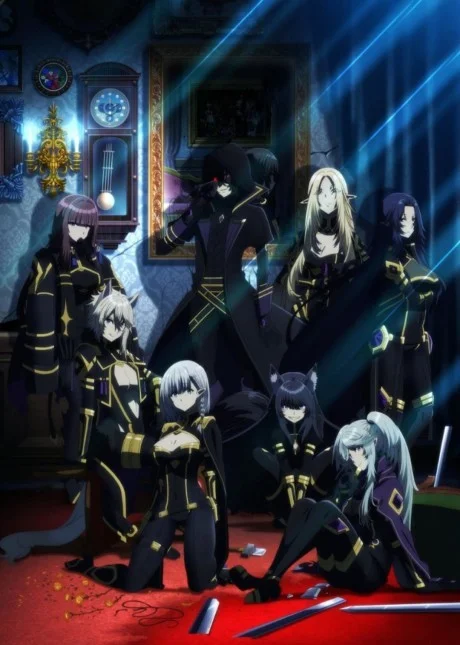
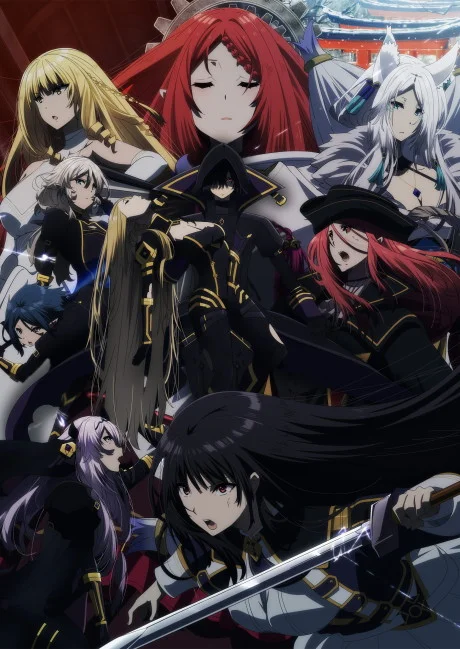
And the stakes do turn real. The Cult of Diablos isn’t played for laughs. The Rose arc in Volumes 3 and 4 goes places the anime rushed through in two episodes. Shadow Garden’s members have actual motivations that accumulate slowly and pay off in ways the adaptation doesn’t have time to build toward. The LN is the most earnest version of this story — not the darkest, not the funniest, but the one that takes its own rules most seriously.
So when I’m looking for a similar read, I’m not looking for “isekai with a strong protagonist.” I’m looking for deliberate tonal contrast, self-aware comedy that doesn’t undercut the action, and a world that treats its own rules seriously even when the protagonist doesn’t. Not many series pull that off. These seven get close.

Is Overlord the Closest Light Novel to The Eminence in Shadow?
Overlord and The Eminence in Shadow share the same essential engine: an overpowered protagonist in an unfamiliar world, everyone around him assuming the worst and being completely correct, and a widening gap between what the protagonist intends and what actually happens. If you finish Eminence and want more of that specific dynamic, Overlord is the first call.
Ainz Ooal Gown is the inverse of Cid in one specific way. Cid is delusional and secretly right. Ainz is genuinely terrifying and desperately trying to seem like he has a plan. Both fail at the thing they’re pretending to do — Cid pretends not to matter, Ainz pretends to have a grand strategy — and both get away with it because everyone around them is catastrophically wrong about the situation. That’s the joke, and Kugane Maruyama runs it for sixteen volumes without it wearing out.
The first three volumes are slow. I’ll say it plainly. Overlord Volume 1 spends a lot of time establishing the world through Ainz’s perspective, and the pacing doesn’t match Eminence in Shadow’s chapter-to-chapter density. But Volume 2 opens up the world significantly, and by Volume 3 the political machinery that Overlord becomes famous for clicks into place.
What Overlord does better than almost any comparable series: the non-Ainz chapters. Volume 9’s Paladin perspective, Volume 10’s Kingdom storyline, the way the world keeps functioning and failing without knowing the thing at the center of it is a skeleton playing pretend. Eminence has something similar with Shadow Garden’s internal chapters, but Overlord commits to it at a scale that eventually dwarfs the protagonist entirely. It becomes less about Ainz and more about the catastrophic ripple effects of Ainz . That is a genuinely different kind of power fantasy.
Yen Press has the English license. Currently at 16 volumes. The anime (Madhouse for Season 1, different studios after) is decent but the LN runs circles around it for depth . Same note as Eminence in Shadow. The LN is the definitive version here too.

Does Didn’t I Say to Make My Abilities Average Hit the Same Notes?
Didn’t I Say to Make My Abilities Average in the Next Life runs the same “protagonist hiding catastrophic power behind deliberate mediocrity” premise as Eminence in Shadow, with a lighter touch. Mile’s version of the gag plays more comedically and less dark, but the core dynamic — absurd ability gap, constant deflection — is immediately recognizable to TEIS readers.
Mile wanted to be average. She reincarnated, made her wish, and ended up with abilities equivalent to the average of all beings in existence , which includes ancient dragons and demigods. So she is, technically, average. Just catastrophically so. And she knows it, keeps trying to hide it, and keeps failing in ways that make her teammates significantly more confused than concerned.
The comedy here is gentler than Eminence in Shadow. FUNA’s writing leans harder into the found-family angle than Aizawa does . Mile’s party, the Crimson Vow, gets substantial development across the 18 volumes J-Novel Club has released in English. The series prioritizes warmth over escalation, which is a real tonal difference.
Honest take: Average doesn’t escalate the way Eminence does. The stakes stay relatively contained and the tone stays consistently cheerful. If what you love about Eminence is the genuinely dark undertones — the Cult of Diablos, the way Volume 4 shifts gears — this might feel slight by comparison. But if you want a protagonist with broken abilities deliberately pretending otherwise, and you want that played with charm rather than tension, Average hits that note more consistently than most alternatives.
J-Novel Club’s translation is solid. 18 volumes in English, which is substantial. The manga adaptation exists but the LN is funnier on the internal comedy front.

Why Does Konosuba Still Work for Eminence in Shadow Fans?
Konosuba shares Eminence in Shadow’s willingness to let the protagonist be genuinely capable while surrounding him with chaos he didn’t ask for. Kazuma schemes, calculates, and gets things done in ways no one anticipates. The comedy is different (more slapstick than theatrical) but the LN version has sharper edges than the anime suggests.
Konosuba is funnier in print. The anime is good — it’s one of the better isekai adaptations out there — but the LN gives Kazuma’s internal monologue room to breathe, and Kazuma is genuinely funny when you can hear him thinking. His running commentary on his party, on the isekai genre, on the specific indignity of his situation: it all lands harder on the page because the timing is yours. The anime can’t hold the deadpan volume of his complaints.
The connection to Eminence in Shadow isn’t immediately obvious. Konosuba isn’t a power fantasy. Kazuma scrapes by through improvisation and low cunning, not overwhelming strength. But the tonal overlap is real: both series build comedy from a self-aware protagonist navigating a genre he understands better than the world around him, and both take that premise seriously enough to generate actual stakes when they decide to.
Konosuba is 17 volumes and complete. The main series ended properly — Natsume Akatsuki finished it, which is rarer than it should be for isekai comedy. Spinoffs continue, but the main run wraps satisfyingly. Yen Press has the LN translation. The anime adapts roughly Volumes 1 through 5; the second half of the series develops Kazuma’s world in ways the anime never reached.
One caveat: Volumes 4 and 5 slow down noticeably. The series finds its footing again around Volume 6, but if you’re binging you’ll feel the drop. Push through. The back half of Konosuba is better than the front.

Is That Time I Got Reincarnated as a Slime Worth It for Organization-Building Fans?
That Time I Got Reincarnated as a Slime is a slower burn than Eminence in Shadow, but watching a protagonist build an organization and leverage it through genuinely complicated politics hits the same satisfaction as Shadow Garden. Rimuru’s nation-building arc, in full gear by Volume 4, is the closest LN analog to Shadow Garden’s internal development across any series on this list.
Slime doesn’t have Cid’s self-awareness angle. Rimuru isn’t running a bit — he genuinely wants to build something and is genuinely good at it. That’s a different flavor of power fantasy than Eminence, less comedic and more earnest, but the organization-building satisfaction is actually stronger here because Tensura commits to it completely. Where Eminence gives you glimpses of Shadow Garden operating as a functional intelligence network, Slime shows you the full administrative machinery of a growing nation-state.
Volumes 1 through 3 establish Rimuru’s world and the founding of Tempest. Volume 4 is where the political chess starts, and by Volumes 7 and 8 the scale is substantial. The manga and anime cut significant amounts of the administrative and diplomatic detail that makes the LN interesting . Same story as Eminence in Shadow, where the LN does the heavy lifting the adaptation can’t fit.
Fuse’s writing is denser than Aizawa’s. Some readers bounce off Tensura because it spends more time on logistics and less on action setpieces. If your favorite parts of Eminence are the fights and Cid’s theatrical reveal scenes, Tensura might feel slow in the middle volumes. But if your favorite parts are Shadow Garden’s internal chapters and the sense of something large organizing in the background, this will work well.
Yen Press has the license. 22 volumes in Japanese, around 20 available in English currently. It’s a long series, but it earns the length.

Does Arifureta Scratch the Same Dark Power Fantasy Itch?
Arifureta goes darker than Eminence in Shadow faster and stays there longer. Hajime Nagumo’s transformation from class punching bag to walking catastrophe happens inside Volume 1, and the series doesn’t soften it afterward. If the moments where Eminence turned genuinely brutal were your favorite parts, Arifureta starts there and builds from it.
I want to be upfront: Arifureta is uneven. Volume 1 is strong — Hajime’s survival arc in the Abyss is genuinely grim and the power acquisition has weight because the cost is real. But Ryo Shirakome’s writing gets messier as the harem expands, and by Volumes 5 and 6 the tonal control that made Volume 1 work gets buried under increasingly chaotic party dynamics. It starts better than it continues.
But it earns its spot on this list because of one thing Eminence in Shadow readers specifically will recognize: a protagonist who has decided what he is and refuses to pretend otherwise. Hajime isn’t performing. He’s done performing. That clarity reads almost as the inverse of Cid — both are running a bit, but Hajime’s is brutal honesty where Cid’s is theatrical mystery. The contrast is interesting if you’ve spent time with both series.
J-Novel Club handles the translation. 13 volumes in English. The anime, produced by asread, condenses the early material and softens some of the darker edges . If Volume 1 of the anime interested you, the LN is the version that actually delivers on the premise.

What Does The World’s Finest Assassin Offer That the Others Don’t?
The World’s Finest Assassin is the most tactically precise recommendation on this list. Lugh Tuatha Dé schemes at a level that matches Cid’s improvisational genius but applies it deliberately . Every mission planned, every variable accounted for. If you liked how Eminence in Shadow made strategy feel like theater, this scratches the same itch with more precision and less comedy.
Lugh is everything Cid pretends to be, done intentionally. Reincarnated as the heir to an assassin family, he applies his previous life’s professional competence to a fantasy setting with methodical efficiency. There’s no comedy here — the tone is straight thriller — but the protagonist’s relationship to competence feels similar to what Eminence in Shadow does when it’s taking itself seriously.
Where Eminence uses misdirection as humor, World’s Finest Assassin uses it as craft. Lugh’s plans have layers that pay off chapters later. The story trusts the reader to track what he’s building. And the female leads , particularly Dia and Maha, have actual agency in the operational planning, which gives the ensemble more texture than the premise initially suggests.
Four volumes in English through Yen Press. The full Japanese run is 14 volumes, so there’s substantial content ahead if the first few click for you. The anime covers Volumes 1 and 2 and does a reasonable job — but Volumes 3 and 4, which significantly expand the political stakes and Lugh’s methods, haven’t been adapted yet. If the anime left you curious, those next two volumes are where the series justifies itself.
And if Arifureta felt too rough-edged and you want something with better prose construction and more tactical coherence, World’s Finest Assassin is the cleaner pick.
Is Cautious Hero Actually as Similar to Eminence in Shadow as People Claim?
Cautious Hero is tonally the closest series to Eminence in Shadow on this list. Seiya Ryuuguuin is overpowered, self-aware, and running a comedic routine that happens to be technically correct about everything . Same structure as Cid. The difference: Cautious Hero leans harder into the darkness at the finale than you would ever expect from the premise.
Light Tuchihi’s Cautious Hero starts as pure comedy. Seiya shows up as a summoned hero, insists on training far past any reasonable ceiling before doing anything, and his goddess handler Ristarte spends most of the series losing her mind at his excessive caution. It reads like Eminence in Shadow’s comedy engine applied to a straight heroic quest — the joke is that the absurdly overcautious approach keeps working, which validates it, which makes the next overcautious choice funnier.
But the series has a final act that recontextualizes the comedy almost entirely. Volume 4 does something I didn’t see coming on a first read. The reason Cautious Hero resonates specifically with TEIS fans is that both series use their comedic premise to set up emotional weight that lands harder because you weren’t bracing for it. Eminence does this across the Rose arc in Volumes 3 and 4; Cautious Hero does it compressed into its ending. Different scale, same emotional move.
The anime covers the full series and is genuinely good. But the LN gives Ristarte’s perspective more room to develop, which matters significantly for the final arc. Her internal monologue is doing a lot of work that the anime has to show visually. The LN version is more satisfying on reread.
Three volumes in English through Yen Press, complete at 4 volumes in Japanese. Short enough to finish in a weekend. If Eminence in Shadow is the kind of series where you re-read specific chapters, Cautious Hero will get the same treatment.
Where Should You Start if You’re New to All of These Series?
For Eminence in Shadow fans going in fresh, Overlord Volume 1 is the safest entry point — it shares the most structural DNA with TEIS and the payoff for the early slow pacing is real. Cautious Hero is the fastest read if you want to test the waters first. Konosuba is the best pick if the comedy was your primary draw in Eminence.
If you haven’t read The Eminence in Shadow light novel itself, that’s the actual first recommendation on this list. The anime covers Volumes 1 through 4 reasonably well — Season 1 handles Vols 1 and 2, Season 2 covers Vol 3 and the first half of Vol 4 — but Cid’s internal monologue in Volumes 1 and 2 is what makes the series click. You can read exactly what the LN adds over the anime in this detailed comparison. Short version: the LN is the definitive version and if you’ve only seen the anime, you’re missing the best parts.
For the series on this list, my honest starting order: Cautious Hero first (shortest, most self-contained, immediately comparable to TEIS), then Overlord if it grabs you, then Konosuba if you want the complete comedy-forward path. Slime or Arifureta depending on which mode you’re in. World’s Finest Assassin if you’ve worked through the others and want something more tactically precise.
All seven are available on BookWalker and Kindle. If you want to start at the source before branching out, The Eminence in Shadow Volume 1 is on Amazon here — the Yen Press edition with Touzai’s illustrations, which are worth seeing in print. And if you burn through everything on this list and still want more, the best isekai light novels guide has an extended list including some less-discussed picks that hit similar notes.
Frequently Asked Questions: Light Novels Like The Eminence in Shadow
What light novel is most similar to The Eminence in Shadow?
Overlord is the closest structural match — both series feature an overpowered protagonist operating under a theatrical persona while the world misreads the situation entirely. The humor in Overlord is darker and more ironic than TEIS, but the core dynamic of “protagonist gets away with an absurd bit because everyone around him is catastrophically wrong” is essentially identical across both series.
Are there light novels where the protagonist deliberately hides their true power?
Yes — this is the core premise of both The Eminence in Shadow and Didn’t I Say to Make My Abilities Average in the Next Life. Mile deliberately limits her output to seem average, while Cid performs the role of Shadow Garden’s founder as theater. Cautious Hero runs a related variation where Seiya’s extreme caution reads as deliberate restraint. All three are worth reading if that specific dynamic is the appeal.
Does Overlord have the same sense of humor as Eminence in Shadow?
Not exactly. Eminence in Shadow’s humor comes from Cid’s sincere enthusiasm for the bit — he loves it, which makes it warm. Overlord’s humor is darker: Ainz is genuinely trying to act normal, everyone else is terrified, and the gap between intention and reception plays for dark comedy rather than warmth. Both work, but Overlord is more likely to make you uncomfortable in the laugh.
What should I read after finishing all 6 current volumes of The Eminence in Shadow?
Start with Overlord Volume 1, then Cautious Hero if you want something shorter and tonally closer. If you’ve already read both, That Time I Got Reincarnated as a Slime’s nation-building arc from Volume 4 onward scratches the “watching a protagonist’s organization take shape” itch that Shadow Garden’s internal chapters create. Volume 7 of Eminence in Shadow has been announced in Japan but has no confirmed English release date yet.
Is Konosuba or Cautious Hero more similar to Eminence in Shadow?
Cautious Hero is structurally closer — Seiya’s technically-correct-about-everything routine mirrors Cid’s theatrical competence, and the series uses its comedic premise to build genuine emotional weight, the same move Eminence makes. Konosuba is tonally looser and more slapstick-forward, but the LN version’s Kazuma internal monologue gives it more texture than the anime suggests. For tonal match: Cautious Hero. For a longer run with a complete ending: Konosuba.