

This article contains affiliate links. If you buy through these links, we earn a small commission at no extra cost to you.
Here’s the honest version of this guide: the reading order for Shield Hero is simple. Volume 1 through 22, One Peace Books, in order. You could stop reading right now.
But the actual questions are harder. Do you start from volume 1 after watching the anime, or pick up where season 3 left off? Which spinoffs matter? How does the web novel fit in — and does the common advice about it hold up? What are you actually getting into with 22 volumes when the series is known to have a quality dip around volume 5?
Those are the questions worth answering. This guide covers all of them.
TL;DR
The main Shield Hero light novel runs 22 volumes, published in English by One Peace Books. Start from Volume 1 even after the anime — Naofumi’s internal monologue is the series. The web novel diverges significantly and isn’t canonical. The Reprise of the Spear Hero spinoff is worth reading after Volume 13. Volumes 1–4 are the strongest stretch.
What Is the Complete Reading Order for The Rising of the Shield Hero Light Novel?
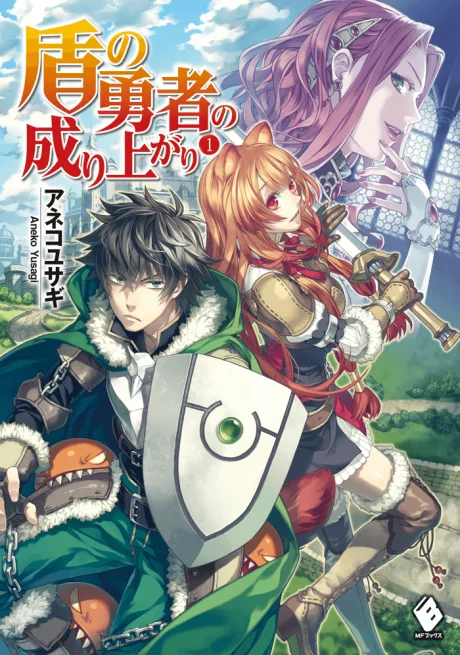
The main series runs 22 volumes in Japanese (completed), with One Peace Books publishing the English translation. The reading order is linear — no companion volumes insert between main entries, no mandatory side stories mid-series. Start Volume 1 and read straight through. The spinoff light novels are separate and recommended after finishing the main arc, not interspersed.
Published in Japan under Media Factory’s MF Bunko J imprint. Author is Aneko Yusagi; illustrator is Minami Seira. One Peace Books holds the English license and has been releasing volumes steadily since 2015.
The main reading order:
- The Rising of the Shield Hero, Vol. 1
- The Rising of the Shield Hero, Vol. 2
- The Rising of the Shield Hero, Vol. 3
- The Rising of the Shield Hero, Vol. 4
- The Rising of the Shield Hero, Vol. 5
- The Rising of the Shield Hero, Vol. 6
- The Rising of the Shield Hero, Vol. 7
- The Rising of the Shield Hero, Vol. 8
- The Rising of the Shield Hero, Vol. 9
- The Rising of the Shield Hero, Vol. 10
- The Rising of the Shield Hero, Vol. 11
- The Rising of the Shield Hero, Vol. 12
- The Rising of the Shield Hero, Vol. 13
- The Rising of the Shield Hero, Vol. 14
- The Rising of the Shield Hero, Vol. 15
- The Rising of the Shield Hero, Vol. 16
- The Rising of the Shield Hero, Vol. 17
- The Rising of the Shield Hero, Vol. 18
- The Rising of the Shield Hero, Vol. 19
- The Rising of the Shield Hero, Vol. 20
- The Rising of the Shield Hero, Vol. 21
- The Rising of the Shield Hero, Vol. 22
After completing the main series (or getting through the currently adapted stretch), the most recommended continuation is the spinoff series. More on that below.
What Does Each Arc in the Shield Hero Light Novel Actually Cover?
The main series breaks into five major arcs across its 22 volumes: the Waves/Demi-Human arc (V1–4), the Three Heroes Church conspiracy (V4–5), the Spirit Tortoise and Glass’s World arc (V6–9), the Vassal Heroes arc (V10–13), and the later series arcs (V14–22) covering the four cardinal heroes’ backstories and endgame. Volumes 8–9 were effectively skipped by the anime despite being a complete arc in the books.
Here’s the arc-by-arc breakdown:
Volumes 1–4: The Waves Arc and Demi-Human Slave Arc
This is the series at its best. Naofumi gets summoned from Japan as the Shield Hero, immediately framed for assault by Malty on day one, stripped of party members and resources, and forced to buy Raphtalia as a demi-human slave to survive his first Wave. The core cast assembles across these four volumes: Raphtalia, Filo, Melty. The three heroes’ incompetence gets established. The political situation with the king and the church becomes clear.
Volume 4 is the last volume that consistently gets praised without qualifiers in community discussions. The Three Heroes Church arc, running across volumes 4 and 5, is where the conspiracy that’s been building in the background pays off. Melty’s political situation reaches a head. The confrontation with the king earns its place precisely because volumes 1–4 set it up properly.
Volumes 5–7: Spirit Tortoise Arc and Glass’s World Arc
Volumes 5 and 6 handle the Spirit Tortoise — an ancient catastrophe-class creature being weaponized, with Naofumi’s party pulled into a coalition effort alongside heroes from multiple worlds. The coalition structure is more developed on the page than the anime showed. Volume 5 has a substantial training sequence that the adaptation cut, which is why the power scaling in season 2 felt arbitrary. Volume 7 moves into Glass’s world and gives Naofumi’s team their first real encounter with the multi-world wave dynamic.
This stretch is where opinions on the series start splitting. The Spirit Tortoise arc is solid work. The character development for Rishia starts here — she looks useless early, but her arc pays off in volume 10, and the LN gives you enough to understand why. Volume 7 is where Glass and L’Arc start getting properly developed backstories. The adaptation compressed all of this to a point where it stopped functioning.
Volumes 8–9: The Tenbi Arc (Anime-Skipped)
Here’s where the reading order diverges from what the anime covered. Volumes 8 and 9 form a complete arc — sometimes called the Tenbi arc or the inter-world arc’s second chapter — that the anime effectively bypassed. The season 2 structure jumped past this material, folding fragments into later episodes or dropping it entirely.
If you’re anime-only and starting the LN where you think season 2 ended, you’ll hit novel content you’ve never seen in any form. These two volumes are not supplementary. They’re part of the main story. And if you skip straight to volume 10 to follow the anime’s timeline, you’ll be missing context that matters for the Vassal Heroes arc.
Volumes 10–13: Vassal Heroes and Waves of Change Arc
Naofumi gets appointed as a Vassal Hero in another world, with the Katana Hero’s role and the diplomatic consequences that come with it. This is what season 3 adapted, and the reception was better than season 2’s — mostly because the adaptation left more of the substance intact at a manageable pace. Rishia’s competence arc has payoff here. The four cardinal heroes’ isolation from each other and their increasingly different power levels becomes a running problem. Volume 13 is a natural resting point before the series’ final stretch.
Volumes 14–22: The Final Arc
The series’ endgame. The four cardinal heroes’ backstories get expanded. The wave system’s actual origin and purpose become clearer. Naofumi’s relationships across all the characters introduced from volume 1 onward start converging toward resolution. Community reception in this stretch is more mixed — some readers find the conclusion satisfying, others think the series loses focus trying to wrap up too many threads. It’s not the tightest ending the series could have had. But it finishes.

Do You Need to Start From Volume 1 Even After Watching the Anime?
Yes. Not because the anime is a bad adaptation of the early volumes — season 1 is fairly faithful to volumes 1–3 — but because Naofumi’s internal monologue changes what the series is on the page. You’re not just filling in scenes the anime skipped. You’re getting access to his reasoning process, which is the actual story. Community consensus is consistent: “Absolutely. Get them for the love of God. The story, characters, events, and plot are all superior.”
Season 1 did a solid job with the surface of volumes 1–3. But “solid job with the surface” means exactly what it sounds like. The anime shows you what happens. The LN shows you why Naofumi responds to each situation the way he does — his calculations about trust, his logic for each decision, the specific texture of his bitterness as something he’s actively building rather than just feeling.
For a series where the protagonist’s psychology is the whole engine, losing that layer changes the reading experience. Volume 1 in particular reads differently when you’re inside Naofumi’s head for the two weeks of solo adventuring before he buys Raphtalia. His decision to purchase a party member is pragmatic and transactional in the anime. In the LN it’s a person who has run through every other option and landed on this one as the least bad available. The scene where he buys Raphtalia lands differently when you’ve watched him fail in detail up to that point.
The case for jumping to volume 4 or picking up after the anime is efficiency. You get to new content faster. The three-anime-season question becomes simple: find where season 3 left off in the volume list and continue. But then you’re missing Raphtalia’s backstory done properly, missing Filo’s actual character interiority in volume 2, missing the Melty political situation as it builds. These aren’t critical gaps that make later volumes incomprehensible. They’re the difference between reading a book and reading a book you invested in from page one.
For the full picture on what each season changed versus the source material — which scenes the anime compresses, which characters lose depth, where the adaptation decisions hurt most — see the Shield Hero light novel vs anime breakdown. That article owns the comparison. This one is about the reading order.

What Are the Shield Hero Spinoff Light Novels — and Which Ones Actually Matter?
The main spinoff is The Reprise of the Spear Hero, which follows Motoyasu Kitamura — the Spear Hero — in a time loop after the main story’s events. It’s a genuinely different read from the main series, lighter in tone, and community reception is positive. One Peace Books publishes it in English. The other cardinal hero spinoffs exist but have not been fully licensed for English release.
The Reprise of the Spear Hero is the spinoff that comes up consistently in recommendations. The premise: Motoyasu, the Spear Hero who spent most of the main series being an obstacle to Naofumi, somehow ends up in a time loop back to the beginning of the story — but he can only see Naofumi properly, and he’s developed an obsessive determination to help him this time. It’s part parody, part genuine character study, and notably funnier than the main series.
When to read it: after finishing volume 13 of the main series, minimum. The spinoff’s setup depends on knowing Motoyasu’s arc in the main story. Reading it alongside volumes 1–5 of the main LN means missing why his perspective shift is interesting. Wait until you know who he is.
The Reprise of the Spear Hero runs 14+ volumes in Japanese. One Peace Books has been releasing the English translation and is multiple volumes in. If you finish the main 22-volume run and want more Shield Hero material that doesn’t replay beats you already know, this is the obvious next step.
There are also spinoffs following the other cardinal heroes — the Bow Hero and Sword Hero get their own side stories in Japanese. English licensing has been incomplete for these. They’re supplementary material at best, and most community members treat them as optional even for committed fans of the series. If the Spear Hero spinoff hooks you, look up what’s been licensed. But those aren’t mandatory reading alongside the main series.
How Different Is the Shield Hero Web Novel From the Light Novel?
The web novel is rougher, darker, and no longer canonical. Naofumi is notably more aggressive and bitter in the WN — the LN polished his characterization toward something more readable. The WN also lacks the “Other World arc,” a significant storyline that only exists in the light novel. Community consensus treats the LN as the authoritative version. Read the LN.
Shield Hero started as a web novel on Shousetsuka ni Narou, and like most web-to-light-novel transitions, the move to publication involved significant rewrites. The degree of change is higher here than in some comparable series.
The version of Naofumi in the web novel is harsher. His responses to Malty, his treatment of Raphtalia early on, his internal monologue — all of it is more uncompromising. The LN brought him back from that edge somewhat without removing the fundamental bitterness. Some readers prefer the WN version on the grounds that it’s more psychologically consistent with someone who’s been through what he has. Others find the LN revision creates a more functional protagonist for a 22-volume story. Both readings are defensible. The LN version is the one that matters for the canonical story.
The bigger structural difference: the LN includes the Other World arc, covering inter-world travel and the wave system’s mechanics from outside Melromarc’s perspective. This arc doesn’t exist in the WN. It’s not a small addition. Multiple volumes of the main series depend on the world-building and character work this arc introduces. The web novel version of Shield Hero and the light novel version are telling related but different stories by the mid-series point. If you started on the WN out of curiosity or read fan translations before the LN was available, know that you’re working from a different source.
As one reader who spent years with the WN put it plainly: “the web novel is pretty terrible” at this point. The community attitude has largely settled in that direction — the WN has historical value for understanding how the series developed, and not much else. The LN is the story as it was meant to be told after the author had the chance to revise it.
Where Does the Shield Hero Light Novel Go After Season 3?
Season 3 covered roughly volumes 10–13. Volumes 14–22 are where the series resolves its endgame: the four cardinal heroes’ backstories converge, the actual origin of the wave system gets answered, and Naofumi’s relationships across the full cast reach resolution. These volumes are English-available from One Peace Books and are not reflected in any current anime season.
If season 3 left you wanting more, volumes 14 onward are clean continuation. There’s no gap to bridge, no content to track down separately. The anime covered through volume 13, approximately. Pick up volume 14 from One Peace Books and continue.
The honest note about this stretch: volumes 14–22 are where the community’s reception starts varying more widely. The series’ early premise — a falsely accused outsider clawing his way from nothing — completed its arc by volume 5 or 6. What comes after is building toward a larger endgame that rewards readers who want to see the full system explained. The intimate character focus of the early volumes isn’t quite what volumes 16–19 are doing.
Some readers find this satisfying. The series does answer its questions. Others feel the later volumes drift from what made the early books work and finish out of obligation rather than investment. Both experiences are documented in the community in roughly equal amounts. Volumes 1–13 are the stretch that earns consistent praise. After that, your mileage depends on how much you want the plot mechanics resolved versus how much you want the specific character texture of the early run.
Should You Actually Read All 22 Volumes — or Stop at a Certain Point?
Read volumes 1–13 in full. That’s the stretch where the series is most consistent and where the adaptation gaps are significant enough that the books do something the anime doesn’t. After volume 13, decide based on whether you’re hooked on the system-level plot versus the character-focused early material. The community is genuinely divided on the final arc, and both positions are reasonable.
My take: volumes 1–4 are the reason this series has a fanbase at all. That stretch is legitimately good isekai storytelling with a protagonist who’s interesting specifically because he’s right about most things and wrong in ways that matter. Volume 5 is where the quality starts to wobble, but the Spirit Tortoise arc has enough going for it — Rishia’s setup, the coalition structure, the inter-world mechanics — to be worth the read. Volumes 8 and 9 are underrated because they were anime-bypassed. If you skip them, don’t.
Volume 13 is a natural stopping point if you want to assess. The Vassal Heroes arc reaches a conclusion that works as a resting place before the final stretch. If you’re invested by that point, continue. If you’re reading out of completionism and not enjoyment, the community’s experience suggests the final nine volumes won’t change that.
And the reader who went in as an anime-only and came out enthusiastic? That experience is real. One community member who started the LN after watching all three anime seasons described being on volume 10 and calling it a significant upgrade over the adaptation — “the story, characters, events, and plot are all superior.” Not a universal experience, but not a minority one either. The books are what this series was supposed to be.

Where Can You Read The Rising of the Shield Hero Light Novel in English?
One Peace Books holds the English license and publishes all 22 volumes in print and digital. Digital editions are available on Amazon Kindle and BookWalker. Physical copies through Amazon, Barnes & Noble, and most major retailers. No legal free-to-read English version exists for the LN. The web novel exists in Japanese on Narou with fan translations scattered across the internet, but the WN is not the canonical story.
Digital is the practical starting point. If you’re reading on BookWalker, the One Peace Books releases are cleanly formatted and the cover art comes through properly. Kindle works fine for most readers; the formatting is standard. If you’re already in the Kindle ecosystem and have Unlimited, check whether any volumes are included — availability changes, but worth checking before buying.
Physical copies exist and the One Peace Books editions are trade paperback quality — comparable to what you’d find from Yen Press or J-Novel Club releases for similar series. The spines are consistent across the run if you’re collecting. If you want to own it physically, the full 22-volume run is available.
For a starting point, Volume 1 is available on Amazon: The Rising of the Shield Hero Vol. 1 (One Peace Books).
If you’re newer to LN collecting and want to understand how different publishers handle long-running isekai series — release pace, pricing, digital availability — the Yen Press vs J-Novel Club vs Seven Seas comparison covers the landscape. One Peace Books operates differently from all three, and knowing what you’re working with before committing to 22 volumes is practical.

Frequently Asked Questions: The Rising of the Shield Hero Light Novel Reading Order
How many volumes does The Rising of the Shield Hero light novel have?
22 volumes in the main series, published in Japanese by Media Factory and in English by One Peace Books. The series is complete in Japanese. All 22 volumes are available in English.
Where does each anime season leave off in the light novels?
Season 1 (25 episodes) covers volumes 1–3 with some volume 4 material. Season 2 (13 episodes) covers volumes 5–7, with the Tenbi arc (volumes 8–9) effectively bypassed. Season 3 (13 episodes) covers roughly volumes 10–13. Volumes 14–22 have not been adapted.
Should I read the Shield Hero web novel or light novel?
Read the light novel. The web novel has been superseded by the LN revision. The LN includes the Other World arc, which does not exist in the WN, and the LN version of Naofumi is more developed. The web novel is historical context, not the canonical story.
Is the Reprise of the Spear Hero spinoff worth reading?
Yes, after finishing at least volume 13 of the main series. The spinoff follows Motoyasu in a time loop scenario. It is lighter in tone, funnier, and published in English by One Peace Books.
Which volumes of Shield Hero are best?
Volumes 1–4 are the strongest with consistent community praise. The series quality begins varying around volume 5. Volumes 1–13 are the stretch worth committing to without caveats. The final arc (volumes 14–22) has mixed reception — some readers find the conclusion satisfying, others feel the series lost its footing.
Who publishes The Rising of the Shield Hero in English?
One Peace Books holds the English license for both the main series and The Reprise of the Spear Hero spinoff. Available in print and digital on Amazon Kindle, BookWalker, and major retailers.