

This article contains affiliate links. If you buy through these links, we earn a small commission at no extra cost to you.
Three seasons of anime. Two of them mediocre. And the consensus basically settled: Shield Hero peaked early, fell off hard, move on.
That verdict is mostly about the adaptation.
I came into the light novels already skeptical. Season 2 had done its damage, and the Spirit Tortoise arc felt like the series had forgotten what made it work. But the books had been on my list, and when I finally got to them, the gap between what’s on the page and what made it to screen turned out to be bigger than I expected.
Not in every direction. Season 1 is genuinely faithful. Volumes 1 through 3 translate well, and the anime’s first cour works partly because it had solid material to work with. But season 2 rushed three books into thirteen episodes and cut the context that makes those books function. Season 3 had the same problem.
The result: if your opinion of Shield Hero is based on what you watched, you’re working from an incomplete picture. Here’s what actually differs between the two versions — and whether those differences are enough to matter.
TL;DR
Season 1 closely follows volumes 1–3 and is the most faithful adaptation. The light novel has richer internal monologue for Naofumi, deeper character work for Raphtalia, Filo, and Melty, and full backstories for Glass and L’Arc that season 2 compressed heavily. Quality varies after volume 4 in both formats — but the light novel holds up better than the anime made it look.
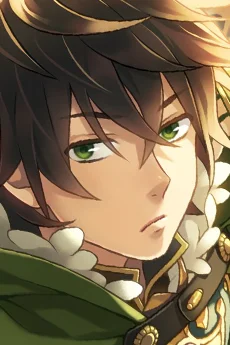
How Much of the Light Novel Does Each Anime Season Actually Cover?
Season 1 (25 episodes) adapts volumes 1–3 with some material pulled from volume 4. Season 2 (13 episodes) compresses volumes 5–7, and the Tenbi arc in volumes 8–9 was essentially skipped. Season 3 covers roughly volumes 10–13. The compression in seasons 2 and 3 is significant enough to change how the story reads.
Breakdown by season:
- Season 1 (2019, 25 episodes): Volumes 1–3, some volume 4 material. The most faithful stretch of the adaptation.
- Season 2 (2022, 13 episodes): Spirit Tortoise arc (volumes 5–6) + Glass’s World arc (volume 7). Three books in half a cour.
- Season 3 (2023, 13 episodes): Waves of Change arc, roughly volumes 10–13. Similar compression.
- The Tenbi arc (volumes 8–9) was effectively bypassed. Content from those books was folded elsewhere or dropped entirely.
Thirteen episodes is not enough room for three One Peace Books-length light novels. That math doesn’t work, and the adaptation shows it.
For context: seasons 2 and 3 are where most viewer frustration concentrated. That frustration has a structural cause. The anime couldn’t do the source material justice at that pace.
| Season | Episodes | Volumes Covered | Major Cuts |
|---|---|---|---|
| Season 1 | 25 | Volumes 1–3 (+ early V4) | Minor pacing compression only |
| Season 2 | 13 | Volumes 5–7 | Tenbi arc (V8–9), Ost depth, L’Arc context |
| Season 3 | 13 | Volumes 10–13 | Character backstory, internal reasoning throughout |

Does Naofumi Read Differently in the Light Novel?
The light novel gives Naofumi extensive internal monologue that the anime can’t replicate. His bitterness is more calculated on the page, his reasoning more visible. His gradual shift toward trusting others happens with more friction. The anime shows the behavior. The LN shows the architecture behind it.
Yes — and it matters for the whole series.
The anime gives you Naofumi’s mistrust as behavior: cold, guarded, makes harsh calls. You see it. What the LN adds is the internal monologue — his running commentary on situations, how he’s processing what happened to him, the specific logic he uses to keep everyone at arm’s length.
Volume 1 establishes this clearly. When he’s first trying to recruit party members and nobody will join him, the LN has him actively building a mental framework for surviving in a world that’s decided he’s guilty. He’s not just moody. He’s constructing rules. And then the series is about those rules slowly failing to hold.
The anime version is streamlined. Naofumi seems bitter because the plot established he has reason to be. The LN makes him bitter in a way that reads like a real psychological response to specific events, and then the cracks in that bitterness are earned differently when they show up.
There’s a fandom line about the LN version being “edgier.” That’s partially true — the anime did smooth him out slightly. But the bigger difference is texture, not degree. You understand his reasoning better. That changes how his relationship with Raphtalia lands, and how the later volumes feel when he starts making different kinds of decisions.

What Does the Light Novel Actually Do With Raphtalia and Filo?
Raphtalia’s trauma backstory gets more development in volumes 1–2 than the anime shows. Filo, mostly used as comic relief on screen, has genuine interiority in volumes 2–3 — her Filolial instincts and her attachment to Naofumi are explored properly. The three-character party dynamic is one of the LN’s strongest stretches.
Raphtalia’s backstory hits harder in volume 1. Her fear responses when encountering certain demi-human enemies, the specific memories she’s carrying, the way being treated like a person registers given her background — the LN takes more time with all of it. The anime hits the beats but moves past them quickly. You get the emotional notes without the detail that makes them feel specific.
Filo is the bigger gap. On screen she’s comic relief and transport. She argues with Raphtalia, she transforms. She’s fast. She’s cute. That’s mostly what you get. In volumes 2–3, Filo has actual character interiority. Her attachment to Naofumi isn’t just possessiveness. The way she processes the world as a newly hatched Filolial is distinct, and her reactions to situations reflect something specific about her rather than just her function in the party.
The dynamic between the three of them in the early volumes is the series at its most readable. Each character is doing something. The anime captures the surface of this but not the texture. Some lighter moments get cut, some uncomfortable undercurrents get smoothed over, and what you’re left with is a party dynamic that works in broad strokes but doesn’t click the same way.


How Different Is the Three Heroes Church Arc in the Books?
The Three Heroes Church arc spans volumes 3–5 in the light novel and plays as a systemic conspiracy rather than a series of encounters. Melty’s political intelligence is more clearly established, Malty’s motivations get fuller development, and the church’s reach feels genuinely threatening rather than episodic.
The church isn’t just an obstacle in the LN. It’s a faction with internal logic, political history, and members operating from specific motivations. The way the king’s favoritism toward the Sword and Spear heroes connects to the church’s agenda, the way Malty functions within a larger system rather than just being the early-arc villain. It’s a more complete picture in volumes 3–5.
Melty benefits most from this. She shows up in the anime as competent and on Naofumi’s side. The LN version gives you more of her political awareness from her introduction in volume 3 — her understanding of court dynamics, what she’s risking by helping Naofumi, what she’s calculating about the situation. She reads as a strategist rather than a character who exists to provide information and occasionally be endearing.
The resolution of the church conspiracy in volumes 4–5 is also more satisfying in the LN. The anime moved through it at speed, which made the payoff feel less earned. The books take time to let the threads converge, and the confrontation between Naofumi and the king lands with more weight when you’ve been tracking all the moving pieces.

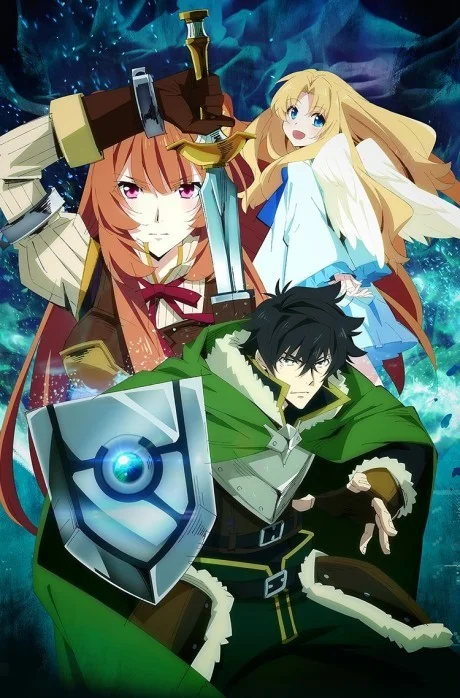
What Happened to Glass and L’Arc’s Actual Story in the Anime?
Glass and L’Arc Berg are introduced effectively in season 1 but lose significant depth in season 2. The light novel’s versions — particularly in volumes 6–7 — include complete backstory, Glass’s relationship with Therese, and L’Arc’s specific dynamic with Naofumi that makes the inter-world conflict feel personal. Season 2 compressed most of this.
Glass’s appearance at the end of season 1 is one of the better moments of the adaptation. A powerful woman shows up, fights Naofumi, holds her own, and leaves. You have almost no idea who she is. That works as a hook.
Volume 4 adds context to her entrance. Volumes 6–7 complete the picture: her world, her relationship with Therese, why she’s fighting the cardinal heroes, what the multi-world wave problem looks like from her side of it. The anime had thirteen episodes to cover all of this plus the Spirit Tortoise arc. Something had to give.
L’Arc is arguably the bigger loss. In volumes 6–7, his relationship with Naofumi is genuinely interesting — two people who clearly like each other, would work well together under different circumstances, in direct conflict because of the mechanics of the wave system. That quality, two characters with natural rapport on opposite sides of an unresolvable situation, gets compressed almost to vanishing in the anime.
It’s the type of writing that needs space. You can’t rush it. Thirteen episodes didn’t leave room.
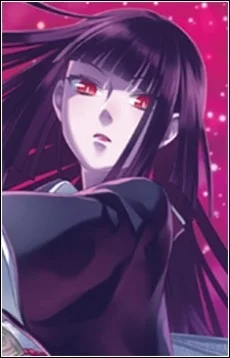

How Does the Spirit Tortoise Arc Compare Between the LN and Season 2?
Season 2 compresses the Spirit Tortoise arc (volumes 5–6) and Glass’s World arc (volume 7) into 13 episodes. Ost Hourai — the Spirit Tortoise’s manifested will — has significantly more narrative weight in the LN. Her relationship with Naofumi in volumes 5–6 is the arc’s emotional core and gets substantially reduced on screen.
The Spirit Tortoise arc was always going to be difficult to adapt at this pace. The premise is solid: an ancient creature is being weaponized, factions are fighting over it, Naofumi gets pulled in. What makes it work in the LN is space for the various players to register as actual people.
Ost Hourai is the clearest example of the gap. She’s effectively the Spirit Tortoise’s consciousness given form, and her dynamic with Naofumi across volumes 5–6 is the emotional throughline of the arc. She knows what she is, she knows how it ends, and the way she and Naofumi negotiate that is one of the more affecting stretches of the whole series.
The anime reduced her presence considerably. Some scenes were cut, some shortened. The arc still functions on screen — big creature, gets dealt with — but the stakes that make it matter in the LN don’t land the same way.
The transition into volume 7 and Glass’s World also loses something in the compression. Going from the Spirit Tortoise aftermath directly into the multi-world material required setup the anime had to skip. Season 2 felt disjointed to many viewers because it was — structurally, it was trying to cover ground that the LN spent three full volumes building.
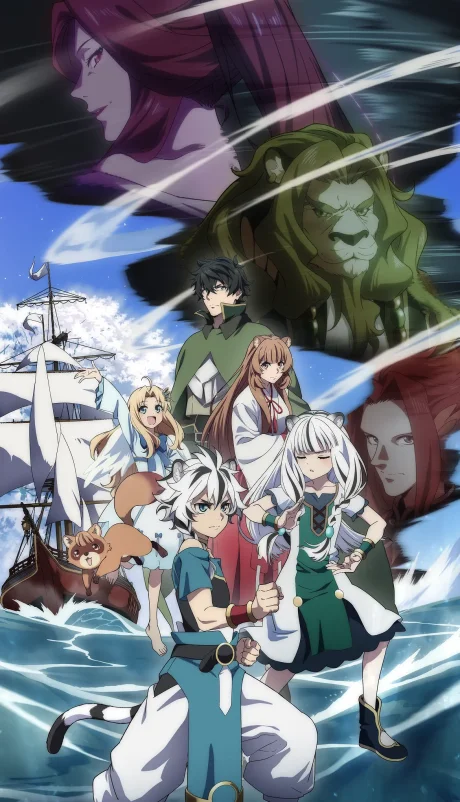
Does the Light Novel Fall Off the Same Way the Anime Does After Volume 4?
Volumes 1–4 are the strongest material in both formats. Past volume 4, the LN expands in scope — more heroes, multi-world mechanics, shifting focus — which not all readers find as engaging. The problems are real, but the LN handles them better because the internal context and character reasoning survive the page better than they translate to screen.
Honest answer: yes, with caveats.
The series changes after volume 4. The tightly contained story of the Shield Hero being persecuted, building a party, learning the wave system — that focus expands into something more ambitious and less controlled. New heroes get significant page time. The other-world mechanics become central. The story is trying to do more.
For some readers this is where it gets interesting. The multi-world aspect, what the wave problem looks like from different sides, the long-term implications of the shield itself — there’s material in volumes 7–15 that works if you’re willing to follow it. The community of readers who loved this stretch aren’t wrong.
My stopping point was around volumes 4–5. Not because the books went bad, but because the specific thing I liked — Naofumi’s isolated struggle, the tight three-person party dynamic — wasn’t the story anymore. The series has a right to become something different.
But even in the stretch where the series has structural problems, the LN holds together better than the anime adaptation of those arcs. The anime compressed the content. It also compressed the reasoning that makes the content make sense. The LN at its weakest still gives you the internal logic.
Volumes 8 and 9 — the Tenbi arc, which the anime largely bypassed — are better than their position in the discourse would suggest. That material gets unfairly associated with season 2’s problems when it wasn’t even adapted. If you want to see the parts of the series the anime didn’t touch, that’s where to start.
Should You Read the Shield Hero Light Novels After Watching the Anime?
If season 2 or 3 put you off the series, the LN through volumes 1–4 is worth reading as a separate assessment. The first arc is tighter, Naofumi’s character is fuller, and the supporting cast gets real development. Past volume 4, reader mileage varies — but the community consensus on volumes 1–4 is strongly positive and largely separate from the adaptation discourse.
Yes — with the same caveats I’d apply to recommending the series generally.
Volumes 1 through 4 are worth reading on their own terms. Not because they fix the anime retroactively — they don’t — but because they’re doing something the adaptation wasn’t fully conveying. Naofumi’s arc feels coherent. Raphtalia and Filo are actual characters. The Three Heroes Church conspiracy has room to develop. You get the Shield Hero that the discourse implies exists.
Whether you keep going past that depends on what you want from the series. The readers who loved it through volumes 10, 15, 22 are not wrong — they found something in the multi-world arc that engaged them. I found the first arc more satisfying as a contained thing, but that’s a preference, not a verdict on the later material.
And the community anecdote that actually stuck with me: multiple readers who dropped the anime mid-season 2 picked up the LN from volume 1 and made it to volume 10 without stopping. The adaptation problems were specific. They weren’t a referendum on the books.
One Peace Books has published all 22 main series volumes with a translation that reads cleanly. Digital editions are on BookWalker and Kindle. Start with volume 1 — if it doesn’t grab you by the end, the rest won’t either. If it does, you’ll know quickly whether you want to stay for the long haul.
For other isekai comparisons worth reading alongside this one: the Slime LN vs anime breakdown and the Goblin Slayer LN vs anime piece both cover how much the adaptation experience can diverge from the source. And if you’re figuring out where to go after Shield Hero, the best isekai light novels list has options from across the genre.
How Does the Light Novel Differ From the Original Web Novel?
The Shield Hero light novel is a revised and expanded version of Aneko Yusagi’s original web novel. Naofumi is notably darker in the web novel — more openly hostile, more ruthless in his methods. The LN softened him while adding depth through internal monologue. The web novel’s “Other World” arc was also substantially reworked for the LN and doesn’t carry over in the same form.
This matters if you’re deciding whether to go back to the source material after the LN.
The web novel Naofumi is a harder character to follow. More abrasive, more willing to cross lines, less reflective about it. Some readers prefer that version — it feels more honest to the premise of a falsely accused man who stops trusting anyone. Others find the LN’s approach more readable without being a significant compromise.
The LN also restructures how certain arcs unfold. Content that appears in the web novel’s “Other World” section was either cut, reworked, or relocated in the official light novel. The two versions diverge enough past a certain point that you can’t treat the web novel as a preview of where the LN is going — they’re separate versions of the same story.
If you’re an anime-only viewer, this probably doesn’t change anything. But if you’re considering which version to read, the LN is the cleaner, more complete version of the story. The web novel is rougher and less finished. One Peace Books licensed the light novel specifically, not the web novel, and the translation reflects the revised version throughout.
The short version: the web novel is where Shield Hero started, but the LN is where it was finished. Start with the LN.
Which Version of Shield Hero Should You Actually Start With?
For new readers: start with the light novel, not the anime or the web novel. The LN gives you Naofumi’s full internal voice from volume 1, the supporting cast is better developed, and One Peace Books’ English translation is clean and consistent across all 22 volumes. The anime works as an entry point for the first arc, but the LN is the more complete version.
For anime watchers who want to continue the story past season 3: pick up from volume 14 or so, but be aware you’ll be missing context from the Tenbi arc (volumes 8–9) that the anime skipped. Some readers choose to go back to volume 1 and read through. Others pick up at the point the anime left off and accept the gaps. Either approach works, but the former gives you more.
The pet peeve I keep coming back to: people who write off the series based on what the anime did in seasons 2 and 3, who have never actually read the source material those seasons were adapting. The adaptation problems were real. They were also specific. The Ost Hourai scenes, the L’Arc dynamic, the breathing room in the Spirit Tortoise arc — those don’t disappear just because the anime couldn’t fit them.
Judge the LN on the LN. The anime made its own choices. Some of those choices were bad. That’s the adaptation’s problem, not the books’.
Frequently Asked Questions: Rising of the Shield Hero LN vs Anime
Does the Shield Hero light novel have more content than the anime?
Yes, significantly. The main series runs 22 volumes. The anime covered roughly volumes 1–7 across seasons 1 and 2, with season 3 adding volumes 10–13 approximately. The Tenbi arc (volumes 8–9) was largely skipped. There are also several spinoff series and the original web novel, which differ from the published LN in meaningful ways.
Is Shield Hero volume 1 much different from anime season 1?
Season 1 is the closest adaptation in the series. Volumes 1–3 are covered faithfully with compression on some secondary scenes. The biggest difference is Naofumi’s internal monologue — the LN has it extensively, and the anime can only approximate it through behavior and expression. Character moments land differently as a result.
Does the Shield Hero light novel get better after the anime falls off?
The LN and anime share similar structural challenges after volume 4, but the LN handles them better because the reasoning behind character decisions survives on the page. Volumes 8–9, which the anime skipped, are considered better than their reputation among readers who made it that far.
Who published the Shield Hero light novels in English?
One Peace Books holds the English license for the main Rising of the Shield Hero light novel series and several spinoffs. Digital editions are available on BookWalker and Kindle. The translation is consistent across the run and reads cleanly.
Is the Rising of the Shield Hero light novel finished?
The main series ran for 22 volumes and is complete in Japanese. The English translation from One Peace Books has covered the full main series. Several spinoffs and related series continue in the Shield Hero universe if you want more after finishing the main run.