

This article contains affiliate links. If you buy through these links, we earn a small commission at no extra cost to you.
Tanya Degurechaff ruined isekai for me. Not in the sense that the series is bad. The opposite. After burning through Carlo Zen’s 14 volumes of a reincarnated salaryman waging alternate-history WWI as a nine-year-old girl mage, going back to the “I got a cheat skill and built a harem” pipeline feels physically painful. The Saga of Tanya the Evil does something almost no other isekai attempts: it treats its fantasy world like a real geopolitical system. It fills that world with morally bankrupt decisions. And it never once asks you to root for its protagonist. You just… do anyway.
Finding light novels that scratch the same itch took me years. Not because dark isekai doesn’t exist, but because most of it confuses “dark” with “edgy.” Tanya isn’t edgy. It’s calculated. Cold. Smart. The darkness comes from systems, not shock value. So here are seven light novels that actually understand what makes Tanya special, each for a different reason.
TL;DR
- Best matches for Tanya fans: Overlord (dark protagonist, political scheming), Re:Zero (suffering-driven isekai), and Grimgar (gritty realism)
- For strategic protagonists: Ascendance of a Bookworm and The Apothecary Diaries
- Mushoku Tensei and Reincarnated as a Sword offer different reincarnation angles with genuine depth
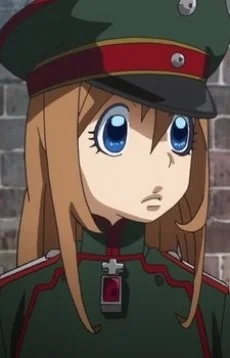
What Makes The Saga of Tanya the Evil So Hard to Replace?
Before the recommendations, I need to name what we’re actually looking for. Because “dark isekai” is a genre tag that covers everything from Berserk-level suffering to teenage power fantasies where the hero kills a bandit once and calls it morally grey.
Tanya operates on a specific frequency. The protagonist is genuinely not a good person. Not in the “secretly kind-hearted antihero” way. Tanya views human life through cost-benefit analysis and treats military doctrine the way a finance bro treats quarterly earnings. The world isn’t a playground; it’s a geopolitical powder keg modeled on actual European history. And the central conflict isn’t “defeat the demon lord” but “outmaneuver a literal god who’s rigging the game against you.”
That combination of institutional realism and genuinely amoral protagonist is what makes the series land. The strategic depth seals it. The recommendations below each capture at least two of those three elements. None capture all three, because Carlo Zen is doing something nobody else quite replicates.
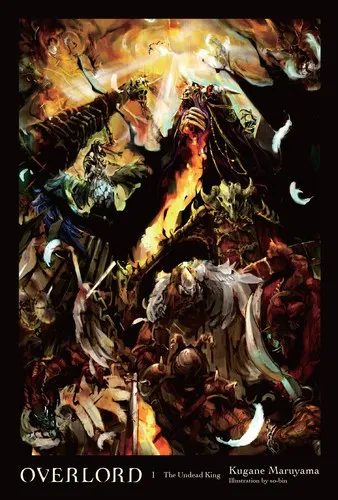
Why Should You Read Overlord After Tanya?
Overlord is the closest tonal sibling. Ainz Ooal Gown is an undead overlord trapped in a game-world-turned-real, surrounded by NPCs who worship him as a supreme being. He’s not evil by intention. He’s evil by momentum. His subordinates expect conquest, so he conquers. His enemies expect mercy, so he… doesn’t provide any. Volume 7 is where Kugane Maruyama stops pretending Ainz is the good guy, and the series gets significantly better for it.
The parallel to Tanya is structural. Both protagonists are isekai’d into positions of power and respond with cold pragmatism instead of heroism. Both series care deeply about the political and military systems around the protagonist. Tanya has the Empire’s war machine; Overlord has the Great Tomb of Nazarick as a functioning nation-state with departments, hierarchies, and internal politics. If you read Tanya for the institutional machinery grinding forward regardless of individual morality, Overlord delivers the same thing from the villain’s throne room.
The honest gap: Overlord’s prose is messier. Maruyama goes on tangents. Side character POV chapters can run 80+ pages before Ainz shows up. Volume 12-13 (the Holy Kingdom arc) tests your patience. But when it hits, particularly volumes 7, 9, and 14, it hits harder than almost anything else in the genre. 16 volumes in English via Yen Press, with the series wrapping up.
Pick up Overlord Vol. 1 on Amazon
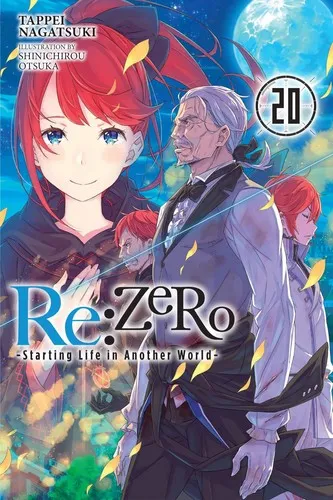
Does Re:Zero Deliver the Same Kind of Suffering?
Different kind. Tanya suffers because a petty god keeps engineering scenarios designed to break her rationalism. Subaru suffers because he dies. Repeatedly. And remembers all of it. Re:Zero‘s Return by Death mechanic is about a guy who can’t escape the consequences of his failures because the universe forces him to relive them until he gets it right.
Where these two series connect: both refuse to let their protagonist off the hook. Tanya can’t just “be smart enough” to avoid war because Being X keeps rewriting the rules. Subaru can’t just “try harder” because each death reveals new information that makes the previous attempt feel naive. Both are isekai stories where the fantasy world actively punishes the protagonist for existing in it.
Start with Arc 3 (volumes 4-9) if you want the real hook. Arc 1-2 is setup. Good setup, but the series transforms when Subaru breaks down at the royal selection in volume 4 and the story stops letting him be the hero. From there through Arc 4 (volumes 10-15), Tappei Nagatsuki writes some of the best character destruction and reconstruction in any light novel I’ve read. The Sanctuary arc in volumes 10-15 is where Re:Zero earns the comparison to Tanya’s best moments. 35+ volumes via Yen Press, ongoing.
Pick up Re:Zero Vol. 1 on Amazon
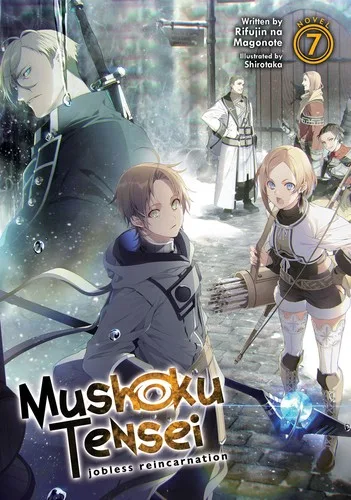
Is Mushoku Tensei Really Similar to Tanya?
On the surface, no. Mushoku Tensei is warmer, more personal, and far more interested in its protagonist’s emotional growth than Tanya ever is. Rudeus Greyrat starts as a genuinely reprehensible human being (a shut-in who wasted his previous life) and the series spends 26 volumes forcing him to become someone worth caring about. Tanya never even tries to become likeable. She’s efficient.
But the worldbuilding is where these two series shake hands. Rifujin na Magonote builds a world with functioning economies, political borders that matter, magical systems with actual rules, and consequences that cascade across volumes. The Displacement Incident in volume 6 reshapes the entire geopolitical map and affects everything that follows. That’s Tanya energy. Both authors understand that a fantasy world needs to function like a real place for the stakes to land.
Fair warning: Mushoku Tensei has content in early volumes that makes people bounce off hard. Rudeus’s behavior is the point of the character arc, not an endorsement, but the series doesn’t condemn it as aggressively as some readers need. If you can push through to volume 7 (the Turning Point), the payoff is massive. 26 volumes, complete, via Seven Seas. This is my favorite light novel series, and I’ll go to bat for it every time.
Pick up Mushoku Tensei Vol. 1 on Amazon
What Makes Grimgar Feel Like Tanya’s Gritty Cousin?
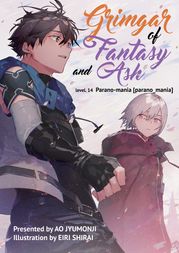
Grimgar strips away everything comfortable about isekai and leaves you with teenagers who can barely kill a goblin without getting hurt. No cheat skills. No game menus. No comfort. When a party member dies in volume 1, they stay dead, and the grief sits with the surviving characters for the rest of the series. Ao Jyumonji writes loss like it actually costs something.
The Tanya connection is the refusal to romanticize combat. Both series treat violence as ugly, exhausting, and consequential. Where Tanya shows this through institutional scale (war as bureaucratic machinery), Grimgar shows it at the individual level. Every fight is desperate. Every victory is barely scraped together. The tactical thinking isn’t grand strategy but small-unit survival: “How do we kill this one enemy without losing another friend?”
Volumes 1-3 are the strongest stretch. The series shifts setting around volume 5 and again around volume 14, which can feel jarring. But those first three volumes? Pure distilled “isekai with actual stakes.” If you read Tanya and thought “I wish the soldiers on the ground got more page time,” Grimgar answers that. 19 volumes via Seven Seas, ongoing.
Pick up Grimgar of Fantasy and Ash Vol. 1 on Amazon
Can The Apothecary Diaries Satisfy Tanya Fans?
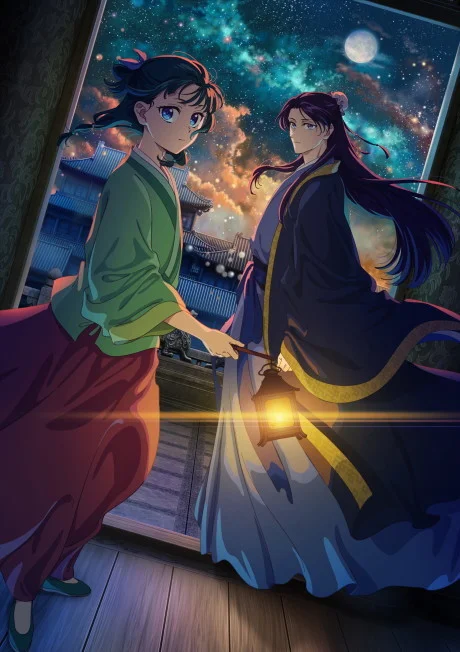
This one sounds like a stretch until you think about it. Maomao isn’t a soldier. She’s a pharmacist kidnapped into imperial palace service. But she operates with the same cold, analytical intelligence that makes Tanya compelling. She solves mysteries by treating the imperial court like a system to be decoded, not a social world to navigate. Poison, politics, and pattern recognition. She doesn’t care about court intrigue for its own sake; she cares because somebody used the wrong mineral compound and a concubine is dying.
The thread connecting this to Tanya: protagonists who are fundamentally problem-solvers trapped in political systems they didn’t choose. Tanya manipulates military bureaucracy. Maomao manipulates court politics. Both view human drama through a lens of “what’s the efficient solution” rather than “how do I feel about this.” The Apothecary Diaries is lighter in tone. Nobody’s getting shelled. But the intellectual satisfaction of watching a smart protagonist dismantle complex problems is identical.
Start with volume 1. Unlike some series that need an “it gets good at volume X” disclaimer, Apothecary hooks you from the first case. The anime adaptation is gorgeous but covers only volumes 1-4 (with Season 2 through volume 7). The light novel goes further into the political conspiracy that drives the later arcs, and that’s where Tanya fans will find the most to chew on. 14 volumes in English via J-Novel Club.
Pick up The Apothecary Diaries Vol. 1 on Amazon
Why Do Bookworm Fans and Tanya Fans Overlap So Much?
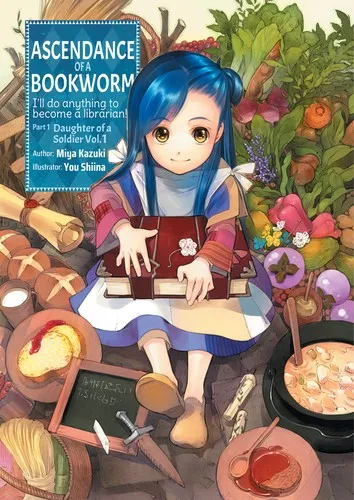
I see this crossover in every recommendation thread and it makes perfect sense. Ascendance of a Bookworm is a reincarnation story where a Japanese librarian is reborn into a medieval fantasy world as a sickly peasant girl. She wants books. This world doesn’t have printing presses. So she invents them. And paper. And ink. And accidentally disrupts the entire socioeconomic order of a feudal society.
Myne and Tanya share DNA. Both are reincarnated adults in child bodies. Both use knowledge from their previous lives to gain outsized influence. Both navigate rigid hierarchical systems through intelligence rather than force. The difference is scope and stakes. Tanya is fighting a war. Myne is fighting a class structure. But the satisfaction of watching a protagonist systematically dismantle obstacles through planning and leverage is the same in both series.
The series is massive. 33 volumes via J-Novel Club, divided into five parts. Part 1 (volumes 1-3) is the slowest, focused on Myne’s immediate survival. Part 2 (volumes 4-7) is where the political maneuvering starts. By Part 3, you’re deep in noble faction warfare and institutional power plays that would feel right at home in Tanya’s Empire. If you bounce off Part 1, I’d ask you to give it through volume 4. The transformation is worth it.
Pick up Ascendance of a Bookworm Vol. 1 on Amazon
How Does Reincarnated as a Sword Compare to Tanya’s Reincarnation?
Here’s the wildcard. A middle-aged guy dies, gets reincarnated as a sentient sword, and is picked up by Fran, a twelve-year-old cat-eared slave girl from an oppressed beastkin tribe. On paper this sounds like pure wish fulfillment. In practice, Yuu Tanaka does something clever with it: the sword (Teacher) is overpowered, but Fran isn’t. The series lives in the gap between having an overwhelming weapon and being a child who doesn’t know how to use it yet.
The Tanya link is the reincarnation angle turned sideways. Tanya is reincarnated as someone powerless (a child, a girl, in a war zone) and compensates with ruthless intelligence. Teacher is reincarnated as something powerful (a magical weapon) but lacks autonomy. Both stories explore what it means to have your agency stripped away by the reincarnation itself. The power dynamic between Teacher and Fran in volumes 1-4 has a mentor quality that Tanya’s relationship with her subordinates (particularly Viktoriya in volumes 2-3) echoes.
This is the lightest recommendation on the list. If Tanya is a military thriller, Reincarnated as a Sword is an action-adventure with heart. But it asks interesting questions about the reincarnation premise that most isekai ignores entirely: what do you owe the person who found you? What does it mean to protect someone when you can’t move on your own? 16 volumes via Seven Seas, ongoing. The anime covers roughly volumes 1-3.
Pick up Reincarnated as a Sword Vol. 1 on Amazon

Frequently Asked Questions
What light novel is most similar to The Saga of Tanya the Evil?
Overlord is the closest match. Both feature morally grey isekai protagonists who operate within complex political and military systems using cold pragmatism. For military realism specifically, Grimgar captures the brutal, unglamorous side of combat. For the strategic protagonist angle, Ascendance of a Bookworm mirrors Tanya’s systematic approach to problem-solving.
Are there dark isekai light novels without harem elements?
Yes. Overlord, Re:Zero, Grimgar, and Ascendance of a Bookworm are all harem-free. Re:Zero has a love triangle but treats it as genuine character conflict, not wish fulfillment. Tanya itself has zero romance. These series prioritize world-building and character consequence over romantic subplots.
Should I read The Saga of Tanya the Evil light novel after watching the anime?
Yes, and you’d be missing a lot if you stopped at the anime. Season 1 covers only volumes 1-2, and the movie adapts volume 3. That leaves 11+ volumes of unadapted content. The light novel goes significantly deeper into military strategy and political maneuvering. Tanya’s inner monologue about Being X gets real philosophical depth that episodes can’t capture. Season 2 (Summer 2026) will adapt volume 4 onward, but the LN’s depth can’t be compressed into episodes.
What should I read if I like Tanya’s military strategy elements?
Overlord for large-scale conquest strategy. Grimgar for small-unit tactical survival. The Apothecary Diaries for applying analytical thinking to non-military problems (court politics and medicine). Ascendance of a Bookworm for economic and social system disruption through strategic planning.
How many volumes of Tanya the Evil are there in English?
14 volumes are available in English via Yen Press as of 2026, with the series still ongoing. Carlo Zen publishes irregularly, so gaps between volumes can be long. The Japanese release is also ongoing with no confirmed end date.