
This article contains affiliate links. If you buy through these links, we earn a small commission at no extra cost to you.
Four volumes. Each one named after a season. You read them 1 through 4. That’s it. If you came here expecting a complicated flowchart with side stories and spin-offs branching off in twelve directions, I have good news and bad news. Good news: the reading order is the simplest I’ve covered on this site. Bad news: you don’t get to skip ahead to the season that interests you most without losing something.
The structure here is what makes this series unusual among light novels. Most LN series tell one continuous story across dozens of volumes. Kana Akatsuki, the same person who wrote Violet Evergarden, built something different. Each volume is a self-contained arc about a different seasonal agent, but they share mythology, characters, and emotional threads that compound across the series. Reading Dance of Autumn hits different when you’ve already lived through Spring and Summer.
With the anime wrapping up and Season 2 announced, a lot of people are asking where to start with the source material. Here’s the complete breakdown.
TL;DR
- Read volumes 1 through 4 in order: Dance of Spring, Dance of Summer, Dance of Autumn, Dance of Winter.
- Each volume is a self-contained seasonal arc, but they share mythology and characters that build on each other.
- The anime adapted volume 1 (Dance of Spring) across 14 episodes with WIT Studio. Season 2 announced.
- A manga adapts Dance of Spring, plus there’s a spin-off called “One Hundred Songs and One Hundred Pages.”
- Published by Dengeki Bunko in Japan, licensed by Yen Press in English.
What Order Should You Read the Light Novels?
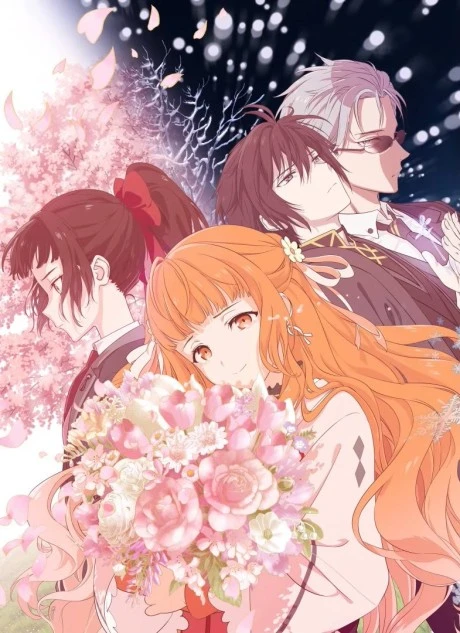
Volume 1 through 4. Sequential. No branching paths, no “.5” volumes, no side stories that need to be slotted between numbered entries.
| Volume | Title | JP Release | What It Covers |
|---|---|---|---|
| Vol 1 | Dance of Spring (Haru no Mai) | April 2021 | Hinagiku, the Agent of Spring, returns after a 10-year disappearance. Sakura, her devoted guard, has been searching for her since. Their reunion and the quest to restore spring to a world frozen in endless winter. |
| Vol 2 | Dance of Summer (Natsu no Mai) | July 2022 | Shifts focus to the Agent of Summer and their relationships. New characters, same world mythology. A different flavor of emotional storytelling. |
| Vol 3 | Dance of Autumn (Aki no Mai) | November 2023 | The autumn agent’s arc. Connections to earlier volumes surface in ways that reward readers who started from the beginning. |
| Vol 4 | Dance of Winter (Fuyu no Mai) | TBD | The winter arc. Given that Winter created Spring out of loneliness in the series mythology, this volume carries the weight of everything that came before. |
The publication pace is roughly one volume per year. Slow by LN standards, but each volume is a complete emotional arc, not a cliffhanger setup for the next installment. You won’t finish Dance of Spring and feel stranded the way Re:Zero leaves you hanging between arcs.
Can You Read the Volumes Out of Order?
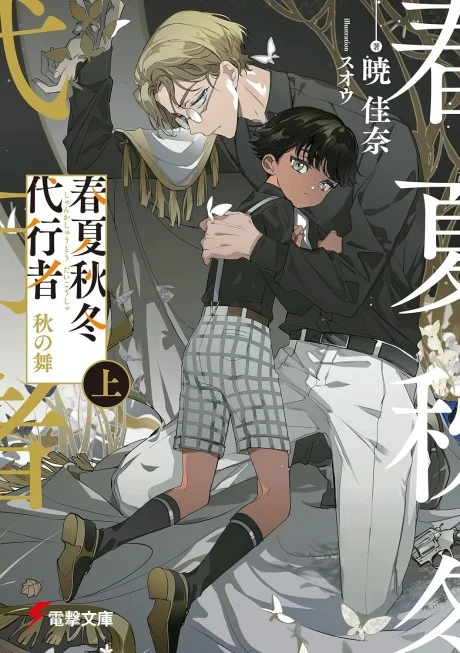
Technically? Each volume works as a standalone story with its own beginning, middle, and emotional resolution. You could pick up Dance of Autumn without reading Spring or Summer and still follow the plot.
But I wouldn’t. The series builds a cumulative effect that only works in sequence. The mythology around how Winter created Spring, why the seasons exist, what the Agents actually are — all of that unfolds gradually across volumes. Readers who’ve gone through all of them describe connections between seasonal stories that you’d miss entirely if you jumped around. It’s like watching a Nolan movie out of order. You can do it. You’ll understand less than you think.
The Spring/Winter relationship is the emotional spine of the entire series. Dance of Spring establishes it. Every subsequent volume adds layers to it. If you skip to Winter’s volume without that foundation, you’re reading the climax without the buildup.
Where Does the Anime Fit In?
The anime (Dance of Spring, WIT Studio, 14 episodes, March to June 2026) adapted volume 1. Faithfully. This isn’t one of those adaptations where the anime rewrites half the story, and you need a conversion chart to figure out where to pick up the novels.
Readers who’ve compared the two consistently say the adaptation stays close to the source. The anime conveys Hinagiku’s trauma and Sakura’s desperation through visuals and Kensuke Ushio’s soundtrack. The novel makes those things explicit through internal narration. Small details got trimmed for runtime, but the emotional beats land the same way.
If you watched the anime and want to continue with the novels:
You have two options. Start at volume 2 (Dance of Summer). You’ll follow a new cast in the same world and won’t be lost. Or start at volume 1 anyway. The novel gives you more context for Hinagiku’s unusual speech patterns — they’re intentional, reflecting her trauma — and Sakura’s quiet desperation during the decade-long search. The anime communicated those things, but the prose version sits with them longer.
I’d lean toward starting at volume 1 because it’s a single volume, and you’ll read it in an afternoon. Unlike Skeleton Knight or Shield Hero where the anime changes enough that starting from volume 1 is almost mandatory, here you genuinely can skip to volume 2 without missing critical plot information. The adaptation earned that trust.
Season 2 has been announced. It will likely adapt volume 2 (Dance of Summer), keeping the one-volume-per-season pattern.
What About the Manga and Spin-Off?
Two manga exist:
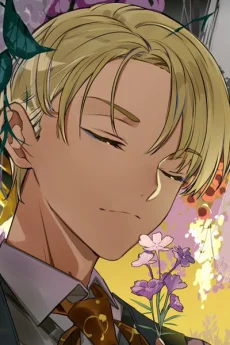
Dance of Spring manga — Adapts the same arc as volume 1 and the anime. Started July 2022. Some readers prefer it for one specific reason: Hinagiku’s dialogue. Her speech patterns in the light novel are intentionally difficult to parse (the character talks the way someone shaped by trauma would), and the manga’s visual format handles that better. If you struggled with Hinagiku’s dialogue in the novel, the manga offers a clearer version of those same conversations.
One Hundred Songs and One Hundred Pages — A spin-off that adapts short stories from the novels. Supplementary material. Not required for the main reading order, but worth picking up after you’ve finished the main volumes if you want more time in the world.
Neither manga changes the core reading order. Read the light novels first. The manga versions are companions, not replacements. They cover Dance of Spring only — if you want the Summer, Autumn, or Winter stories, the light novels are your only option.
Why Does This Series Feel Different From Other Light Novels?
Because it’s structured like an anthology with a shared mythology rather than a traditional serialized narrative. Most LN series I cover have the same shape: one protagonist, one continuous plot, volumes that end on hooks designed to make you buy the next one immediately.
Akatsuki did something else here. Each volume is its own complete story about a seasonal agent and the people closest to them. The world connects them. The mythology connects them. You get genuine closure at the end of each book instead of “to be continued” energy.
I think this is why the Violet Evergarden audience responded to it so strongly. VE had a similar quality — episodic emotional stories within a larger framework. Agents of the Four Seasons takes that same instinct and applies it to fantasy worldbuilding instead of letter-writing. Different flavor. Same precision in how the emotional payoffs are constructed.
The pacing divides people though. If you want action-heavy LN storytelling, this isn’t it. The series is slow, quiet, and deliberate. Beautiful plant imagery and character moments punctuated by occasional action sequences that, at least in the anime, didn’t always get the animation quality they deserved. The novels don’t have that problem — action on the page works fine. But know going in that this is a mood piece with a fantasy framework, not a fantasy series with occasional emotional beats.

Where Can You Buy Them?
Yen Press publishes the English edition. Available through the usual channels:
- Amazon Kindle / physical — full series
- BookWalker (digital, frequent Yen Press sales)
- Barnes & Noble (physical and Nook)
- Kobo (digital)
At four volumes, this is about as low-commitment as a series entry point gets. You can read the first volume in a single sitting to decide if Akatsuki’s writing clicks for you. If you liked Violet Evergarden — the emotional DNA is unmistakable. Different world, different characters, same gut-punch delivery.