
Mushoku Tensei: Light Novel vs Anime — What You’re Missing
| Light Novel | Anime | |
|---|---|---|
| Volumes/Episodes | 26 vols (complete) | 2 seasons ~23 eps + OVAs |
| POV | Multiple characters | Rudeus only |
| Story depth | Full, uncut | ~60–70% of content |
| Rudy’s inner monologue | Uncensored, detailed | Toned down significantly |
| Where to start | Vol 7+ if anime-only | S1 to get hooked |
| English publisher | Seven Seas Entertainment | Crunchyroll/Funimation |
TL;DR
- The light novel is the better version of the story. The anime adapts roughly volumes 1-6 of 26, covering about 25% of the complete series. The remaining 20 volumes are LN-only.
- What the anime cuts: ~30-40% of content from adapted volumes. Rudeus’s uncensored inner monologue, multiple POV chapters from other characters, and significant worldbuilding context are removed or toned down.
- What the anime adds: Exceptional fight choreography, a strong musical score, and visual storytelling that works better than prose in a few specific scenes (particularly the Orsted battle).
- Where to start reading: Volume 1 (recommended) for the full experience, or Volume 7 to pick up where Season 2 ends.
Kai here. I’ve spent more time than I care to admit in the Mushoku Tensei forums watching the same argument play out in cycles. An anime-only fan says the series is good. A light novel reader appears and says “you have no idea.” The anime fan gets defensive. Someone tells them to read the books. Nobody actually explains what they’re missing, because that would require writing three thousand words in a Reddit comment box. That’s what this article is.
Mushoku Tensei is one of the rare isekai series where the gap between source material and adaptation actually matters in a meaningful way — not just “oh the LN has more detail” in a vague hand-wavy sense, but structurally, emotionally, and in terms of what kind of story you think you’re reading. The anime covers roughly volumes 1 through 6 across two seasons and a handful of OVAs. That leaves twenty volumes of completed story that anime-only fans have never touched. But more than that, even within what the anime does cover, it makes deliberate choices about whose perspective you’re inhabiting, how much of Rudeus’s psychology you see, and what context gets stripped out to hit episode counts. Those choices add up.
My position: the light novel is the better version of the story in almost every respect, with one genuine exception I’ll get to later. If you watched the anime and felt something — the Orsted fight, the teleportation incident, Ruijerd’s quiet devastation — you owe it to yourself to go back and read what was actually on the page. What follows is as specific as I can make it without spoiling the back half of the series for people who want to experience it fresh.
The Short Answer
If you want the blunt version: the anime gives you the skeleton. The light novel gives you the muscle, the nerve endings, and the thing that makes it breathe. Studio Bind did an admirable job adapting an extremely difficult source material — a story whose power is almost entirely interior, driven by a first-person narrator whose psychology is the actual subject of the series. They pulled off things visually that the prose couldn’t do. But the translation from first-person interiority to third-person cinematic storytelling cuts roughly thirty to forty percent of what makes the early volumes work, and it changes the fundamental mode of the story from psychological character study to conventional isekai adventure with elevated production values.
For most people, the practical recommendation is: watch the anime first to decide if you care, then read from volume 1 if you do, or jump in at volume 7 if you just want to pick up where the anime leaves off. Either entry point is defensible. But you should go in knowing that volumes 7 through 26 contain the bulk of the story by page count, and none of it has been animated yet.
What the Anime Does Right
Before I get into the cuts, let me be clear about what Studio Bind actually accomplished, because it’s not nothing. Mushoku Tensei is a web novel that started publishing in 2012. The prose is functional and dense, not lyrical. Rifujin na Magonote was writing what became essentially a reference document for the modern isekai genre, not a prestige literary work. The web novel in particular has pacing that tests patience in places the final light novel tightens up. Adapting it into a TV anime that feels polished, emotionally coherent, and visually distinctive required real creative decisions, not just transcription.
The fight choreography across both seasons is genuinely excellent. The Ruijerd introduction, the Orsted fight at the end of season one, the battle sequences during the Demon Continent arc — Studio Bind was spending money in the right places. Rudeus using magic in ways that feel physically grounded and tactically interesting is something the prose describes but the animation shows, and showing works better there. The visual design of the Dead End nameplate, the way the Superd race reads on screen, Eris’s physicality as a character — these are cases where animation adds something the words on a page can’t replicate.
The score is doing a lot of heavy lifting too. The moments that hit hardest in the anime — and I’ll argue one of them hits harder than the equivalent LN scene — land partly because of music cues that the prose obviously doesn’t have access to. This is just the nature of the medium. If you’ve only read the books and never watched a single episode of Studio Bind’s adaptation, you’re also missing something. It’s a different kind of missing, but it’s real.
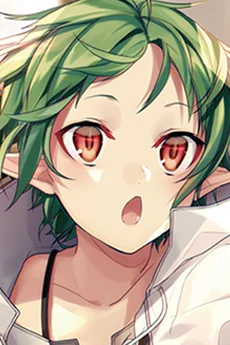
The compression of Sylphie’s arc from her childhood through to Ariel’s service works better on screen than you might expect from reading a summary of the cuts. The anime makes Sylphie’s loyalty to Ariel legible through visual shorthand in ways that would require several chapters of interiority in the novels. That’s adaptation working as intended — finding the cinematic equivalent of something the prose does in a slower, more interior mode.
The POV Problem — What Anime-Only Fans Are Missing

This is the structural difference that matters most, and it’s the one that’s hardest to appreciate until you’ve read the books. The anime is almost exclusively Rudeus’s perspective. You see what he sees, you’re present for what he’s present for, and when he’s not in the scene, the scene doesn’t exist for the viewer. The light novel is not built that way.
Rifujin na Magonote breaks from Rudeus’s first-person narration throughout the series to give you POV chapters from Sylphie, Eris, Paul, Zenith, and various side characters. This isn’t a minor stylistic flourish — it’s load-bearing. These chapters do things the main narration structurally cannot do, because Rudeus doesn’t know what other people are thinking, feeling, or doing when he’s not around. The anime has to either cut this information entirely, fold it into scenes where Rudeus is present, or convey it through visual acting without interior access. None of these substitutes are equivalent.
The most consequential of these POV chapters are the Sylphie sections in volumes 8 and 9, the Eris chapters scattered across volumes 2 and 6, and Paul’s perspective in volume 1. When you’re anime-only, Paul reads as a complicated but ultimately disappointing father figure — someone Rudeus has complicated feelings about, someone who failed his family. The LN’s Paul chapter gives you a man who is genuinely trying to negotiate between his guilt, his love for Rudeus, and his belief that sending the kid to work under Roxy is actually an act of care, not abandonment. The character doesn’t become simple or redeemed by this information. He becomes more real, which is harder and more useful.
The Sylphie chapters in volumes 8 and 9 are a case where the community has discussed them being released as OVAs, and that would be the right call, because they’re too substantial to summarize. What I’ll say is that watching Sylphie navigate the years after the teleportation incident entirely from Rudeus’s eventual, incomplete perspective — which is all the anime gives you — means you’re experiencing her reunion with him without the context that makes the emotional stakes of that reunion fully legible. You can feel the weight of it through the animation and the acting. You can feel more of the weight if you’ve spent time in her head.
The Eris POV material is worth calling out separately because it directly affects how you read one of the most controversial moments in the series. I’ll get to that in the section on moments that hit differently.
Volume-by-Volume: What Got Cut
Vol 1–3 — The Foundation
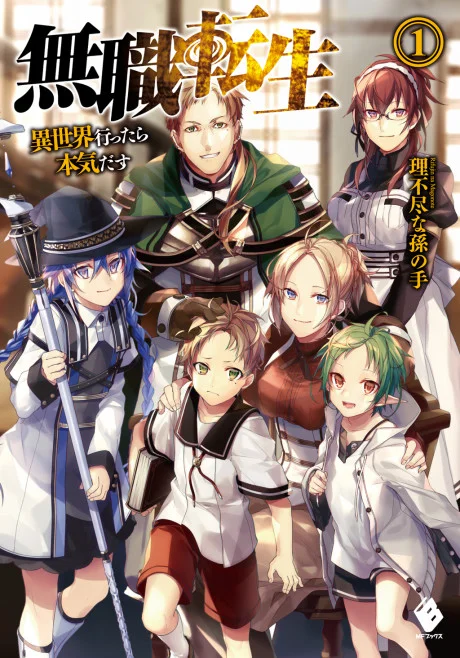
Volume 1 is where the cuts feel most consequential in retrospect, even though many first-time anime viewers don’t notice them in the moment. The most significant is Zenith’s interior perspective on Rudeus. The anime shows Zenith as a loving, slightly overwhelmed mother who clearly adores her prodigy son. The LN gives you her actual thoughts — her unease at how mature he seems, her inability to fully put her finger on what’s strange about him, the way she loves him while also feeling slightly unsettled by the child she’s raising. This doesn’t make her a villain or even particularly suspicious. It makes her a mother with a realistic psychological response to a genuinely unusual kid, and it foreshadows the kind of story Mushoku Tensei actually is: one where the people around Rudeus are perceiving something real about him that they can’t quite name.
The scene where Sylphie attacks Paul after he discovers her and Rudeus together is cut from the anime or heavily softened depending on which version you watched. In the LN, Sylphie swings at Paul. It’s a moment that tells you something about who she is underneath the gentle surface — she’s not purely passive, she has a protective instinct and a temper, and she’s willing to put herself between Rudeus and an authority figure when she’s frightened. The anime Sylphie is gentler and more of a pure comfort figure in the early volumes. The LN Sylphie has more edges.
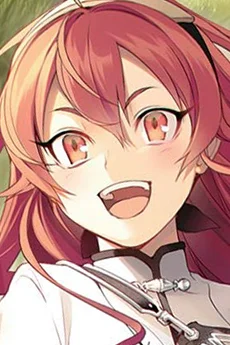
Volume 2’s Eris POV chapters are where I’d direct anime-only fans who want to understand why LN readers talk about her the way they do. The anime presents Eris as a character you come to appreciate over time — hot-tempered, gradually softened by her relationship with Rudeus, a tsundere archetype that the story eventually treats seriously. The LN’s Eris chapters reveal what she’s actually thinking during their time together on the Demon Continent. She’s not being softened passively. She’s actively processing Rudeus, developing feelings she doesn’t have the vocabulary to name, and carrying a specific kind of pride that makes her later decision both more comprehensible and more painful. You’re not reading a tsundere thawing. You’re reading a person forming an attachment she doesn’t know what to do with.
Also cut from volume 2: the shopping date with Eris in Millis, the Greyrat family dinner sequence, Ruijerd’s contact among the Millis Knights, and the scene where Rudeus meets his aunt at the port. These aren’t individually critical. Collectively, they establish that Dead End exists within a social world — that there are people who know Ruijerd, that the Greyrat name means something specific in specific places, that Rudeus is building a network even when it doesn’t feel like a plot-relevant activity. The anime moves faster and the story feels slightly thinner for it, even when you can’t point to a specific hole.
Volume 3’s additional Demon Continent quests include Sara’s backstory, which the anime either cuts or compresses to near-invisibility. Sara is a commoner who lost her family to the direct neglect of Notos Greyrat. She is, in other words, evidence of what the Greyrat family name means to people who aren’t Rudeus’s mother or father or childhood sweetheart. When Rudeus eventually has to reckon with the Greyrat name and what it represents, the LN has spent time building what that reckoning should feel like. The anime, working faster, has to trust that the name Greyrat carries weight without having done quite as much to establish why.
Vol 4–6 — The Demon Continent
Volume 6 has two cuts I want to flag specifically because they’re the kind of thing that sounds minor in summary and turns out not to be. The first is Rudeus’s extended project of trying to recreate Japanese food from memory. This isn’t a comedy subplot that got trimmed for time. It’s a window into how Rudeus actually thinks about his past life — with specificity and longing and the particular kind of nostalgia that comes from knowing you can never go back. He’s not just trying to cook. He’s doing what people do when they’re homesick for somewhere they can never return to: reconstructing fragments of it from whatever materials are at hand. The anime Rudeus carries his past life as backstory. The LN Rudeus carries it as an ongoing psychological presence.
The second cut from volume 6: the Death God, who turns out to be a cook at a dive restaurant serving what’s called “Nanahoshi Style” meat. This encounter is doing several things simultaneously — it’s establishing lore about Death God as a character, it’s introducing the Nanahoshi connection earlier than the anime does, and it’s doing the thing Mushoku Tensei does best in its quieter moments, which is revealing that the world is full of people with histories that don’t center on Rudeus. A legendary killer is now a cook. The most dangerous person Rudeus has ever been near is worried about whether the customer liked the food. This is the texture of a fully realized world, and it’s what gets lost when you’re trimming for episode count.
Volume 6 is also where Eris’s POV material around her departure is most significant, and since that scene deserves its own section, I’ll hold it there.
Vol 7–9 — Turning Points
Volumes 7 through 9 are the ones that haven’t been animated yet as of this writing, with season 3 announced but no confirmed episode count or scope. This means what I can tell you about them is limited by spoiler concerns — if you’re planning to read the LN from volume 7, you want to go in relatively fresh. What I can say without ruining anything: the Sylphie POV material in these volumes is among the best character work in the series. The community discussions around it being adapted as OVAs are wishful thinking in the best sense — people who’ve read it recognize that it needs time and space the main narrative flow can’t give it.
Volumes 8 and 9 also contain the context for the blue-haired girl who appears briefly in the episode featuring Badigadi’s introduction. If you watched that sequence and felt like you were missing a reference — you were. The LN has her established clearly before Badi enters the narrative. She’s not a mystery figure. She’s someone with a specific history and a specific relationship to the larger plot, and seeing her appear on screen without that context is a consequence of the anime’s compression of the Ranoa University of Magic (ROA) material.
The ROA content more broadly is one of the areas where the anime’s pace works against the story. This is where Rudeus is supposed to be rebuilding — not just his life after the incident with Eris, but his understanding of who he is and what he wants. The anime covers it. The LN lives in it. The difference between coverage and inhabitation is significant when the subject is a character whose interiority is the actual story.
One specific cut worth noting: Badigadi and Rudeus’s conversation about Toki, the Battle Aura that some fighters in this world can produce. Rudeus cannot use it. The conversation in the LN establishes exactly why this matters — not just as a power system fact, but as something that tells Rudeus something about his own limitations and the shape of his identity in this world. The anime keeps Badi as a fun, memorable character. The LN uses him more purposefully.
The Moments That Hit Differently in the Light Novel
There are three scenes I want to walk through specifically, because they’re cases where the difference between the LN and anime version isn’t just a matter of more detail — it’s a matter of the scene meaning something different depending on which version you experienced.
The Hitogami/Orsted scene. In the anime, when Orsted asks Rudeus about Hitogami, Rudeus’s reaction reads as confusion mixed with fear — he knows the name, he’s been told about this being in his dream sequences, but the scene plays as Rudeus being caught off guard by someone who knows things he doesn’t expect anyone to know. It works as a dramatic beat. It works less well as a character moment, because the anime hasn’t established what Rudeus has been doing with the information from his Hitogami encounters.
In the light novel, Rudeus has been actively, quietly searching for anyone in the world who has knowledge of Hitogami since his first encounter. This isn’t a major plot thread that the anime is suppressing — it’s an interior activity, something Rudeus is doing in his own head and in careful conversations. He asks questions. He pays attention to how people react to the name. He collects small pieces of evidence. When Orsted confirms that Hitogami is real, that this being is a known quantity to someone with Orsted’s knowledge and power, Rudeus’s emotional reaction is not confusion. It’s the release of something he’s been holding for a long time. He’s been searching in the dark. Someone just turned on a light. The anime gives you a dramatic fight scene. The LN gives you that fight scene plus the psychological weight that makes Rudeus’s reaction make sense.
The Roxy and Sylphie confrontation. The community is consistent on this one: the LN version is significantly better, and I agree. The anime handles the confrontation competently — it’s clearly staged, the character dynamics are readable, and you understand what’s at stake between these two women and their relationship to Rudeus. But the LN version has interior access to both characters at a level the anime can only gesture at through facial expression and voice acting. You know exactly what Roxy is feeling as she registers who Sylphie is and what Sylphie means to Rudeus’s present. You know what Sylphie is carrying into the scene. The confrontation isn’t just between two women — it’s between two versions of who Rudeus has been and what he owes to each of them, and that’s a more complicated thing than the anime had space to articulate.
Roxy’s arc in general is an area where the LN rewards patience. She’s a character whose significance to Rudeus is established early and then paid off slowly, across many volumes, in ways that require you to have tracked her interiority across her own POV material. The anime Roxy is a beloved character. The LN Roxy is a more fully rendered person, and the scenes she shares with Sylphie are where that rendering becomes most visible.
Ruijerd’s spear. The anime mentions that the Superd went mad and killed their own people. This is presented as history — tragic, important backstory that explains why Ruijerd carries guilt and why the Superd race is feared. What the anime does not tell you is the mechanism: Superd children are born with tails. Those tails fall off. They become the child’s spear. Ruijerd’s spear is his son’s tail. His son is dead.
When you know this and you watch Ruijerd with his spear in the anime, the entire performance changes. Every time he holds it, every time he uses it in combat, every time he’s protective of Rudeus or Eris in a way that echoes paternal instinct — he is literally holding what remains of his child. The anime gives you a tragic backstory. The LN gives you a physical object that every scene with Ruijerd turns into a sustained act of grief. These are different things.
Where the Anime Actually Wins
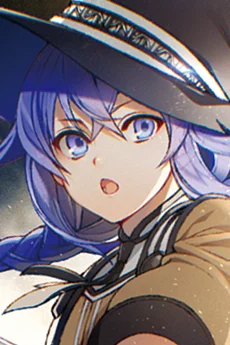
I said I’d be honest about the exception, so here it is. Eris’s departure — the end of volume 6, covered at the end of season 2 — is the one moment where I think the anime version is emotionally stronger than the LN, and I think it’s worth being specific about why rather than just noting the community consensus.
The LN version of Eris leaving is described by many readers as “detached and rushed.” That’s not quite the framing I’d use, but there’s something to it. The LN gives you Rudeus’s experience of waking up and finding her gone, his processing of what it means, his spiral into depression. What it doesn’t give you — because the LN is primarily Rudeus’s perspective — is Eris’s interior state as she makes the decision and walks away. Her POV material in earlier chapters tells you things about her feelings for Rudeus, but in the departure itself, the LN holds its camera on Rudeus’s devastation without fully grounding what Eris was trying to do by leaving the way she did.
The anime makes a creative choice here that goes beyond the source material: it connects Rudeus’s depression after Eris leaves to his past-life trauma, to the NEET who died never having left his room, and frames his collapse not just as heartbreak but as a recurrence of the psychological state that defined his previous existence. This isn’t in the LN. It’s an addition by Studio Bind. And it works. It makes the depression sequence feel like the consequence of a specific character with a specific history rather than a narrative device to show the audience that Rudeus is sad. For my money, it’s the best thing the anime adds that isn’t in the source material.
The animation in both seasons also does something worth acknowledging: it communicates Rudeus’s magic ability in ways that have no equivalent on the page. When Rudeus constructs a spell, you see it built. The physical grammar of how his magic works is visible in a way that prose can describe but can’t render. For a series where Rudeus’s magical talent is supposed to be one of the clearest expressions of how seriously he’s taken his second chance at life, watching it on screen has a specific impact that reading about it, however vividly, approximates but doesn’t replicate.
Studio Bind clearly loves this material. The production choices — the decision to animate Rudeus’s birth and early childhood with genuine tenderness rather than comedy, the willingness to sit with quiet moments, the care in the designs — reflect a team that’s not just executing an IP adaptation. That love is visible, and it should be acknowledged even when, as I’d argue, the adaptation doesn’t fully capture what makes the source special.
Should You Read the Light Novel?
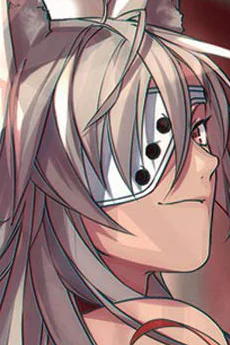
Yes, if you felt anything watching the anime. But let me be more specific than that, because “yes, read the source material” is something people say about everything, and it’s not always true that the source is actually better or that the additional investment is worth the additional time.
Mushoku Tensei is a series where the source material is better in a way that is specifically tied to what the story is actually about. This is not a plot-driven series in the way that, say, an action manga is plot-driven, where the beats of the story are its primary appeal and a good adaptation can hit all the beats. Mushoku Tensei is a character study of someone whose interior life is severely limited, who failed at being a person the first time around, and who is trying to rebuild a self in conditions he didn’t choose. The interior access the LN has — the unfiltered first-person narration, the POV chapters that give you other characters’ psychological states, the slow accumulation of Rudeus’s thoughts across hundreds of pages — is not supplementary material. It is the story. The anime tells you a story. The LN is the story.
If you finished both seasons and found yourself engaged but not particularly attached, if you liked the fights and the world-building but the character material didn’t grab you — the LN probably won’t change your mind. The LN is slower, more interior, and more demanding of the kind of patience that extended prose fiction requires. It’s asking you to spend time inside Rudeus’s head in a way the anime was deliberately not asking. If the anime’s version of that head didn’t interest you, more time inside it isn’t going to help.
If you finished both seasons and felt like something was just outside your reach — like the emotional logic of the series was present but not quite landing the way you sensed it should — then the LN is exactly what you’re looking for. The community consensus is that reading from volume 1 is valuable even if you’ve seen the anime, because the foundation chapters do substantive character work that the adaptation abbreviates. But if you’re impatient, starting from volume 7 is a perfectly viable entry point. You’ll occasionally feel like you’ve missed specific context — the Sylphie POV material, some of the Eris backstory — but the LN from volume 7 onward is coherent without it. You’ll just have more gaps than someone who started from the beginning.
One thing the community is near-universal on: skip the manga adaptation. It exists. It is not worth your time. The manga has neither the animation budget of the anime nor the interior depth of the LN. It is a third format that loses the advantages of both other versions without compensating for the losses. The anime and the LN, taken together, cover what you need to cover.
Seven Seas Entertainment publishes the English LN. The print editions are well-produced. The ebook versions are available on all the usual platforms. At 26 volumes completed, you have the full story in front of you — which is not a guarantee you can make about a lot of ongoing isekai series. Mushoku Tensei is done. You can read it knowing where it ends. That’s rarer than it should be in this genre.
More on this series: light novels like Mushoku Tensei
FAQ
Is the Mushoku Tensei light novel better than the anime?
For most readers, yes — the light novel is the stronger version of the story. It includes multiple POV chapters from characters like Sylphie, Eris, and Paul that the anime cuts entirely, gives you unfiltered access to Rudeus’s interior psychology, and covers roughly 30–40% more content within the volumes the anime has adapted. The one genuine exception is the Eris departure scene at the end of volume 6, where Studio Bind’s addition connecting Rudeus’s depression to his past-life trauma hits harder than the source material’s version. The LN is slower and more demanding than the anime, but for readers who found the anime’s character work engaging, the light novel is where that work actually lives.
Where should I start the Mushoku Tensei light novel if I’ve already watched the anime?
Two reasonable options. Starting from volume 1 is worth it if you want the full foundation — the LN’s early volumes do meaningful character work with Zenith, Paul, Sylphie, and Eris that the anime abbreviates, and Ruijerd’s backstory in particular lands differently once you understand the detail about Superd children’s tails becoming their spears. If you’re impatient and just want to continue the story, volume 7 is where the anime’s coverage ends and you can pick up without having missed any animated content. You’ll feel some gaps in the Sylphie and Eris backstory, but the narrative is coherent from that entry point.
How many volumes does the Mushoku Tensei light novel have, and is it finished?
The Mushoku Tensei light novel is 26 volumes and is fully completed. Seven Seas Entertainment publishes the English edition in both print and ebook formats. The series began as a web novel in 2012, was revised and released as a light novel starting in 2014, and concluded with volume 26. This makes it one of the few major isekai series in English where you can read the complete story without waiting for ongoing releases. The anime, as of this writing, has covered approximately volumes 1 through 6 across two seasons and several OVAs, with season 3 announced but not yet aired.
What does the Mushoku Tensei anime leave out?
The most significant omissions are structural and psychological rather than just plot-level. The anime cuts all POV chapters from characters other than Rudeus — meaning Sylphie’s inner life across volumes 8–9, Eris’s interior state during their time together and at her departure, and Paul’s perspective on sending Rudeus away in volume 1 are all absent. Specific scenes cut include the Greyrat family dinner in Millis, Sara’s backstory connecting her parents’ deaths to Notos Greyrat neglect, the Death God’s identity as a restaurant cook serving “Nanahoshi Style” food, and Rudeus’s project of trying to recreate Japanese food from memory. The Hitogami/Orsted scene plays differently because the anime hasn’t shown Rudeus actively searching for Hitogami information since his first encounter. Ruijerd’s spear being his deceased son’s tail — the most emotionally significant piece of his backstory — is omitted entirely.
Should I read the Mushoku Tensei manga?
No. The manga adaptation exists, but it’s widely considered the weakest version of the three formats. It doesn’t have the animation budget and visual storytelling capability of the Studio Bind anime, and it doesn’t have the interior depth and POV access of the light novel. The manga strips out the psychological interiority that makes the LN work, then doesn’t compensate with the visual production quality that makes the anime work. If you’re going to invest time in the Mushoku Tensei story in a format beyond the anime, go directly to the Seven Seas light novel releases. Skip the manga.