

Mushoku Tensei is hard to follow. Not because isekai is scarce. There are hundreds of isekai light novels. The problem is that most of them borrowed the surface (reincarnation, overpowered MC, RPG skills, harem) without borrowing what actually makes Mushoku Tensei work: a protagonist who changes over time, consequences that stick. A story that was planned from beginning to end.
This article contains affiliate links. If you buy through these links, we earn a small commission at no extra cost to you.
TL;DR
- Most isekai borrowed the surface of Mushoku Tensei — reincarnation, OP MC, RPG skills — without borrowing what actually works: a protagonist who changes, consequences that stick, a story planned from beginning to end.
- These 7 picks each share at least one core strength. Character growth, worldbuilding, completed narratives, or emotional weight.
- Nothing comes close to the full package. But each scratches a specific part of what makes Mushoku Tensei special.
If you finished all 26 volumes and want something that scratches a similar itch, here are seven series worth reading. Not because they’re clones. Because they share specific qualities that make MT more than just another isekai power trip.
More about Mushoku Tensei
Re:Zero: Starting Life in Another World
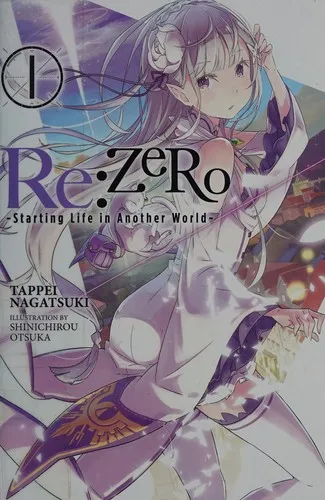
Author: Tappei Nagatsuki | Publisher: Yen Press | Volumes: 37+ (ongoing)
If Mushoku Tensei is about whether a broken person can grow through a second chance, Re:Zero asks what happens when the second chance keeps killing you. Subaru Natsuki dies repeatedly, resets to save points, and has to relive his worst moments to find the one path forward. The psychological damage accumulates. Subaru breaks down. The series lets him break down. That’s the connection to MT.
Both series use first-person interiority as their engine. Both refuse to let their protagonists off easy. The difference is scale: MT spans a lifetime, Re:Zero is still going at 37+ volumes with no end in sight. The Arc 4 payoff (Volumes 10-15) is on par with MT’s Labyrinth arc for emotional devastation.
Start from Volume 1. The anime is excellent but cuts Subaru’s internal monologue the same way the MT anime cuts Rudeus’s.
Read this if: you want another protagonist who earns growth through suffering, not power-ups.
Ascendance of a Bookworm
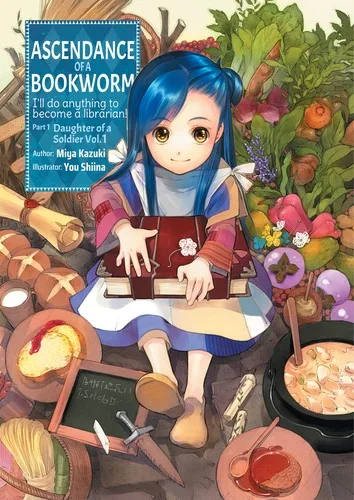
Author: Miya Kazuki | Publisher: J-Novel Club | Volumes: 33+ (ongoing)
Bookworm is the series I’d recommend if someone told me they loved MT’s worldbuilding but wanted a protagonist they could root for without reservations. Myne is reincarnated into a medieval world without magic and decides her life’s purpose is making books. The entire series is built around one woman’s obsession with the printed word, and it’s riveting.
What connects it to MT: the worldbuilding is dense, internally consistent, and actually matters to the plot. Economics, class hierarchy, guild politics, religious doctrine. Kazuki thought through all of it. The series runs 33+ volumes across five parts and the structural ambition is comparable to MT’s 26-volume arc. Myne’s growth is slower and subtler than Rudeus’s, but by Part 5 she’s a fundamentally different person than the woman who woke up in a child’s body.
J-Novel Club publishes this and the translations are consistently good. If you have a J-Novel Club subscription, it’s the best value series on the platform.
Read this if: you want MT’s worldbuilding depth with a protagonist who solves problems through knowledge instead of combat.
Grimgar of Fantasy and Ash
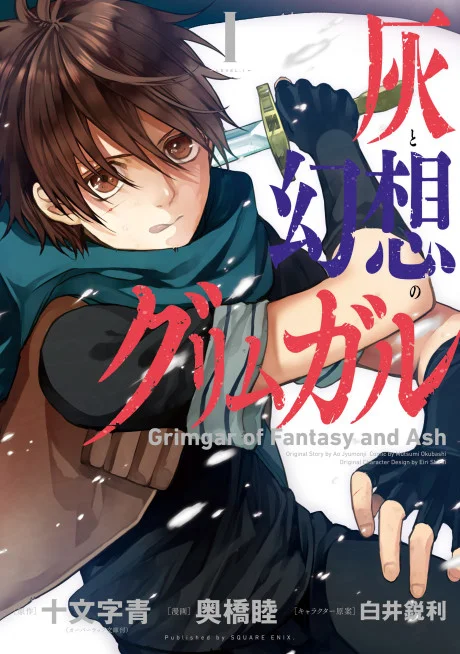
Author: Ao Jyumonji | Publisher: J-Novel Club | Volumes: 18+ (ongoing)
Grimgar is what happens when isekai takes itself seriously at the ground level. A group of people wake up in a fantasy world with no memories. No overpowered abilities. No tutorial NPCs explaining the system. They join the Volunteer Soldiers and fight goblins that can actually kill them. The first goblin fight takes an entire chapter because these people don’t know what they’re doing.
The connection to MT is tonal, not structural. Both series take the emotional lives of their characters seriously. Both use the isekai setup to explore something real about human vulnerability rather than as a framework for power fantasy. The difference is that Grimgar stays grounded. Nobody in this series becomes world-shatteringly powerful. The stakes stay personal.
Vol 1 is the best entry-point test. If the slow, deliberate pacing hooks you, the series rewards patience through 18 volumes. If you need the action to pick up fast, this isn’t your series.
Read this if: you want MT’s emotional honesty in a low-power, survival-focused setting.
The Faraway Paladin
Author: Kanata Yanagino | Publisher: J-Novel Club | Volumes: 12+ (ongoing)
Will is raised by three undead guardians in a ruined temple: a warrior skeleton, a mage ghost, and a priestess mummy. The first three volumes are essentially a coming-of-age story about a boy raised by people who love him but can’t stay with him forever. It’s the most emotionally grounded isekai setup I’ve read outside of MT itself.
The MT connection is direct. Will is reincarnated with past-life memories. He chooses to live his second life with purpose, which is what Rudeus spends 26 volumes working toward. The difference is that Will makes that choice early. He’s not a broken person learning to be better. He’s a good person from the start, which changes the dramatic engine entirely.
The series slows down after the temple arc (Volumes 4-5 onward shift to a more traditional adventure structure). The early volumes are the highlight. But those early volumes are strong enough to justify the read.
Read this if: you want MT’s reincarnation premise with a morally clean protagonist.
So I’m a Spider, So What?

Author: Okina Baba | Publisher: Yen Press | Volumes: 16 (complete)
Kumoko is reincarnated as a spider in the weakest dungeon. No human form. No cheat abilities. Just a spider in a cave trying not to get eaten. The first few volumes are a survival game told through the most entertaining internal monologue in isekai. Kumoko’s narration is fast, funny, self-deprecating, and propulsive in a way that carries you through what is essentially one character alone in a dungeon for hundreds of pages.
The connection to MT: both series use first-person narration as their primary tool and both pull off long-range plot payoffs that recontextualize early events. Spider does something structurally ambitious with parallel timelines (the human chapters and Kumoko’s chapters run on different timeframes) that pays off spectacularly around Volume 9. The series is complete at 16 volumes, which is a genuine advantage over Bookworm and Re:Zero.
Fair warning: the human chapters in the early volumes are widely considered the weakest part. Push through them. They exist for a reason that becomes clear later.
Read this if: you want MT’s structural ambition and first-person narration in a more comedic, faster-paced package.
The Saga of Tanya the Evil
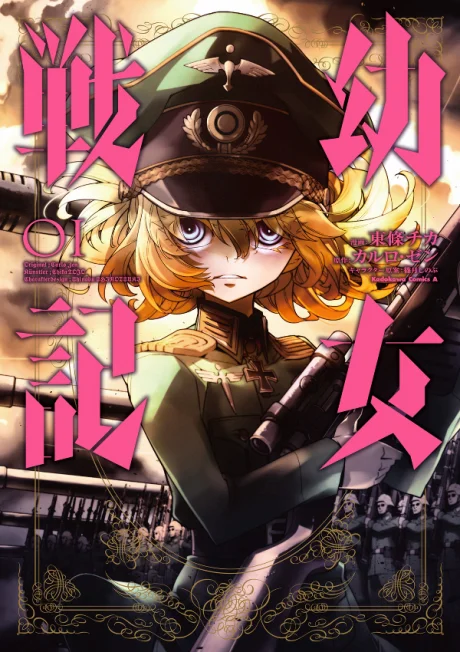
Author: Carlo Zen | Publisher: Yen Press | Volumes: 13+ (ongoing)
A ruthless Japanese salaryman is reincarnated as a young girl in a World War I-era fantasy setting by a god he refuses to believe in. Tanya von Degurechaff is a strategic genius operating within a military structure, trying to secure a comfortable rear-echelon posting while Being X (the god she antagonizes) keeps throwing her onto the front lines.
The MT connection: both protagonists carry adult minds in child bodies, both use strategic thinking as their primary tool, and both operate in worlds with real geopolitical consequences. The difference is that Tanya never changes. She’s the same person in Volume 13 that she was in Volume 1. The series is a character study of someone who refuses to grow, set against escalating conflicts that keep demanding growth from her. It’s a deliberate inversion of what MT does.
Carlo Zen’s writing is dense. Military strategy, political maneuvering, theological philosophy. If you liked MT’s worldbuilding, Tanya delivers similar depth from a completely different angle.
Read this if: you want MT’s “adult mind in child’s body” concept executed as dark military fiction.
The Rising of the Shield Hero
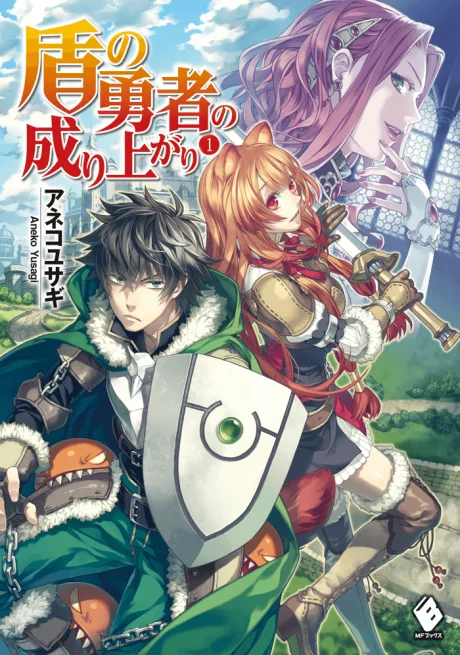
Author: Aneko Yusagi | Publisher: One Peace Books | Volumes: 22 (complete)
Naofumi is summoned as the Shield Hero, immediately framed and betrayed. He has to rebuild from nothing while the world treats him as a criminal. The early volumes run on justified rage and underdog momentum. Naofumi’s bitterness is specific and earned. The series at its best (Volumes 1-4) delivers an isekai protagonist whose anger is the story rather than a footnote to his power curve.
The MT connection: both series feature protagonists who start in genuinely bad positions and have to grow. Both take the emotional consequences of the premise seriously in the early arcs. The caveat: Shield Hero falls off after Volume 4. The character work that makes the early series compelling gets replaced by standard isekai power escalation. Naofumi’s edges soften. The rage that defined him becomes background noise.
Read it for the first four volumes. If you want the full 22, know that the quality curve goes downward.
Read this if: you want MT’s “protagonist rebuilding from nothing” premise with a sharper anger to it.
FAQ
What light novels are similar to Mushoku Tensei?
Re:Zero, Ascendance of a Bookworm, and Grimgar of Fantasy and Ash share MT’s focus on character growth and emotional depth. Faraway Paladin and Spider both use the reincarnation premise for structural ambition. Tanya the Evil inverts the “adult in a child’s body” concept. Shield Hero delivers similar underdog momentum in its early volumes.
Is there anything as good as Mushoku Tensei?
Re:Zero and Bookworm are the closest in ambition and execution. Both are ongoing. If you want a completed series, So I’m a Spider, So What? (16 volumes) or Shield Hero’s first four volumes are the best bets.
What should I read after Mushoku Tensei?
Start with the Redundant Reincarnation side stories if you haven’t already. Then Re:Zero if you want similar emotional weight, or Bookworm if you want similar worldbuilding depth.
Are there any completed isekai light novels like Mushoku Tensei?
So I’m a Spider, So What? (16 volumes) and The Rising of the Shield Hero (22 volumes) are both complete. Spider has the stronger structural ambition. Shield Hero has the stronger opening but weaker back half.