

This article contains affiliate links. If you buy through these links, we earn a small commission at no extra cost to you.
Haruhi Suzumiya has a reading order problem. Not a complicated one — but an outdated one. Most guides out there were written before Nagaru Tanigawa broke his nine-year silence in 2020. As of November 2024, the series has 13 volumes. A lot of guides still say 11 or 12. This one is current.
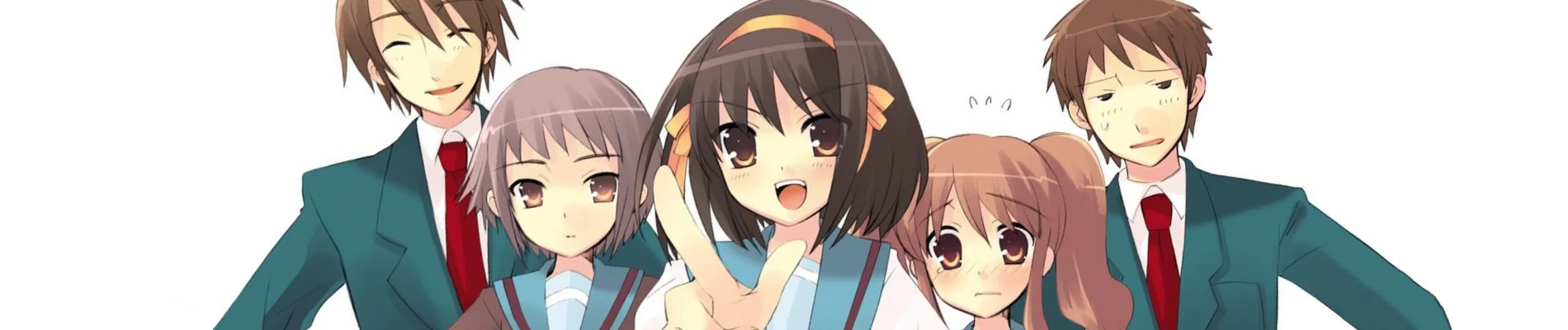
I’ll cover the full publication order, the anime question (always comes up), what has been left unadapted, and what to prioritize if you are coming in cold or picking this back up after the long hiatus years. Short version below.
TL;DR: Reading Order at a Glance
- Read all 13 volumes in publication order, starting with Vol. 1 (The Melancholy of Haruhi Suzumiya)
- Short story collections (Vols. 3, 5, 6, 8, 12, 13) are fully canon — don’t skip them
- Volumes 9 through 13 have no anime adaptation; the LN is the only way to finish the story
- Watch the S1 anime and the Disappearance film first if you haven’t
What Is the Complete Reading Order for The Melancholy of Haruhi Suzumiya?
Publication order. That is the community recommendation and the right one. Tanigawa wrote the series to be read in the sequence it was published. A chronological reading order exists in fandom wikis — Vol. 3 (The Boredom) takes place before Vol. 2 (The Sigh) in-universe — but the disruption is not worth the theoretical authenticity. Read it in the order it came out.
The full sequence, as of November 2024:
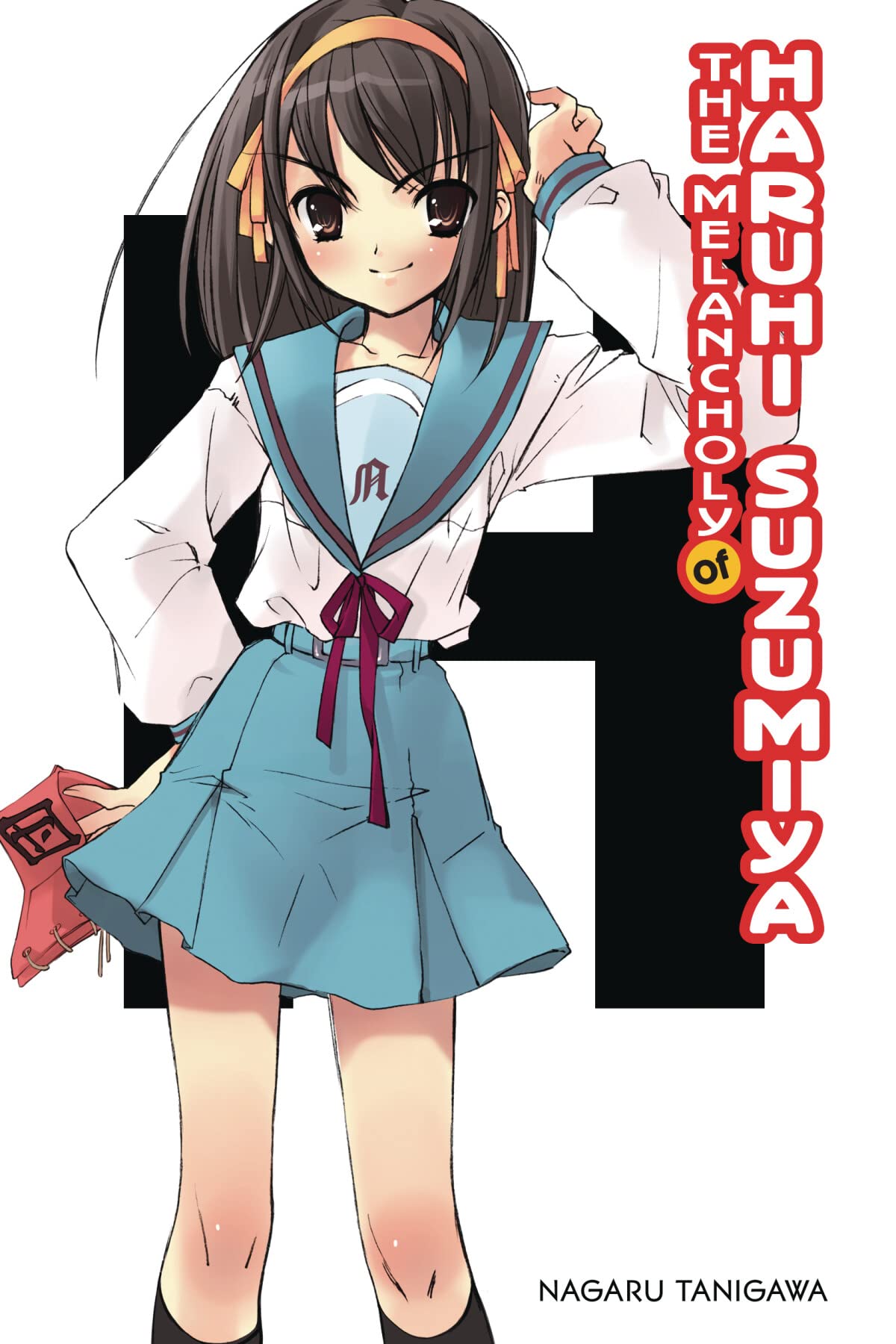
Vol. 1 — The Melancholy of Haruhi Suzumiya
The origin. Kyon starts at North High, meets Haruhi, and ends up founding the SOS Brigade more or less against his will. The S1 anime covers this arc in its chronological form, but the LN spends significantly more time inside Kyon’s head. His sardonic running commentary is sharper here than anywhere in the adaptation. Read this even if you have already seen S1. The prose version of Vol. 1 is a different experience.
Vol. 2 — The Sigh of Haruhi Suzumiya
Haruhi decides the SOS Brigade will make a movie for the school cultural festival. Kyon has to manage her increasingly unrealistic demands while Haruhi’s unconscious reality-warping starts creating actual problems on set. The anime adapts this in the back half of S1. The novel’s version of Kyon’s exasperation and Yuki’s quiet interventions is better in prose than on screen.
Vol. 3 — The Boredom of Haruhi Suzumiya (Short Story Collection)
The first short story collection. Stories include an inter-class baseball game where the SOS Brigade has very non-standard assistance, a locked-room mystery at a remote vacation house, and a handful of lighter episodes. Chronologically these precede Vol. 2, but they read fine after it. The baseball game is some of the funniest writing in the entire series. Do not skip it.
Vol. 4 — The Disappearance of Haruhi Suzumiya
The best novel in the series. Kyon wakes up on December 18th to find Haruhi gone from North High, Yuki transformed into a shy ordinary girl, and nobody who remembers the SOS Brigade. His reaction to this alternate reality — and specifically, the choice he makes about whether to restore it — is the emotional core of everything. The 2010 KyoAni film directed by Yasuhiro Takemoto is excellent. Read the novel too. Kyon’s full internal monologue during the library scene and the computer room breakdown is richer on the page than even Tomokazu Sugita’s superb delivery can fully convey.
Vol. 5 — The Rampage of Haruhi Suzumiya (Short Story Collection)
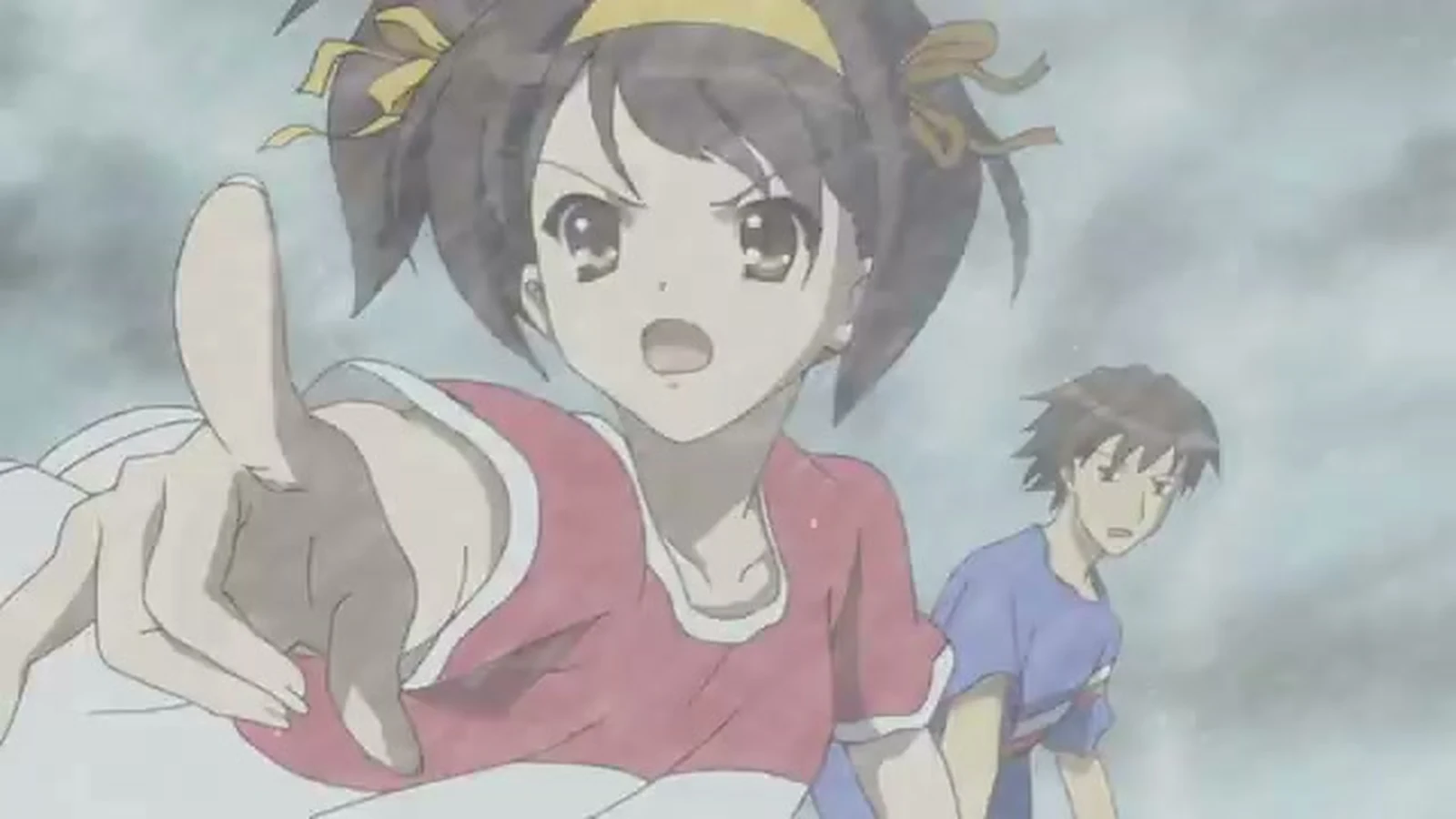
Contains the original “Endless Eight” story. One chapter. Cleanly resolved. The SOS Brigade gets stuck reliving the same two-week summer vacation loop — Yuki has been experiencing it for 15,532 iterations — and the resolution is clever and genuinely funny. The KyoAni anime stretched this single chapter into eight nearly-identical episodes in Season 2. That backlash belongs entirely to the adaptation. The source material is sharp. Read the chapter, appreciate how tight it is, move on.
Vol. 6 — The Wavering of Haruhi Suzumiya (Short Story Collection)
Short stories filling in the timeline gap between Vols. 4 and 7. Lighter in tone. The cultural festival story and the snow mountain mystery are the highlights. Not the most essential volume in the series, but short enough that skipping it costs more than it saves. You want every Kyon chapter you can get — that is always the argument.
Vol. 7 — The Intrigues of Haruhi Suzumiya
A Mikuru-focused novel. A future version of Mikuru Asahina contacts Kyon with a mission. A separate past version of Mikuru needs protecting at the same time. The time travel mechanics get layered. The S2 anime adaptation is confusing in ways the novel is not. If the Mikuru timeline subplot from the anime left you with lingering questions, Vol. 7 resolves them with more clarity.
Vol. 8 — The Indignation of Haruhi Suzumiya (Short Story Collection)
Two longer novellas rather than short vignettes. The first follows Kyon helping the literary club through a school competition under pressure from student council politics. The second digs further into those politics and the faction dynamics that set up the main arc coming in Vol. 9. More substantial than the earlier collections. Vol. 8 functions as a transition volume and is worth reading carefully.
Vol. 9 — The Dissociation of Haruhi Suzumiya
The series shifts tone here. A new character, Sasaki, arrives — she is an old acquaintance of Kyon’s from middle school — accompanied by her own faction of supernatural entities who want to transfer Haruhi’s reality-warping powers to her. The novel introduces an α/β timeline split: the same period of time told along two branching paths simultaneously. The tone is noticeably heavier than anything before it. Vol. 9 is the beginning of the unadapted territory.
Vols. 10–11 — The Surprise of Haruhi Suzumiya
Two novels, sold separately in Japan, combined into a single English volume by Yen Press. The α and β timelines from Vol. 9 converge. The Sasaki conflict reaches its resolution. Major questions that have been building since the supernatural factions were introduced in S1 get addressed. This is the natural end of the pre-hiatus arc and the conclusion of the main storyline as of 2011. Vol. 11 published in May 2011. Then nothing for nine years.
Vol. 12 — The Intuition of Haruhi Suzumiya (Short Story Collection)
Released November 25, 2020, simultaneously worldwide in ebook — an unprecedented same-day international release alongside Japan, China, Korea, and Taiwan. Nine years after Vol. 11. The comeback volume is deliberately lighter, closer to the early short story collections than to the parallel-timeline weight of Vols. 9 through 11. Kyon’s voice is intact. The writing has not deteriorated. Fans were relieved. Cautiously.
Vol. 13 — The Theater of Haruhi Suzumiya (Short Story Collection)
Released November 2024. Four years after Vol. 12. Another short story collection. No Vol. 14 announced. The series is ongoing and Tanigawa’s pace is what it is — after the nine-year hiatus, four years almost qualifies as prompt. Buy it. Read it. Having new Haruhi content at all remains something the community does not take for granted.
Should You Watch the Anime Before Reading the Light Novels?
Yes. The S1 anime (2006, directed by Tatsuya Ishihara at Kyoto Animation) is an exceptional LN adaptation and the recommended entry point. You can watch in the original broadcast order — the nonlinear sequence Ishihara chose deliberately, which starts with Haruhi’s amateur film and skips around before showing the origin story — or in chronological order if you prefer a cleaner intro. Both are legitimate. The broadcast order was intentionally disorienting. It works.
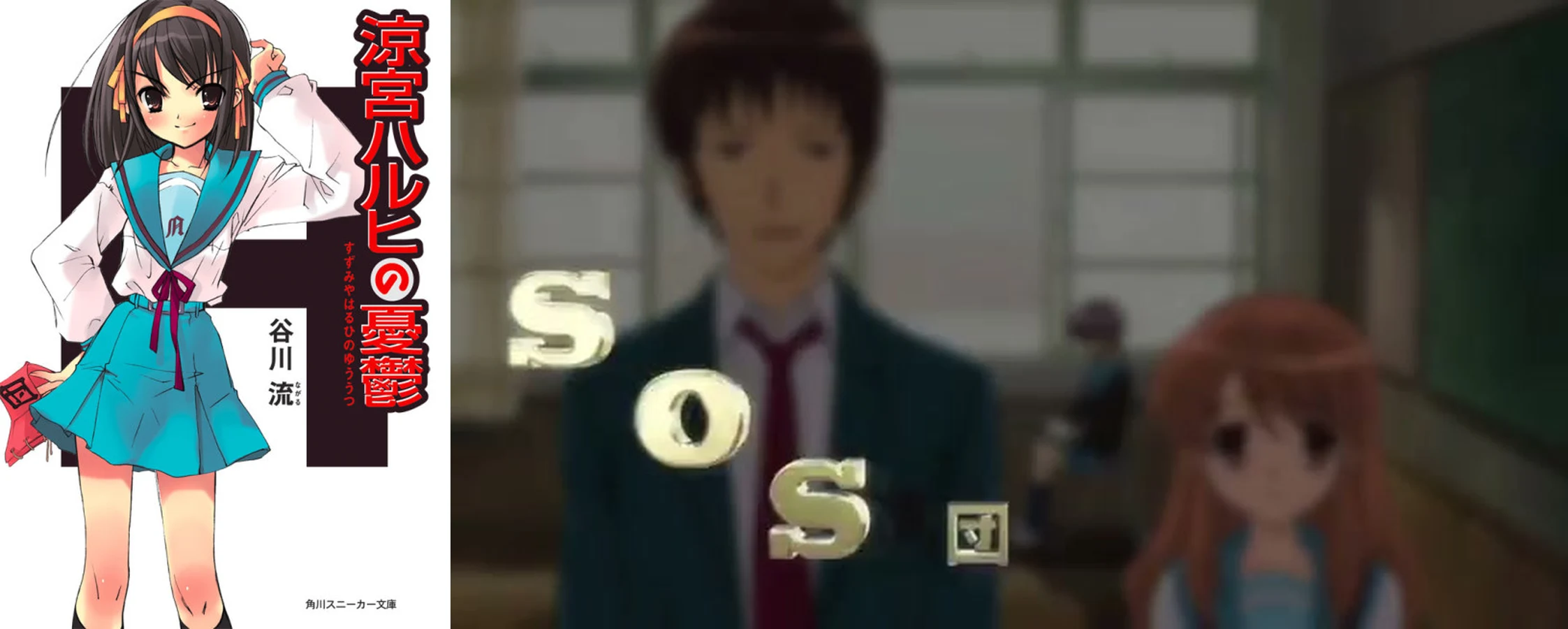
After S1, watch The Disappearance of Haruhi Suzumiya (2010). It runs 162 minutes and adapts Vol. 4. Director Yasuhiro Takemoto turned Kyon’s mental breakdown into a cinematic achievement that stands with the best anime films made. Then start the LN from Vol. 1.
You will not be bored re-reading Vols. 1 and 2 after watching the anime. The novels give you substantially more of Kyon’s interior voice. The S1 anime conveys the events and character dynamics faithfully. What it cannot convey is pages of sardonic internal commentary, self-aware humor, and philosophical tangents. The experience is additive, not redundant.
S2 (2009) is the complicated one. The Endless Eight controversy is real and its reputation took lasting damage. Watch it for completeness, or skip to the source material. The original chapter in Vol. 5 takes 30 minutes to read and is definitively better.
What Does Kyon’s Narration Add That the Anime Cannot Replicate?
Kyon narrates the entire series in first person, and his prose voice is the main reason to read the LN even after you have seen every adaptation. Sugita’s performance in the anime is excellent. But entire paragraphs of Kyon’s internal commentary exist only in the novels: pop culture references he immediately undercuts, philosophical tangents he abandons midway through, frank admissions of his own contradictions. His humor is drier on the page. His self-awareness is sharper.
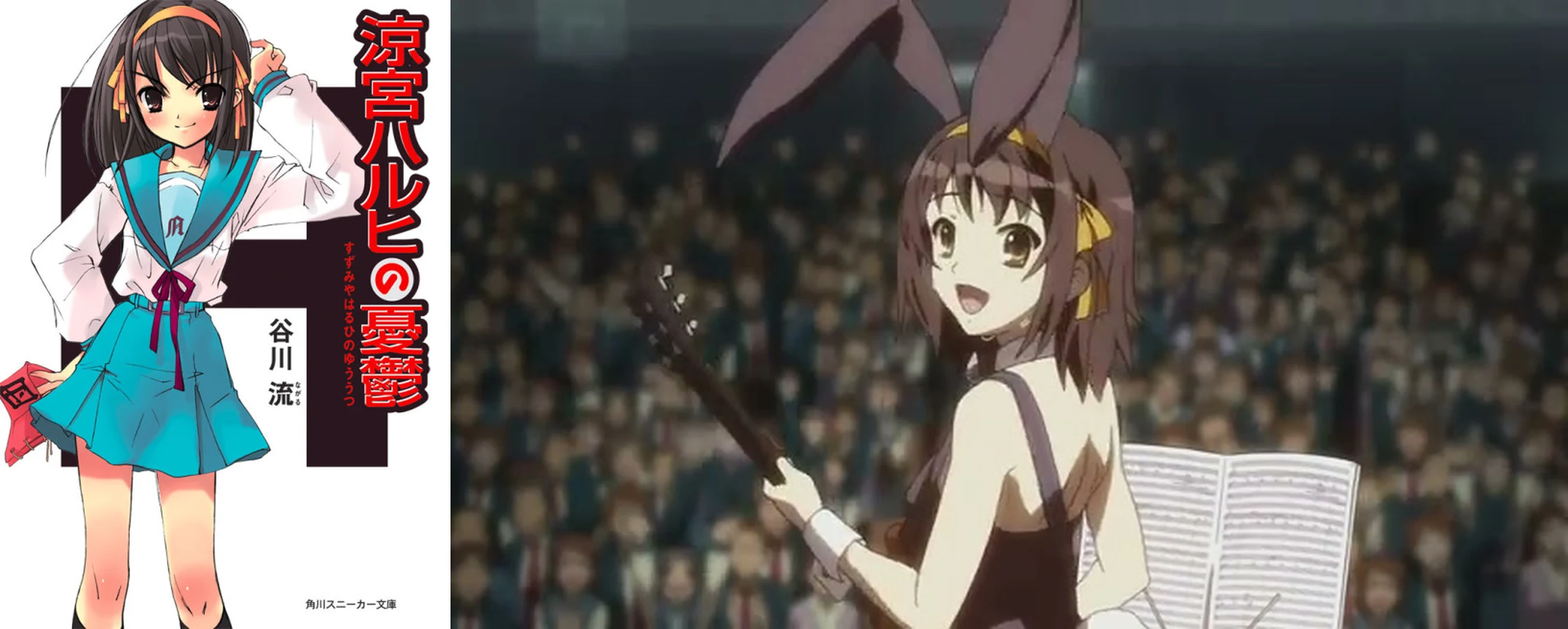
The clearest example is Vol. 4, during the library scene. Kyon has found Yuki’s message. He is sitting alone working through what he has to do next. The film conveys this through Sugita’s delivery and KyoAni’s animation. The novel gives you the full internal argument — both sides of it, at length, for several pages. Both are good. They deliver different things. Readers who come to the LN after the anime consistently report that the prose version of Kyon is richer and funnier than the screen version. This is the single best argument for reading the series.
Are the Short Story Collections Worth Reading, or Can You Skip Them?
Do not skip them. Vols. 3, 5, 6, 8, 12, and 13 are all short story collections, and all of them are canon. They flesh out the Brigade’s daily life, introduce context that matters in later volumes, and contain some of the series’ best individual writing. The Boredom baseball story. The original Endless Eight. The Indignation literary competition. None of it is padding.
The short stories were originally serialized in The Sneaker magazine, which is now defunct. The collected volumes are the only way to read them. At the pace Tanigawa publishes, you want every chapter you can get. Nothing in the short story collections is disposable.
Which Volumes Have Never Been Adapted by the Anime?
S2 partially covered through Vol. 8 — the Endless Eight, The Sigh, and portions of Vols. 7 and 8. But the major arcs in Vols. 9 through 11 — the α/β timeline split, the Sasaki conflict, Fujiwara and Kuyou Suou’s factions, the full resolution of what the supernatural entities have been working toward since S1 — have never been animated. No adaptation exists. The only way to get the complete story is the light novel.
Volumes 12 and 13 are also entirely unadapted. The anime ended in 2009 with S2 and no revival has been announced.
If you watched S1 and S2 and left feeling like threads were unresolved — the Sasaki subplot, the competing factions, the second future Mikuru who showed up briefly — those threads get resolved in Vols. 9 through 11. Five volumes of story never made it to screen. The LN is the only place it exists.
What Happened to the Series Between 2011 and 2020?
Vol. 11 published in May 2011. Then silence. Tanigawa went quiet for nine years with no statement. A short story appeared in a special one-time revival issue of The Sneaker in October 2018 — a brief signal the series was not dead — then nothing again. Vol. 12 was announced in August 2020 and released November 25, 2020 with a worldwide simultaneous ebook launch.
The hiatus damaged the series’ momentum. Readers waiting since 2011 moved on. New readers picking it up in 2016 or 2018 would finish Vol. 11 and hit a wall. The community learned not to expect anything on any predictable schedule.
Vol. 13 followed in November 2024 — four years after Vol. 12. Tanigawa’s release pace is not going to change. The series is ongoing, Vol. 14 has not been announced, and after everything the community has been through, four years between volumes registers as almost reasonable.
Where Can You Buy the Haruhi Suzumiya Light Novels in English?
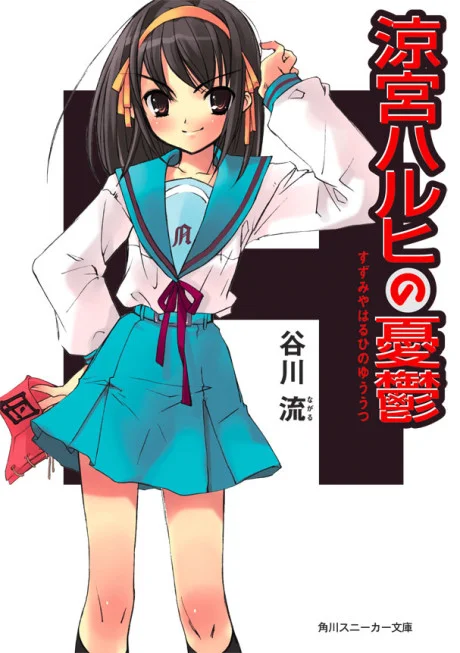
Yen Press (Yen On imprint) publishes all 13 volumes in English. Most entries are available in hardcover and paperback. One important note: Vols. 10 and 11 are sold as a single combined English volume titled The Surprise of Haruhi Suzumiya — you are not missing a volume if you only see 12 separate books. Find the full series on Amazon here.
Digital editions are available on Kindle and BookWalker. Vol. 12 had a true day-one international ebook release alongside Japan in November 2020. Vol. 13 matched that with a simultaneous November 2024 release. The audio rights have been licensed by Yen Press and the community is campaigning for Crispin Freeman (the EN Kyon VA) to narrate; he has publicly expressed interest.
Frequently Asked Questions
What order should I read the Haruhi Suzumiya light novels?
Publication order, Vol. 1 (The Melancholy of Haruhi Suzumiya) through Vol. 13 (The Theater of Haruhi Suzumiya). Do not rearrange by chronological order. The disruption to the reading experience is not worth the theoretical in-universe accuracy, and Tanigawa wrote with publication order in mind.
How many Haruhi Suzumiya light novels are there?
13 as of November 2024. Many older guides stop at 11 or 12 — they predate the post-hiatus releases. Vol. 12 (The Intuition of Haruhi Suzumiya) released in 2020 after a 9-year gap, and Vol. 13 (The Theater of Haruhi Suzumiya) released in 2024. The series is ongoing.
Should I watch the Haruhi Suzumiya anime before reading the light novels?
Yes. The S1 anime is the recommended entry point. Watch S1, then the Disappearance film (2010), then start the LN from Vol. 1. The novels reward returning viewers with a fuller version of Kyon’s narration and five volumes of story that were never adapted.
Which Haruhi Suzumiya volumes have no anime adaptation?
Volumes 9 through 13 are largely unadapted. The Dissociation and Surprise arcs (Vols. 9–11) and both post-hiatus volumes (12–13) have no anime counterpart. The α/β parallel timeline arc and the Sasaki faction conflict have never appeared on screen.
Is the Haruhi Suzumiya light novel series finished?
No. The series is ongoing with 13 volumes. Vol. 13 (The Theater of Haruhi Suzumiya) released November 2024. Author Nagaru Tanigawa has not announced Vol. 14. After the 9-year gap between Vols. 11 and 12, the community hopes for continuation but does not wait with any particular expectation of speed.