

This article contains affiliate links. If you buy through these links, we earn a small commission at no extra cost to you.
Most “LN vs anime” debates come down to taste. With Haruhi Suzumiya it comes down to math: the 2006 and 2009 anime adapt roughly the first eight volumes, the Disappearance film handles Vol. 4, and then the adaptation just stops. Vols. 9 through 13 — five novels, hundreds of pages, an entire late arc — have never been animated and probably never will be.
That changes the calculus of “should I watch or read.” This isn’t a case where the anime gives you the whole story in a tighter package and the novels are an optional deep-dive. Half the existing material only exists on the page, including the resolution to plot threads Season 2 deliberately set up and walked away from.
Below: what the S1 anime nails that the novels can’t touch, what Kyon’s narration does that voice acting can’t, why Endless Eight reads completely differently as a single chapter, and the actual order I’d recommend depending on whether you’ve already seen the show.
TL;DR
- The S1 2006 anime is exceptional — watch it first, with the original broadcast order
- Kyon’s interior monologue is richer in the LN; it’s the single best argument for reading after watching
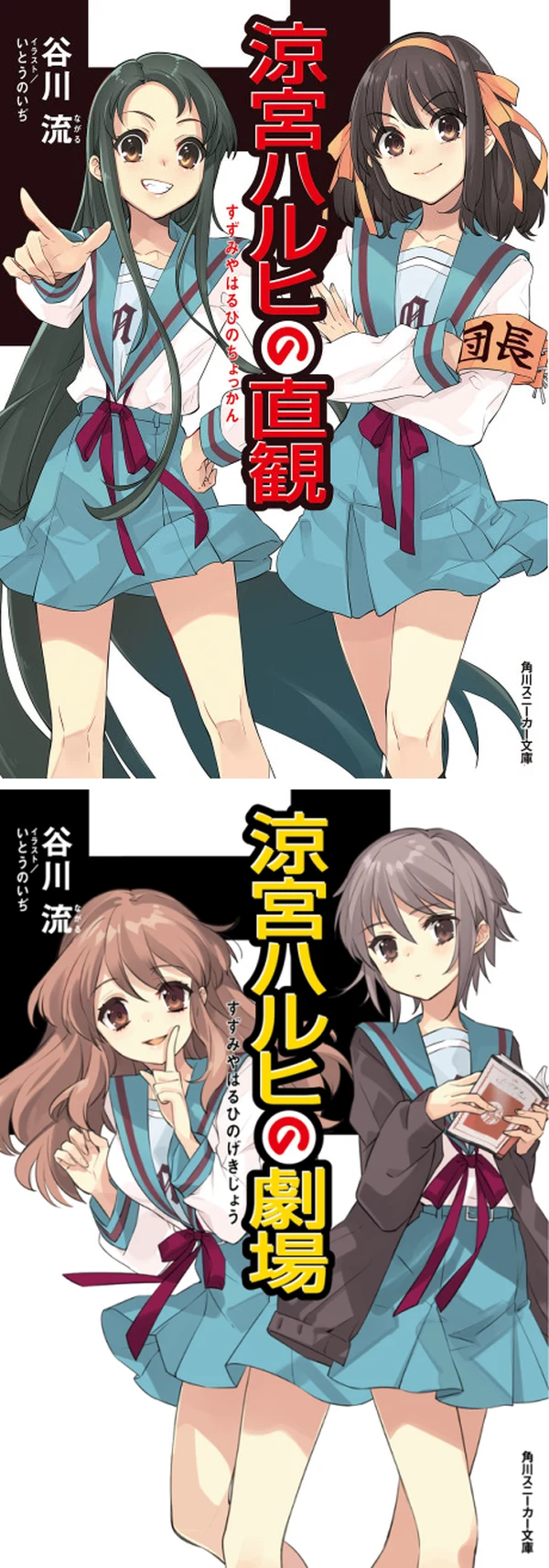
- Vols. 9–13 (The Dissociation, The Surprise, The Intuition, The Theater) have never been animated
- Endless Eight is one short chapter in Vol. 5; the controversial 8-episode anime version is the adaptation problem, not the source
- The 2010 Disappearance film adapts Vol. 4 and many fans consider it the definitive version of that story
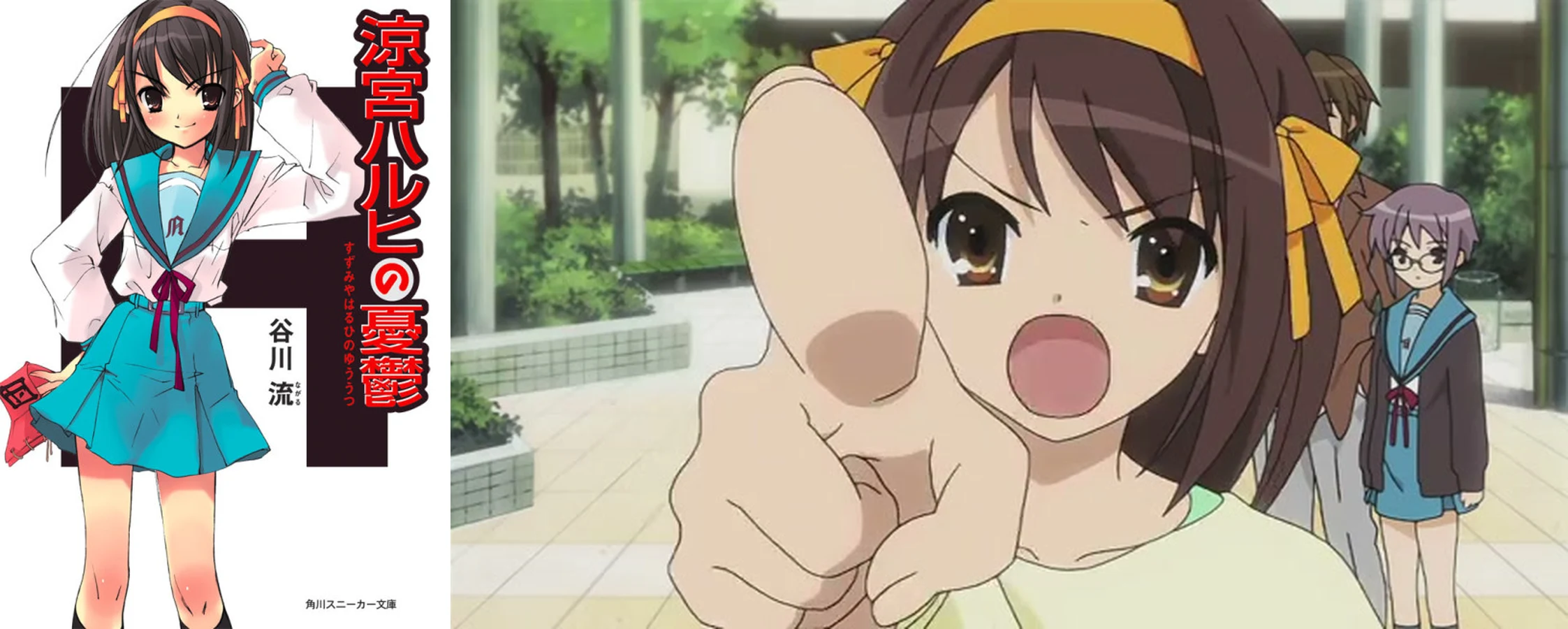
What Are the Biggest Differences Between the Haruhi Suzumiya Anime and Light Novel?
There are four things you need to know before anything else. First: the anime covers the content of Vols. 1 through roughly 8, in two seasons (2006, 2009) plus the Disappearance film (2010). Second: Vols. 9 through 13 have never been animated and as of 2026, there’s no announced adaptation. Third: the anime adapted the S1 content extremely well by any reasonable standard. Fourth: the LN has Kyon’s complete interior voice, and that’s the reason to read it.
The story follows Kyon, a high school student who gets recruited into the SOS Brigade by Haruhi Suzumiya, a girl who created the club to find aliens, time travelers, and espers. Three of the four other members actually are those things. Haruhi has unconscious reality-warping power and can never know. If she decides the universe is too boring, she’ll unmake it. Kyon narrates everything in first person, and that narration is the soul of the novels. You can find the complete 13-volume series on Amazon via Yen Press’s Yen On imprint.
For the full breakdown of whether the LN is worth reading on its own terms, see our Haruhi Suzumiya light novel review. This article is specifically about what the two formats do differently.
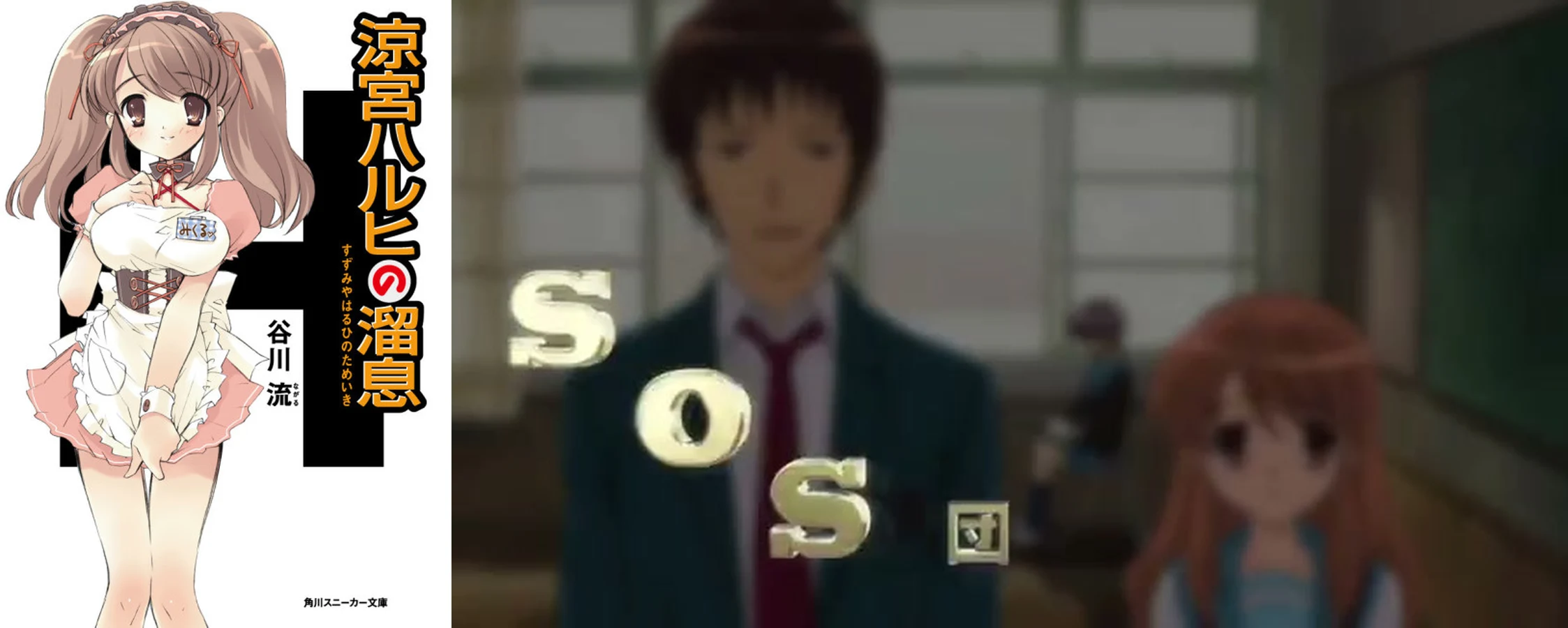
What Was the Broadcast Order Controversy and Does It Apply to the Light Novel?
The original 14-episode Season 1 broadcast in a deliberately nonlinear order chosen by director Tatsuya Ishihara. Episodes had two numbering systems: “Kyon numbers” for broadcast order, “Haruhi numbers” for chronological. The series started with Haruhi’s amateur film instead of the origin story, then jumped around in time before circling back. DVD releases used chronological order. The internet has argued about which order is better for two decades.
The novels are in publication order by default, but the short story collections are not strictly chronological with the main novels. The Boredom (Vol. 3) technically takes place before The Sigh (Vol. 2). Tanigawa wrote with publication order in mind, so that’s the right way to read them.
My take on broadcast vs. chronological: watch broadcast order first. The disorientation is intentional. Starting with Haruhi’s terrible student film and then rewinding to the first day of school has a different effect than a clean timeline. Chronological order is more accessible but irons out a deliberate creative choice. Neither is wrong, and the LN doesn’t replicate this either way. The episode-order chaos is an anime-exclusive experience.
Is Endless Eight as Bad in the Light Novel as It Is in the Anime?
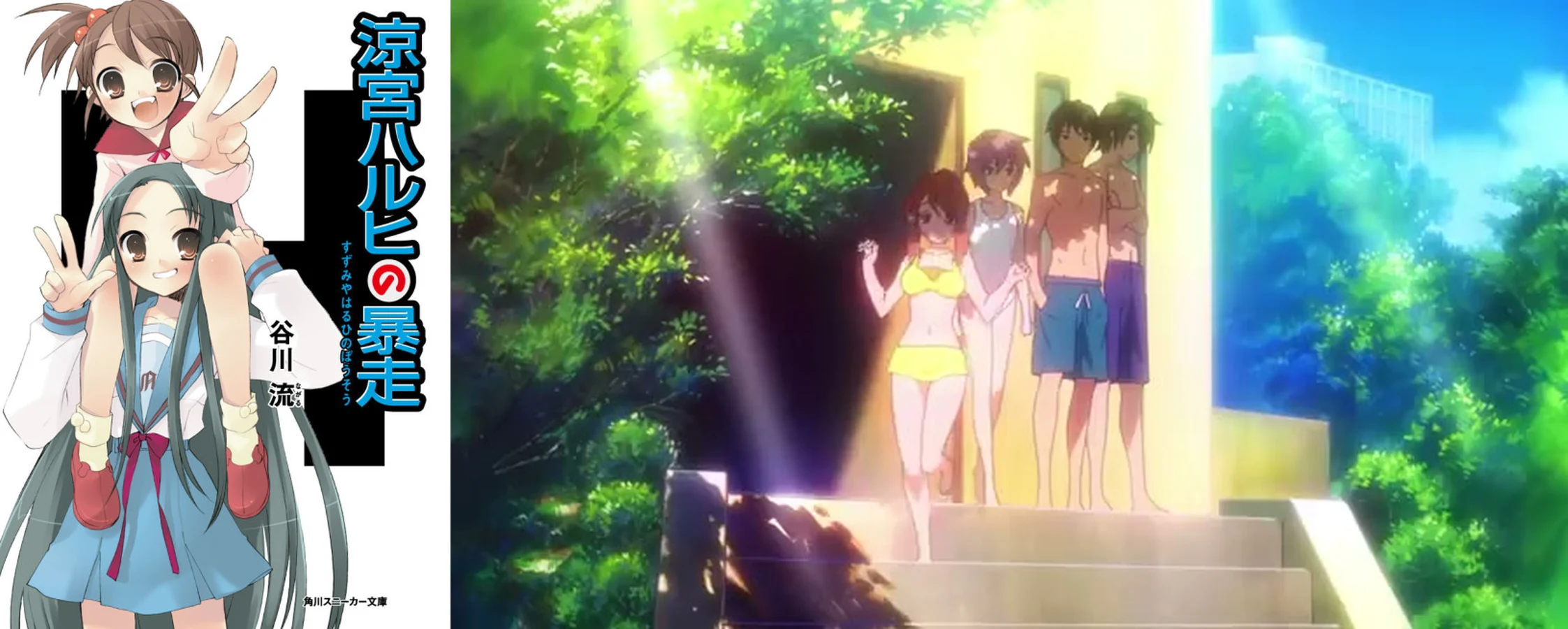
Not even close. The Endless Eight in the light novel is a single chapter in Vol. 5, The Rampage of Haruhi Suzumiya. It’s clever, well-paced, and resolved cleanly. Kyon figures out what’s happening, Yuki delivers her signature understated heroism, loop ends. Reading time: roughly 40 minutes. It isn’t even the most memorable story in that volume.
The anime adapted it into eight nearly-identical episodes across Season 2 in 2009. Each depicting a slightly different version of the same two-week summer vacation time loop, the one that repeats 15,532 times in-universe. KyoAni animated each iteration with different cuts and costumes but essentially the same script. The community reaction was spectacular in the wrong way.
The argument that the repetition forces you to feel the tedium has some merit. I partially buy it as a statement about medium and experience. The problem is it aired directly before the Disappearance arc, and a lot of people quit mid-season and never got there. That’s the real damage. The LN chapter isn’t controversial at all. Vol. 5 is a solid short story collection. The Endless Eight debate belongs entirely to the adaptation.
How Does the Disappearance Film Compare to Vol. 4 of the Light Novel?
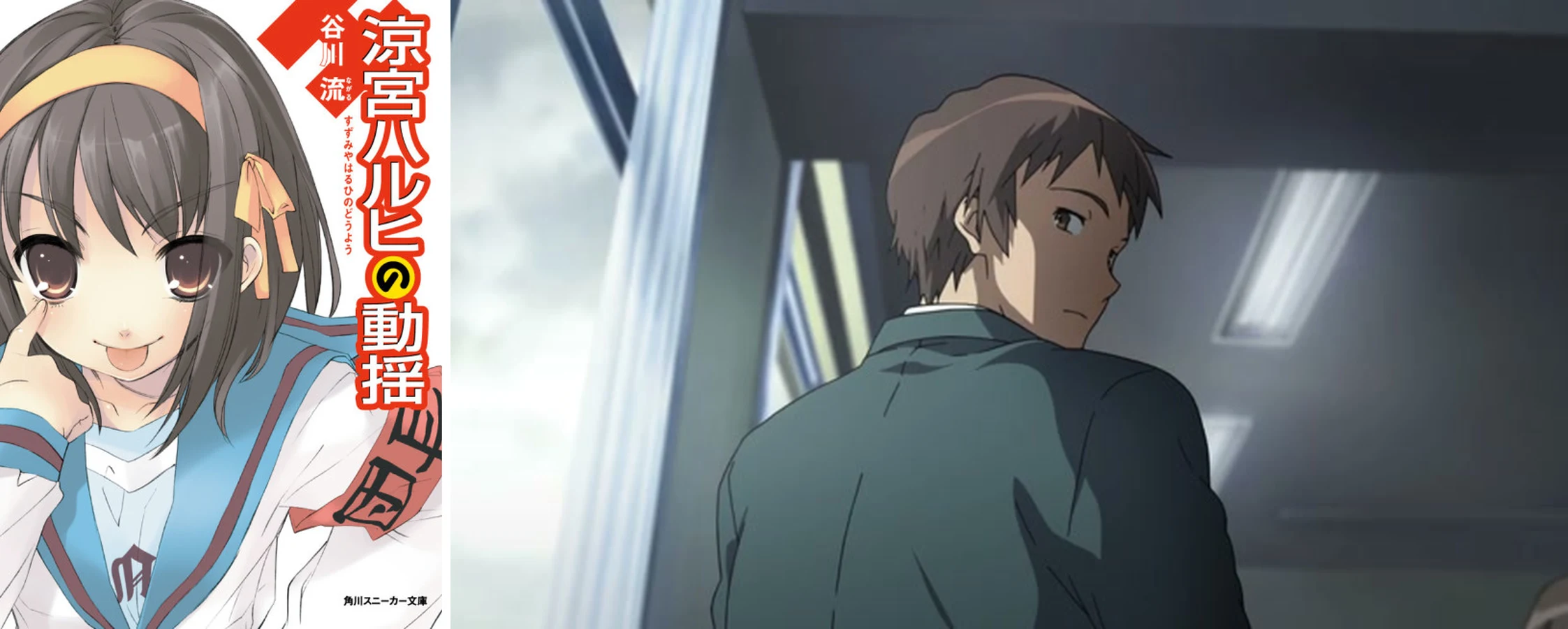
Vol. 4, The Disappearance of Haruhi Suzumiya, is the emotional peak of the early series. Haruhi disappears. The SOS Brigade is full of strangers who don’t remember her. Kyon has to decide whether he actually wants the insane, exhausting, world-bending life Haruhi represents. His answer is the emotional core of everything.
The 2010 film, directed by Yasuhiro Takemoto, runs 162 minutes. Takemoto translated Kyon’s internal breakdown into facial expressions and voice work in a way that stands alongside the source material and, for many fans, surpasses it. The film appears regularly on lists of the best anime films made. These aren’t exaggerations from a hyperbolic fandom. The direction is exceptional.
Takemoto died in the 2019 KyoAni arson attack. The film has a different weight knowing that.
My read: Vol. 4 is essential context and Kyon’s full interior monologue during the hospital rooftop sequence hits harder on paper. But the film is the definitive version of this story for most people. If you’ve already read the book, watch the film. If you’ve only watched the film, the book adds what got compressed out.
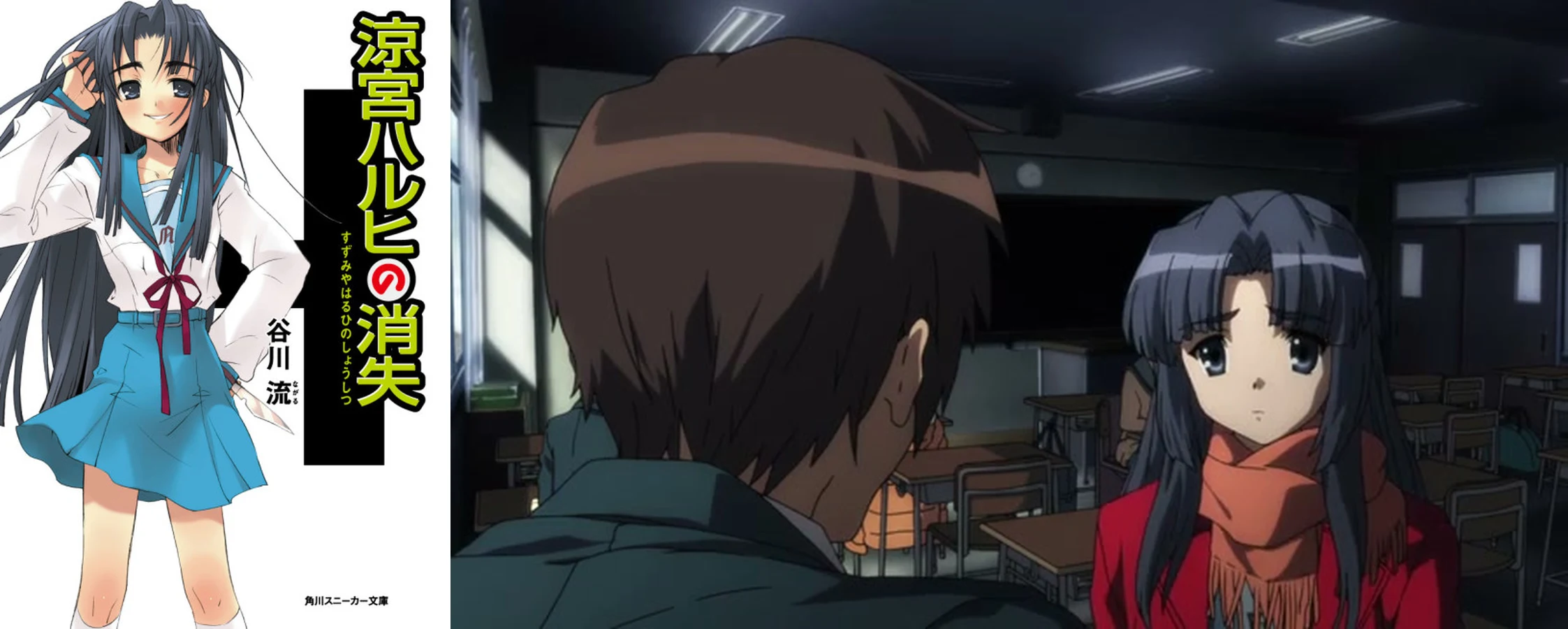
What Light Novel Content Has Never Been Animated?
This is the strongest practical argument for reading the books.
Season 2 adapts material from Vols. 7 and 8 (The Intrigues and The Indignation) plus additional short stories. The adaptation also includes “Live Alive” from Vol. 3. But the major arc across Vols. 9 through 11 has never been touched. This arc introduces parallel timelines labeled the α and β branches. The Sasaki conflict gets introduced here, along with new factions among the aliens and time travelers. Plot threads Season 2 left dangling get resolved. It’s the most structurally ambitious thing Tanigawa attempted.
Vol. 9, The Dissociation of Haruhi Suzumiya, splits the narrative into two simultaneous timelines and expects the reader to track both. The Surprise (Vols. 10 and 11, combined into a single English edition by Yen Press) brings them back together. It’s a demanding read, but the payoff is real.
Vol. 12, The Intuition of Haruhi Suzumiya, arrived in November 2020 after a nine-year gap. Short story collection. Lighter, warmer. Vol. 13, The Theater of Haruhi Suzumiya, came in November 2024. None of this exists in animated form. If you finished the anime and the Disappearance film and want the Sasaki plotline resolved — what happens with Asakura, how the alien faction conflict from Season 2’s background ends — the books are the only place that story gets told.
Is Kyon’s Inner Monologue Better in the Novel or the Anime?
The entire series runs in Kyon’s first-person voice. His sardonic, pop-culture-heavy, philosophically meandering narration is what separates this from every other “normal guy meets supernatural girl” premise. He’s not a passive observer. His interiority is the actual story.
Tomokazu Sugita’s anime performance is excellent. Sugita commits completely, and the characterization holds up. But the anime necessarily compresses Kyon’s internal commentary. Entire paragraphs of tangents, literary digressions, self-aware humor, and philosophical asides exist only in the LN. Readers who come from the anime report consistently that LN Kyon is funnier and more interior than his animated version. This is not a small difference.
If you’ve only watched the anime, you know Sugita’s Kyon. If you read the novels, you get the version Tanigawa actually wrote: more verbose, more self-deprecating, and funnier in a literary way the anime can’t carry in 24 minutes per episode. This is the single best reason to read the books after watching the anime. Not for specific plot beats. For more Kyon.
What Does the Anime Add That the Light Novel Cannot Replicate?
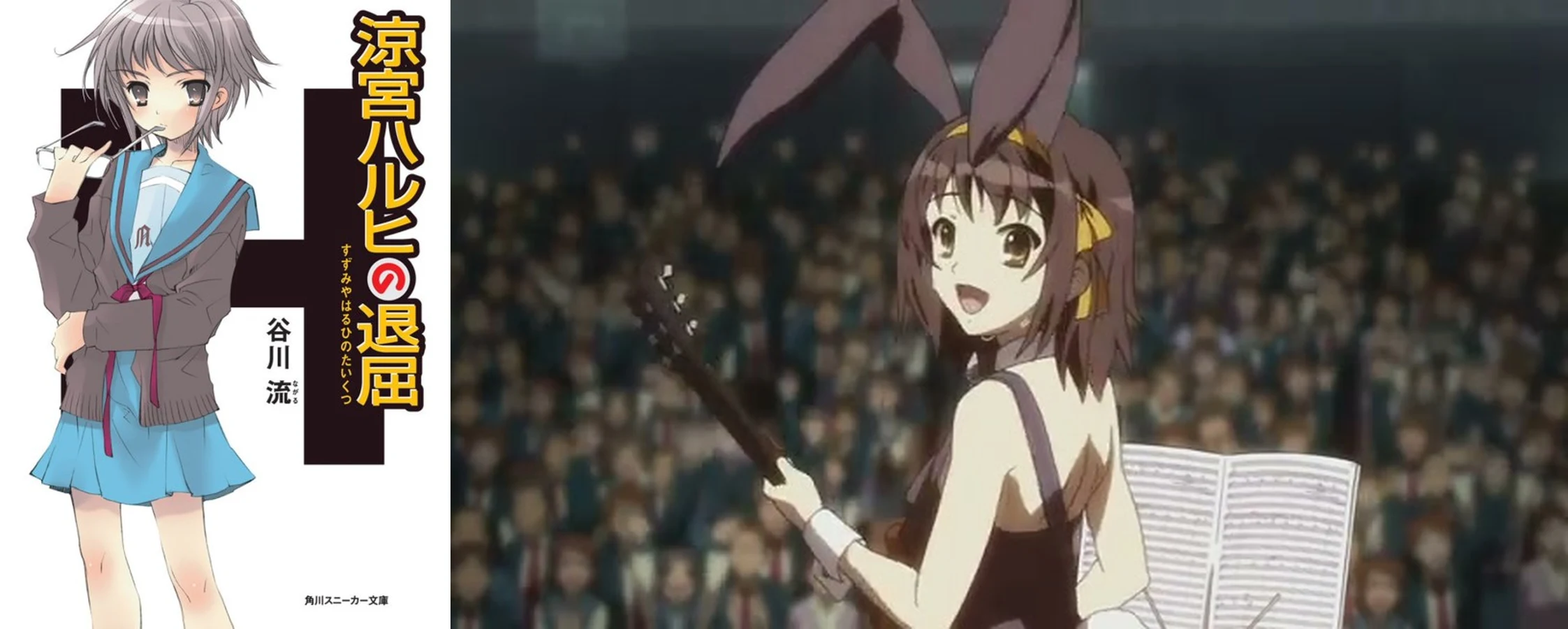
The nonlinear broadcast experience, already covered above. KyoAni’s 2006 animation, which was exceptional for its era. Satoru Kōsaki’s score, which is embedded in every longtime fan’s memory. And then there’s the “God Knows” live performance in Episode 12 (chronological numbering), where Haruhi and Yuki have to cover for the school festival band mid-show. Aya Hirano’s vocal performance, the crowd animation, the energy of the scene. There’s no prose equivalent. You can’t put a live guitar performance in a sentence.
The “Hare Hare Yukai” ending dance established the cover dance genre on Nico Nico Douga, which launched the same year as the anime. One consequence of the original broadcast: a 2011 discussion on 4chan about the optimal order to watch all possible episode orderings led to a mathematical proof about the lower bound of minimal superpermutation length. This resolved an open problem in combinatorics that had existed since 1993. The Haruhi anime fandom contributed to a real math discovery. This isn’t the sort of thing the novels could have generated on their own.
The anime is not an inferior version of the LN. It’s a different experience with different strengths. Both formats are worth your time.
Should You Watch the Anime First or Read the Light Novel First?
Watch first. The community consensus on this is strong.
The 2006 anime is a clean entry point. The premise establishes fast, Kyon’s voice is immediately readable through Sugita’s performance, and you’ll know within two episodes whether this series works for you. After the anime and the Disappearance film, pick up the LN from Vol. 1. You’ll get Kyon’s narration in full, the same content you already know but with more interior depth, and then from Vol. 9 onward you’re in completely uncharted territory with no anime equivalent.
If you want to skip directly to new content: Vol. 9 (The Dissociation) is the cleanest entry point for someone who has seen everything animated. You can start there if you’re willing to accept some setup gaps from Vols. 7-8. Vol. 5 is also good if you want to see how Endless Eight was supposed to work as a single chapter — one concise read versus eight television episodes.
Reading before watching is genuinely harder to recommend here. The anime adds so much that the LN can’t replicate, and it’s the format most people will encounter first anyway. The broadcast-order S1 is a specific experience worth having on its own terms.
What Are the Biggest Criticisms of Each Format?
The anime’s main stain is Endless Eight. Eight weeks of diminishing returns during the 2009 simulcast drove away viewers before the acclaimed Disappearance arc could have been a recovery moment. It’s a legitimate grievance regardless of how you feel about the artistic intent.
The LN has different problems. The nine-year gap between Vols. 11 and 12 (2011 to 2020) killed the series’ momentum in a way that’s impossible to quantify but impossible to miss. Vol. 12 came out to mild coverage. Vol. 13 to even less. The cultural window where Haruhi was a defining franchise closed around 2008 or 2009. The series has been operating in a quieter register since. Another four-year gap between 12 and 13 doesn’t help. Tanigawa has not announced Vol. 14.
Haruhi herself is the most consistent criticism across both formats. She’s bossy, oblivious, and treats Mikuru as a prop. The later volumes add dimension and begin showing the fear underneath the chaos (Vol. 7 onward makes this clearer). But in Vols. 1 through 4, she’s mostly a force of nature that happens to people. The community consensus is that this is intentional and that her obliviousness is the comedic premise rather than a flaw in the writing. Whether that lands as funny or as exhausting is reader-specific.
The tone shift in the later novels is also worth knowing about. Vols. 1 through 6 are lighter, episodic, comedic. Vols. 9 through 11 are serious: parallel timelines, existential stakes, faction politics among the supernatural factions. Some readers prefer the early charm. Others find the series maturing appropriately. Vol. 12 returns to short stories and is the warmest volume since Vol. 8.
Final Verdict: Light Novel or Anime?
Both. That’s the only honest answer.
The S1 anime plus the Disappearance film are one of the best LN-to-anime pipelines in the medium’s history. Watch them. The LN gives you Kyon’s complete interior life and five volumes of story that have never been animated. Read them after. They complement each other rather than competing.
If you want a rank: the LN is where the complete story lives. But the anime is the experience you should have first.