

This article contains affiliate links. If you buy through these links, we earn a small commission at no extra cost to you.
I watched the Haruhi anime for the first time in 2015, burned through the whole thing in three days, and then spent years thinking I’d already had the complete experience. The anime was that good. The nonlinear broadcast order, Tomokazu Sugita’s performance as Kyon, the “God Knows” concert scene. It all felt complete. A finished thing.
Then Vol. 12 dropped in November 2020 after nine years of silence from Nagaru Tanigawa, and I finally picked up the novels. Late convert. I read all twelve volumes across about three months, and Vol. 13 came in 2024. My conclusion after all of it: I’d been wrong to wait. Kyon’s narration in the novels is its own thing. Here’s the full breakdown, including why your entry point matters.
TL;DR
- Kyon’s first-person narration is richer and funnier in the novels than the anime can convey
- Volumes 9–13 are completely unadapted — novel-only story with no anime counterpart
- 13 volumes total as of November 2024; series is ongoing with slow, irregular release gaps
- Best path: watch the S1 anime and the Disappearance film first, then read the novels
What Is The Melancholy of Haruhi Suzumiya Actually About?

The premise sounds ridiculous on paper. Kyon, a deliberately ordinary high school student, gets recruited by Haruhi Suzumiya into the SOS Brigade, a club she created specifically to find aliens, time travelers, and espers. Three of the four other members actually are those things. Haruhi doesn’t know. She can never know, because she has unconscious reality-warping power. If she decides the universe is too boring, she’ll reshape it. The current universe ends.
Kyon narrates every word. That’s the actual premise.
Nagaru Tanigawa started publishing the series in 2003 under Kadokawa Sneaker Bunko in Japan, and the 2006 KyoAni anime turned it into a genuine cultural event. “Viral” wasn’t even standard language yet. “Hare Hare Yukai” spread everywhere. The nonlinear broadcast order spawned debates the community still hasn’t resolved. The series sold over 20 million copies internationally across print and manga formats. The first novel won the Grand Prize at the 8th Sneaker Awards, only the third Grand Prize in the award’s history.
As of November 2024, there are 13 volumes in total. Vol. 12 (The Intuition of Haruhi Suzumiya) broke a nine-year publication gap in 2020. Vol. 13 (The Theater of Haruhi Suzumiya) arrived in November 2024. All 13 are available in English through Yen Press’s Yen On imprint. You can find the complete series on Amazon. A lot of older reading guides still say 11 or 12 volumes. They’re out of date.
What Does the Light Novel Add That the Anime Doesn’t?
The S1 anime is genuinely excellent. KyoAni’s animation, Satoru Kōsaki’s score, the “God Knows” live performance, the deliberate disorientation of the nonlinear broadcast order. These are things the novels cannot replicate. I’m not here to argue that the anime is inferior. It isn’t. Watch it first.
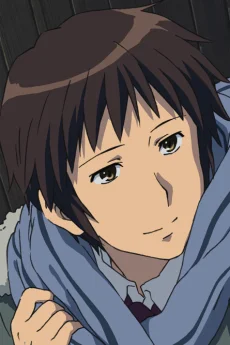
But the novels have Kyon’s full interior life.
In Vol. 1, when Kyon first watches Haruhi recruit the club, the anime shows his expression. The novel gives you three pages of internal commentary — references to pulp sci-fi conventions, whether he actually wants the boring life he claims to want, and the social dynamics of being the only boy talking to the odd girl in front of a class full of witnesses.
The anime has maybe four seconds of skeptical face. The novel has three pages of thought. That gap repeats across all 13 volumes.
Kyon’s literary references, his philosophical tangents, his moments of reluctant honesty about his own feelings. All of it exists fully only in print. Readers who came from the anime consistently report that the novel Kyon is richer and funnier than his animated counterpart. I agree completely. Tomokazu Sugita’s performance is excellent. Tanigawa’s prose version has more room to breathe.
Vol. 4 (The Disappearance of Haruhi Suzumiya) is the one specific case where the adaptation may actually be better. The 2010 film runs 162 minutes and director Yasuhiro Takemoto handled it with exceptional care. Kyon’s mental breakdown in chapter 9 of the novel is strong on the page. In the film, it becomes something else entirely — his breakdown is expressed through facial animation and voice performance in ways that hit differently than prose. My honest take: read Vol. 4 first, then watch the film. The film lands differently when you already know what Kyon is thinking, and what the film chooses to show instead is worth seeing.
The strongest argument for reading the novels is Vols. 9 through 13. The Dissociation (Vol. 9) and The Surprise (Vols. 10–11, combined into a single English volume) introduce a parallel timeline split: an α-route and β-route running simultaneously, tracking how different choices cascade across the same time period. The anime never adapted this arc. The Sasaki conflict, the faction politics between competing alien organizations, the resolution of plot threads left dangling after S2. All novel-only. If you watched the anime and felt like something was left unresolved: it was. Vols. 9–11 finish it. Vols. 12 and 13 are short story collections released in 2020 and 2024, and they are the freshest content in the series. The only way to read them is to read the novels.
Is Kyon’s Narration Actually Good, or Is It Just Nostalgia?
This was my real worry when I started Vol. 1 in 2020. I knew the anime cold. I’d grown up thinking in Kyon’s register. The risk of reading the source material years later was measuring it against a version of itself I’d already internalized.

The novels hold up. Kyon’s voice has a specific register: resigned, observant, occasionally absurd, and consistently willing to be wrong about himself. He’ll spend a full paragraph building a case for why Haruhi’s enthusiasm is exhausting and then undercut it by admitting he’s jealous of her certainty. The humor lands. The self-awareness doesn’t feel performed. Tanigawa wrote a narrator who sounds like someone with genuine literary taste who is deeply skeptical of his own conclusions.
Vol. 3 (The Boredom of Haruhi Suzumiya) is the best test for whether this voice sustains across disconnected short stories. The “Day of Sagittarius” story, where the Brigade faces the computer research society in a space strategy game that gets cosmically absurd as it goes, is pure comedy. It works entirely because Kyon’s commentary on the escalation is the entertainment, and it stays funny without a plot anchor. Vol. 5 (The Rampage of Haruhi Suzumiya) has the original “Endless Eight” chapter: a single tightly written story that resolves cleanly in about an hour of reading. The anime made 8 nearly identical episodes out of it. The novel chapter is genuinely not controversial. If you’ve written off this part of the series because of the anime adaptation’s choices, the novel is a completely different experience.
What Are the Real Problems With This Series?

Haruhi herself. This is the consistent friction point across the whole fandom, and I’ll give my honest take: she’s difficult to like in Vols. 1 and 2. She conscripts Mikuru into situations that range from embarrassing to genuinely uncomfortable, and she treats her club members as props for her own entertainment without registering their objections. The narrative asks you to read this as oblivious rather than malicious. She doesn’t understand social dynamics because she’s never had reason to care about them. Kyon’s exasperation is meant to be the counterweight. In the early volumes, the framing doesn’t always hold.
She gets more interesting from Vol. 7 onward. Once the series makes clear that her reality-warping impulses are a subconscious defense against accepting that the world is ordinary, she becomes a coherent character rather than an obstacle. She’s terrified of a boring universe, not just inconsiderate. I could actually engage with her once I understood the fear underneath. Before that, the comedy asks for more patience than I always had.
The nine-year hiatus is the other genuine problem. Vol. 11 came out in May 2011. A short story appeared in a 2018 revival issue of The Sneaker. Vol. 12 didn’t arrive until November 2020. By then, the series had contracted. The community had moved on and rebuilt around other properties. Vol. 12 was good. Warmly, genuinely good. But the momentum was gone. Vol. 13 followed in November 2024 with another four-year gap, and there’s no Vol. 14 announcement. Tanigawa publishes when he publishes. Starting the series now means accepting an ongoing series that may take years between entries.
The tone shift in the later volumes is also real. Vols. 1–6 are light, comedic, episodic. Closer to the short story collections than to dense plot. Vols. 9–11 become more serious: parallel timeline politics, faction conflicts between competing organizations, existential stakes. Some readers prefer the early episodic energy. Others appreciate that the series grows into something more structurally ambitious. Vol. 12 returns to the short story format and reads like a deliberate callback to the early volumes. Vol. 13 continues that register.
How Does Haruhi Suzumiya Hold Up Against More Recent Light Novels?
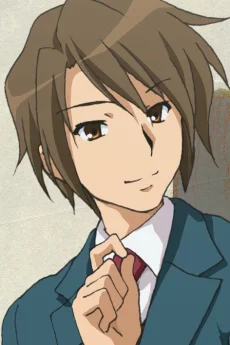
Haruhi defined the template. Sardonic male narrator with a supernatural female lead, high school club setting, short story collections alternating with main arc novels — this is the structural DNA of a significant slice of the LN industry since 2006. Bunny Girl Senpai is explicitly modeled on it. OreGairu took the sardonic narrator and pushed the psychological depth further. Both series owe Haruhi directly, and neither hides the influence.
If you read OreGairu before Haruhi, Kyon’s narration might feel lighter than you’d expect. Hachiman’s voice in OreGairu is more self-lacerating and emotionally precise. If you read Haruhi first, you’ll see the lineage everywhere in the series that followed. Both are valid starting points, but they shape how you hear the other one.
What Haruhi still does better than most LN releases from the last decade: structural ambition. The α/β parallel timeline split in Vols. 9–11, Kyon as an unreliable narrator across the full series, the nonlinear short story placements that affect how arcs read in retrospect — this is more architecturally interesting than most recent releases attempt. The slow publication pace has cost the series cultural momentum. The novels themselves haven’t been surpassed on that axis.
Should You Start From Volume 1 or Jump Ahead?
Start from Vol. 1. Even if you’ve watched the anime through twice. The novel version of Vols. 1 and 2 is richer than the S1 adaptation, not a repeat of it. Vol. 1 covers the same material as S1 episodes 2, 3, and 4 in broadcast order — but Kyon’s narration of those events adds enough that it doesn’t feel like going backward. Vol. 2 (The Sigh of Haruhi Suzumiya) covers the student film production and goes harder on Kyon’s internal conflict about whether to push back against Haruhi’s behavior. His character development actually starts on the page here, not in the anime version.
Vol. 5 is worth reading if only to see what Endless Eight was supposed to be. Takes about an hour and settles the adaptation debate permanently.
Vol. 9 onward is the best argument for getting through the early volumes efficiently if you’re impatient. The Dissociation and The Surprise are the most plot-dense material in the series, and they’re completely novel-only. Nothing in the anime or the Disappearance film touches this territory.
Publication order is the correct order. Chronological reading guides exist in fandom but Tanigawa wrote with publication order in mind, and the short story placements work as intended interruptions to the main arc. Reading them out of that sequence makes them feel like supplemental material when they aren’t.
Is The Melancholy of Haruhi Suzumiya Worth Reading in 2026?
Yes. With clear-eyed expectations.
Read it for Kyon’s narration — it has genuine literary quality as its own thing, not just as context for an adaptation. Read it for Vols. 9–13, which are the only way to see the full story. Go in knowing the series publishes on Tanigawa’s schedule, not yours, and that there’s no confirmed Vol. 14 on the horizon.
The cultural context matters here too. Haruhi predates and directly influenced Madoka Magica, Bunny Girl Senpai, OreGairu, and the entire LN anime adaptation boom of the 2010s. Reading it in 2026 means encountering the originator of tropes that have since become clichés. Some of those tropes will feel familiar. That’s the point. Haruhi invented them.
Vol. 12 and Vol. 13 are both available in English from Yen Press with simultaneous ebook release alongside the Japanese editions, an unprecedented move Yen Press used for both recent volumes. All 13 are on Amazon through the Yen On imprint. Vols. 10–11 are combined into a single English release (The Surprise of Haruhi Suzumiya).
The anime is the right entry point. The 2010 Disappearance film is mandatory. And the novels are the destination — the place where Kyon’s voice finally has all the room it needs. I waited five years too long to figure that out.