

The title almost lost me this series.
Not almost. It did lose me. For three months in fall 2018 I kept seeing “Bunny Girl Senpai” in seasonal discussion threads and skimming past it. Figured I knew exactly what it was. The thumbnail looked like every mildly ecchi school rom-com that cycles through every season. Then someone with genuinely good taste said four words: “Episode one. Trust me.” I watched all thirteen episodes that weekend.
Then I needed more. The Dreaming Girl film came and went. Two more volumes done. And then — nothing. No anime for volumes 8 through 11. A whole continuation of the story that most viewers don’t know exists.
That’s the conversation this article is trying to have. Because the anime and the light novels aren’t just the same story in two formats. The books do things the anime flat-out can’t, and there are stretches of this series you cannot experience without reading them.
TL;DR
- The anime (13 episodes, 2018) adapts volumes 1–5; the Dreaming Girl film (2019) covers volumes 6–7
- Volumes 8–11 are fully unadapted. The light novels are the only way to finish the main story arc
- Sakuta’s internal monologue gains real depth on the page; the quantum physics framing is more developed in text
- The series holds quality through volume 11, ends on a deliberate cliffhanger, and the college sequel continues from there
How Far Into the Light Novels Does the Anime Actually Get?
The 2018 CloverWorks anime adapts volumes 1 through 5 across 13 episodes. The 2019 Dreaming Girl film adds volumes 6 and 7. Everything from volume 8 onward (including a major cliffhanger ending in volume 11) has no anime adaptation as of 2026. That’s roughly half the main series sitting in text-only territory.
13 episodes. 5 volumes. That’s what the TV series covers.
CloverWorks adapted one Adolescence Syndrome arc per story chunk across the 2018 season. Volume 1 is Mai’s arc. The Bunny Girl arc that titles the whole series and establishes the central dynamic between Sakuta and Mai. Volume 2 is Tomoe and the time loop. Volume 3 is Rio’s quantum doubling, easily the most structurally complex of the early arcs. Volume 4 covers Nodoka’s body swap with Mai. Volume 5 handles Kaede’s arc, which hits significantly harder than it looks like it’s going to.
Then Dreaming Girl (2019) takes volumes 6 and 7 — Shouko’s arc. Two volumes compressed into roughly 90 minutes. It works better than most theatrical LN adaptations manage.
That’s 7 volumes total covered by anime and film combined. Volumes 8 through 11 are completely unadapted. The series also transitions into a college sequel (Sakuta and Mai at university) for which a new anime (Rascal Does Not Dream of a Dear Friend) was announced, though whether it will address the gap volumes first or jump straight to university is unclear as of 2026.
So if you watched everything and put the series down, you’ve seen roughly the first half of the full story. The back half is text-only for now.
What Does the Light Novel Add That the Anime Doesn’t Show?
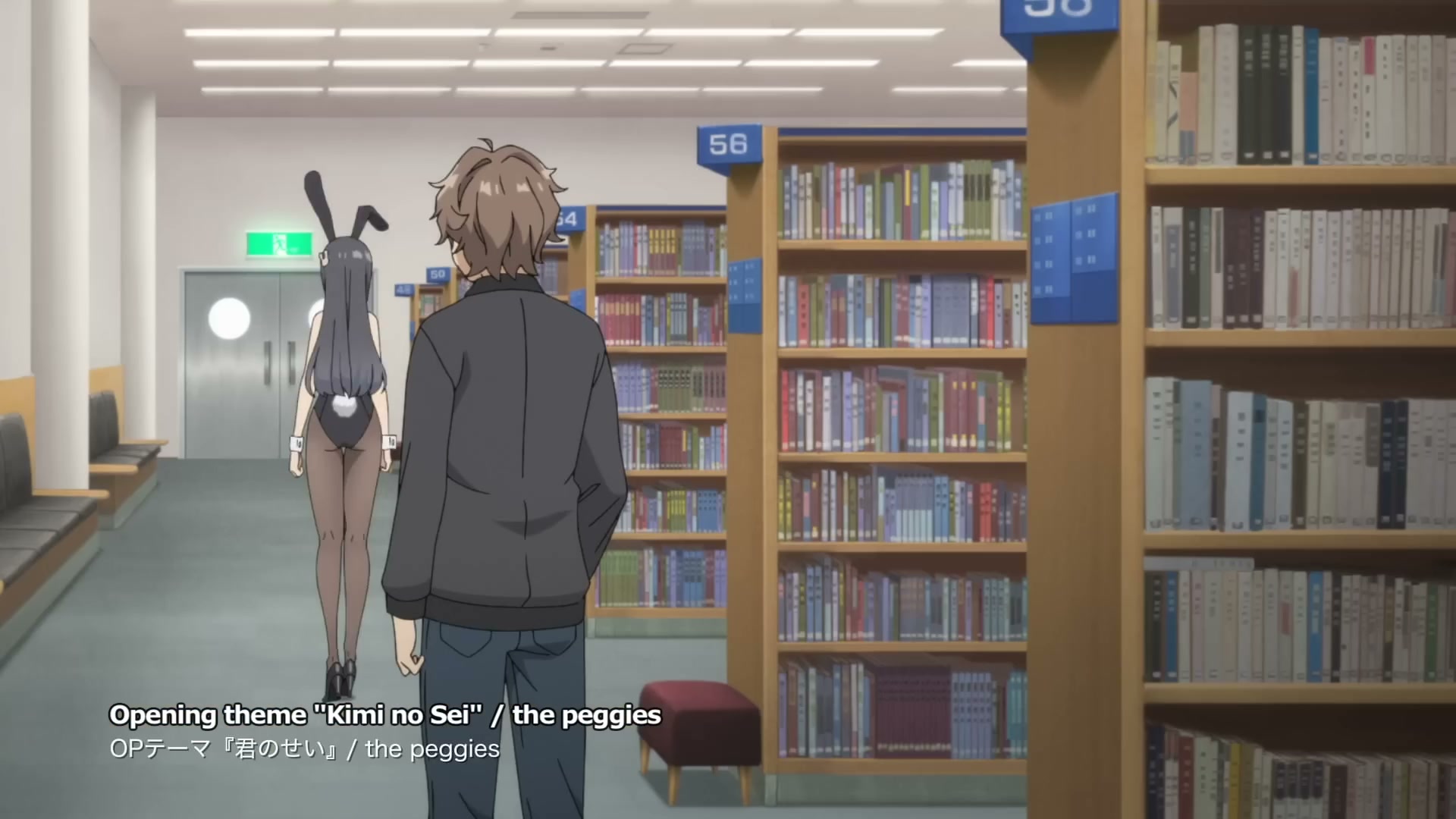
The anime is a faithful adaptation with minimal cuts to the main arcs. What the light novels add: bonus chapters between arcs, extended internal monologue, deeper quantum physics explanations for each Adolescence Syndrome, and small characterization moments that don’t survive compression to 23-minute episodes.
Let’s be honest first: this is not a series where the anime gutted the source material. Bunny Girl Senpai is one of the more faithful LN adaptations you’ll find. Arc structures are the same, resolutions are the same, the emotional beats land in roughly the same order.
But faithful doesn’t mean identical.
The books include bonus chapters that sit between the main arcs. A conversation between Sakuta and Kunimi about nothing in particular. A quiet evening with Mai after a crisis resolves. Sakuta at 1am, turning something over that won’t stop bothering him. None of these survive the 23-minute episode cut. All of them matter for texture and for understanding where these characters sit emotionally between the major arcs.
The more significant difference is in the Adolescence Syndrome framing. Kamoshida uses quantum mechanics — Schrödinger’s cat, many-worlds interpretation, quantum entanglement — as structural metaphors for each supernatural case. The anime presents these explanations but rushes them. Rio does her exposition and the story moves on. In the books, the back-and-forth lasts longer. Sakuta asks questions, pushes back, needs convincing. The concept gets stress-tested against what’s actually happening before it gets accepted as the explanation.
If the anime’s physics segments felt hand-wavy, the books make them more earned. There’s also slightly more on Sakuta’s family situation. The shape of what happened with his mother, his relationship with his father — handled in small increments that the anime references but doesn’t dwell on. None of this is revelatory. It’s texture. But the texture accumulates.
Is Sakuta’s Narration Actually Different When You’re Reading His Thoughts Directly?
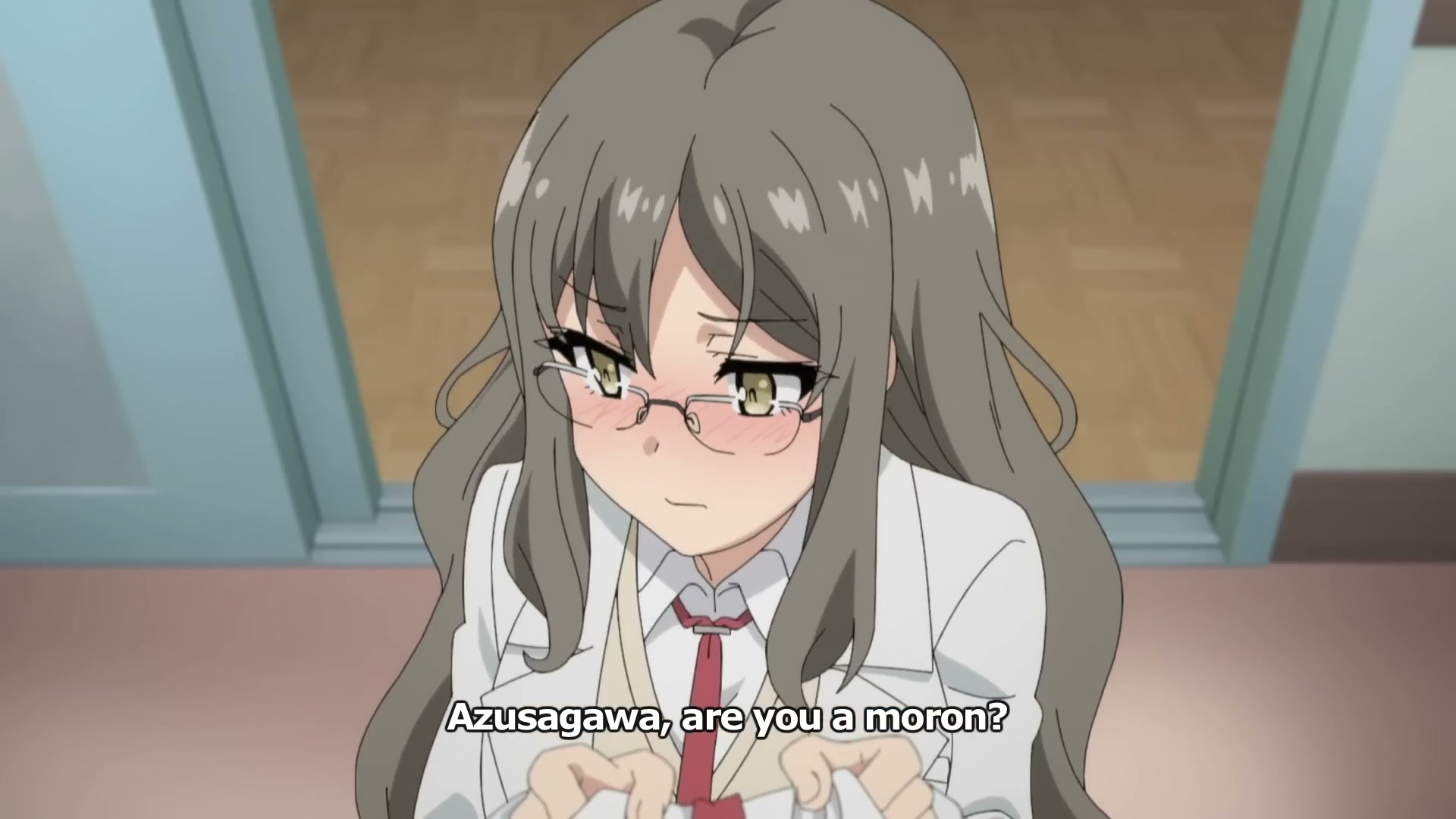
Reading Sakuta’s first-person narration is a different experience from watching him. The anime relies on delivery and timing to land his wit. The books give you his internal calculus — what he notices, in what order, and sometimes the gap between what he thinks and what he actually says out loud. That gap is where the character lives.
This was the question I had going in. The anime version of Sakuta works largely because of Kaito Ishikawa’s performance. The deadpan timing, the precise pause before a comeback. I wondered if text would feel flat by comparison, stripped of all that.
It doesn’t. But it is different.
The anime gives you wit as output. The books give you wit as process. You’re inside his head while he’s forming the observation, which means you get the micro-decisions. What he notices. What he chooses to say. What he deliberately holds back. He’s more strategic than he looks. The text makes that visible.
The banter with Mai is one place this shows up clearly. On screen, their exchanges play like a well-rehearsed comedy double act. In the books, you’re watching Sakuta recognize he’s losing an argument and decide to keep pressing anyway. That self-awareness makes him feel slightly more vulnerable than the confident surface the anime projects, and slightly more real.
His concern for Kaede is another. The anime handles her arc well, but in the books his low-grade worry about her runs underneath everything else as a consistent undercurrent. Not stated directly. It shows up in small priorities, small deflections. You pick up on it cumulatively across volumes. And when Kaede’s arc hits in volume 5, that accumulation makes the moment land differently than it would without it.
Do the Adolescence Syndrome Arcs Play Out the Same Way in the Books?
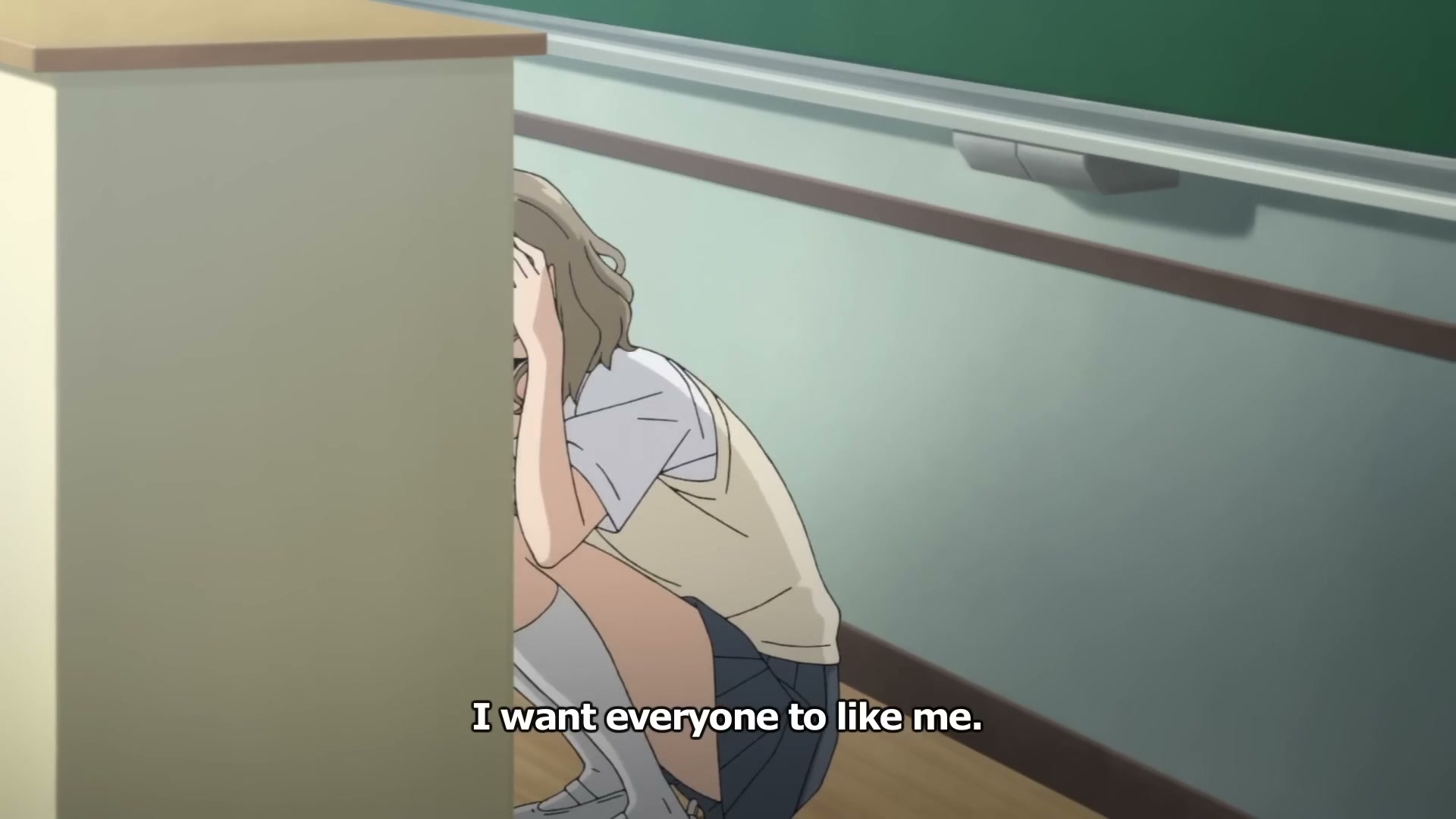
Four of the five main TV arcs closely follow the source material. Rio’s quantum double arc (volume 3) and Kaede’s arc (volume 5) are the most meaningfully different — volume 3 requires more from the physics explanation before the payoff, and volume 5 earns its ending more gradually in the books than the anime’s compressed gut-punch allows.
Arc by arc:
Volume 1, Mai’s arc: essentially shot-for-shot in places. This is the template the adaptation used, and it shows. The invisibility mechanic, the investigation, the resolution. It all maps cleanly from page to screen.
Volume 2, Tomoe’s arc: very close. The time loop is the same, the emotional core is the same. Tomoe reads slightly more sympathetically in text because you spend more time inside the social mechanics that trapped her in the first place.
Volume 3, Rio’s arc: this is where the LN earns its keep. The many-worlds interpretation drives the resolution, and the books require you to actually understand it before the payoff clicks. The anime hand-waves the final logic step. The book doesn’t — Sakuta has to have it explained properly, push back, and accept it. If this arc felt rushed on screen, the book version won’t.
Volume 4, Nodoka’s arc: close to the anime. There’s more background on the idol industry pressure Nodoka operates under, which sharpens her motivation, but the arc structure is the same.
Volume 5, Kaede’s arc: this surprised me most. The anime compresses it into a precise gut-punch, and it works as constructed. The book version has more runway. You spend more time with Kaede in the build-up, which means the turn hits differently, not harder necessarily, but more earned. Two different ways to land the same moment, and both are valid.
What Is the Dreaming Girl Movie’s Relationship to Volumes 6 and 7?
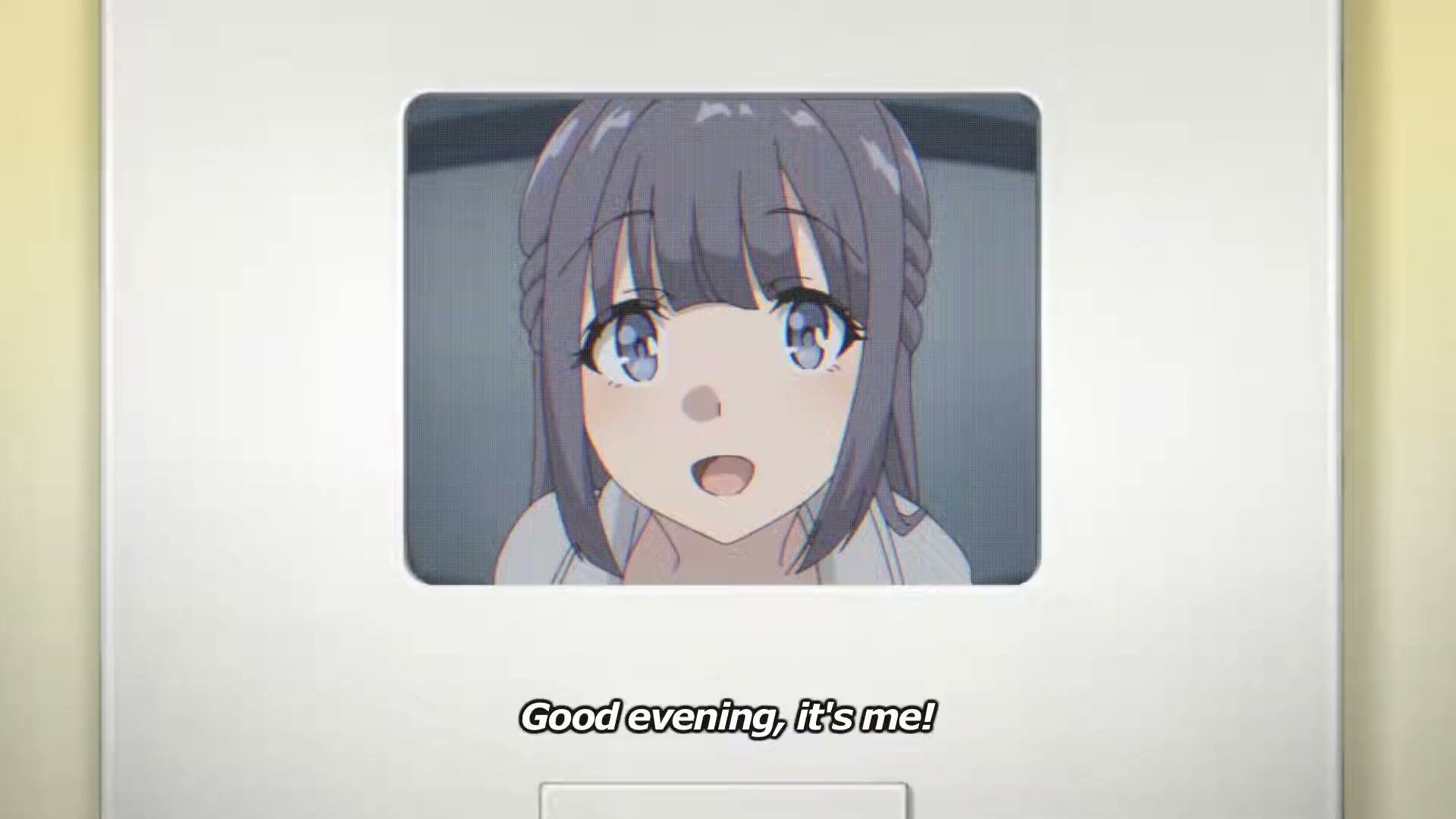
The Dreaming Girl film adapts volumes 6 and 7 (Shouko’s arc) in roughly 90 minutes. The core emotional arc survives the compression well. What it loses is the quiet Sakuta-and-Mai relationship development that runs through both volumes in the books — some of the best writing Kamoshida does in the early series.
Better than it had any right to be.
Shouko’s arc is structurally the most unusual thing in the early series. Multiple timelines, two versions of the same character at different ages, and a reveal that recontextualizes something about Sakuta’s emotional history that the main series only hinted at. It’s the arc that requires the most trust from the reader. You have to let the mechanics be weird before they pay off.
The film handles the compression well. It makes choices, trims scenes, accelerates certain beats, but the core emotional arc survives. The reveal lands. The ending lands. As a piece of theatrical storytelling, it works.
What the film loses is the quiet Sakuta-and-Mai thread running through both volumes. By this point in the story their relationship has moved past the initial crisis and into something more settled, and that settled quality gets stress-tested in low-key ways across volumes 6 and 7. Domestic moments. Small conflicts. The texture of two people actually trying to maintain something. The film stays focused on Shouko and mostly cuts this material.
And it turns out Kamoshida is just as good at writing the quiet version of this relationship as he is at the high-stakes version. That’s not obvious from the film. It’s very obvious from the books.
Where Do the Light Novels Go After the Movie Ends?
Volumes 8 through 11 are fully unadapted and mark a tonal shift. The Adolescence Syndrome arcs become more interconnected, the emotional stakes are different from high school drama, and volume 11 ends on a cliffhanger that left LN readers genuinely frustrated waiting for volume 12. Most anime watchers don’t know this section exists.
This is the conversation most people aren’t having about this series.
Volume 8 begins a new arc and immediately signals that something has shifted. The Adolescence Syndrome format continues, but the cases feel less isolated than in the early volumes. Consequences from one arc start affecting the next. The series is building toward something, and volumes 8-11 are the accumulation of that build.
Without spoiling the specific syndrome cases: the emotional register changes. Sakuta is older. His relationships are more settled, which means the pressures that crack them are different pressures. High school drama has given way to something less categorizable, and Kamoshida handles that transition without losing what made the early volumes work.
Volume 11 ends on a cliffhanger significant enough that the community reaction when it dropped in English was genuinely frustrated. Not because the quality fell. The quality is fine, but because the stopping point feels deliberately brutal. You reach the end and immediately want volume 12.
There’s also a small detail worth knowing: volume 11 includes a reference to Nanami from Sakurasou no Pet na Kanojo, Kamoshida’s earlier Dengeki Bunko series. Nanami doesn’t appear — it’s a universe acknowledgment, not a crossover. But it rewards readers who came to BGS through his earlier work.
The college sequel arc begins around volume 12. The announced anime (Rascal Does Not Dream of a Dear Friend) covers Sakuta and Mai at university. Whether that adaptation will also address the gap volumes (8-11) is still uncertain as of 2026.
Does the Series Hold Up Through Volume 11, or Does It Lose Steam?
The series maintains quality through volume 11 with one softer stretch around volume 10. The tight one-arc-per-volume structure relaxes after the movie — more ambitious narratively but more demanding for the reader. Volume 11 recovers strongly and ends in a way that confirms Kamoshida knows exactly where he’s taking the story.
Mostly yes. With one caveat I’ll be honest about.
The early volumes are structurally disciplined. One syndrome per book, one emotional problem per arc, resolution required by the end. That format enforces clarity. You always know what the problem is and roughly when it’ll resolve. Each volume feels complete even if the overall story isn’t.
By volumes 8 and 9, the arcs start bleeding into each other. Something from one volume has consequences in the next. This is actually the more interesting narrative approach — it’s what makes the series feel like it’s going somewhere rather than cycling through case-of-the-week. But it asks more from you. You need to track character states across volumes rather than treating each book as self-contained.
Volume 10 is the weakest of the post-movie stretch in my read. Not bad. Just less focused. The emotional problem being worked through feels slightly manufactured next to the sharper pressures in earlier arcs. If you’re going to slow down anywhere in the series, it’ll probably be here.
Volume 11 earns everything back. The cliffhanger ending is the move of a writer who’s confident in where he’s going next. You don’t end a volume that way unless you know what volume 12 does with it.
So no. This isn’t a series that falls off after a strong start. The ambition increases as it goes. The quality holds. But be prepared for the structure to get more demanding from volume 8 onward.
Does the Title Actually Represent What This Series Is?
The “Bunny Girl Senpai” title is one of the most misleading in modern light novel publishing. It signals ecchi rom-com. The actual series is emotionally mature, uses supernatural mechanics to explore adolescent psychology, and has roughly the fan service content of a drama club production. The community feedback on this is consistent: most people who loved the series almost missed it because of the title alone.
Let’s talk about this, because it comes up constantly and the criticism is legitimate.
The title attracts exactly the wrong audience and repels exactly the right one. “Bunny Girl Senpai” implies something specific about what you’re getting, and that implication is wrong. The actual series is built around quantum physics metaphors for adolescent psychology, a genuine central relationship with real emotional weight, and protagonist interiority that reads more like literary fiction than genre light novel. The bunny costume appears in episode one as a plot device, then mostly doesn’t come up again.
The Japanese title — Seishun Buta Yarou wa Bunny Girl Senpai no Yume wo Minai — has the same problem in a different direction. “Youth Pig Boy” (seishun buta yarou) is deliberately weird framing that signals something off-kilter and genre-subversive. In practice it just reads as odd to anyone encountering the series cold.
The community feedback on this is consistent: Reddit threads full of people saying they almost skipped it, that they watched it only on a trusted friend’s insistence, that they kept having to convince others to give it a chance. One viewer called it “one of the greatest surprises of an anime I’ve ever watched”, which is the actual fan experience, but you only reach that moment after getting past the packaging.
In the light novels, this problem compounds. Each subsequent volume has a different subtitle — Logical Witch, Petite Devil Kohai, Dreaming Girl, and the main series title changes entirely with the college arc. New readers trying to find volume 8 at a bookstore, or searching for what comes after the movie, can genuinely struggle to identify the correct entry point. The series titling system rewards people who already know the series and penalizes everyone trying to get in.
But the content inside these books is significantly better than the packaging suggests. If the title was the reason you almost skipped it, you’re in good company.
Is It Worth Picking Up the Light Novels After Watching the Anime?
Yes, without qualification. Watch the anime (volumes 1-5), watch Dreaming Girl (volumes 6-7), then start the light novels from volume 8. You get the best of both formats without redundancy. Volumes 8-11 are the only way to continue the main story — no anime, no film, no shortcut.
The recommended path is anime first, film second, books from volume 8. That gets you the best of both formats for the adapted material without retreading it. The anime is good enough to be worth your time on its own terms. The film is good. You don’t need to reread what’s already been adapted unless you want to.
And if you want to go all-in and start from volume 1 in print. That works too. The text versions of arcs you’ve already seen aren’t redundant. They’re denser and doing slightly different things. Knowing how an arc resolves doesn’t undercut the reading experience because the experience in text isn’t primarily about suspense. It’s about being inside Sakuta’s head. And Sakuta’s head is worth being inside.
What you’re giving up if you stop at the movie: four full volumes of story, a major unresolved cliffhanger, and the thread that ties everything into the college arc. The sequel anime will eventually exist, but it may not cover the gap volumes. Going in now means experiencing volume 11’s cliffhanger the way it was meant to land, without knowing when or how it resolves.
Volume 1 is available from Yen Press: Rascal Does Not Dream of Bunny Girl Senpai Vol. 1 (light novel). Also on Kindle and BookWalker for digital readers.
If you’re comparing adaptation faithfulness across similar series, the Shield Hero LN vs anime breakdown is a useful contrast — that’s a case where the books diverge meaningfully from what the anime made of them. BGS is far more faithful, which says something real about what makes this series work. And for what to read next after finishing all 11+ volumes, the best romance light novels list covers the obvious adjacencies (Oregairu, Toradora) alongside a few less-cited picks worth knowing.
Frequently Asked Questions: Bunny Girl Senpai Light Novel vs Anime
Does the Bunny Girl Senpai anime follow the light novel closely?
Yes. The anime adapts volumes 1-5 with minimal cuts to the main arcs. Bonus chapters and extended internal monologue are exclusive to the light novels, but arc structures and resolutions are essentially the same.
How many Bunny Girl Senpai light novel volumes are there?
The main series runs 13+ volumes. The anime covers volumes 1-5, the Dreaming Girl film covers 6-7, and volumes 8-11 are unadapted. The college sequel series begins around volume 12.
Where should I start the light novels if I’ve already watched the anime and movie?
Volume 8. The anime and film cover volumes 1-7 faithfully. Starting from volume 8 lets you continue the story without retreading adapted material.
Is the college arc light novel available in English?
Yen Press has licensed the sequel series. Rascal Does Not Dream of a Dear Friend was scheduled for a January 2026 English release. Check Yen Press’s site for current availability.
Is Bunny Girl Senpai connected to Sakurasou no Pet na Kanojo?
Same author (Hajime Kamoshida), same publisher (Dengeki Bunko). Volume 11 includes a subtle universe reference to Sakurasou. It’s not a crossover, but it rewards readers familiar with his earlier work.