

Volume 1, chapter 3. Sakuta watches Mai Sakurajima walk through a crowded train station and nobody reacts. Not a single head turn. She’s a nationally famous actress and the world has decided she doesn’t exist. He’s the only person who can still see her. That gap between what he knows is real and what everyone else has agreed to ignore is the moment Hajime Kamoshida’s writing clicked for me. Not the premise. Not the concept. The specific image of a girl walking through a crowd that has collectively chosen to unsee her.
The bunny suit appears for maybe fifteen pages in volume 1. It’s a provocation Mai uses to test her own invisibility. After that, the series becomes something entirely different: a 15-volume supernatural romance where every fantastical element exists to literalize an emotional state the character can’t express any other way. If you’re wondering whether the light novels are worth reading, especially after the anime, the answer is yes. Here’s why.
TL;DR
- 15-volume main series by Hajime Kamoshida, complete in English (Yen Press, Jan 2026)
- The anime covers volumes 1–9; volumes 10–15 (university arc) are novels-only until season 2 finishes airing
- Sakuta’s extended inner monologue and Mai’s physical warmth are substantially richer in the books than on screen
- Recommended for OreGairu fans, Monogatari readers, and anyone who wants the full story past the theatrical films
What Is Rascal Does Not Dream of Bunny Girl Senpai?
Bunny Girl Senpai (BGS) is a supernatural romance light novel series by Hajime Kamoshida, published under Dengeki Bunko in Japan from April 2014 to October 2024. The main series ran 15 volumes and is now complete. A supplemental volume, “Beach Queen+,” released in July 2025, and a possible “Doctor Pig” volume is announced for October 2026. Yen Press brings the English editions under their Yen On imprint, translated by Andrew Cunningham, with all 15 main volumes available as of January 27, 2026.
The story follows Sakuta Azusagawa, a high school second-year in Fujisawa who keeps running into cases of “Adolescence Syndrome” — supernatural phenomena with physical effects tied to a character’s emotional state. Volume 1 opens with Mai Sakurajima, a famous actress who has become invisible to everyone around her. Sakuta can still see her. That gap, and what it means that he can see her when no one else can, is the emotional foundation for everything that follows across 15 volumes.
Kamoshida also wrote Sakurasou no Pet na Kanojo. Same warm-but-gutpunch tone. If Sakurasou worked for you, BGS will work for you.
Is the Bunny Girl Senpai Light Novel Worth Reading After the Anime?

Yes, for two reasons that stack.
First: the light novel version of Sakuta is better on the page. The anime captures his deadpan exterior, but the novels give you his full internal monologue. He’s funnier in print. More self-aware about his own emotional reactions. His commentary on the absurdity of each Adolescence Syndrome case runs underneath the dialogue and does a lot of work that the anime had to cut for pacing. Volume 1 already shows this — his thoughts during the invisibility arc are half the actual content, and they’re sharp.
Second: the anime runs out. The 13-episode series (CloverWorks, 2018) covers volumes 1–5. The theatrical film “Rascal Does Not Dream of a Dreaming Girl” (2019) covers volumes 6–7. The two 2023 theatrical films — “Sister Venturing Out” and “Knapsack Kid” — adapt volumes 8 and 9. That’s nine volumes covered across anime and film releases. Everything from volume 10 onward is novels-only until the season 2 anime works through it. If you watched the anime and both 2023 films and wanted more, the only path forward is the books.
The Yen Press translation by Andrew Cunningham is clean. Sakuta’s comedic voice carries over without stiffness. Volume 1 paperback is 232 pages at $15.00, or $7.99 digital. You can find the full series on Amazon through Yen Press’s Yen On imprint.
What Is Adolescence Syndrome and Why Does It Actually Work?

Each volume introduces a different character experiencing a supernatural crisis. The framing borrows loosely from physics: Schrodinger’s cat, Laplace’s Demon, observer effects. Rio Futaba (volumes 3–4) literally explains quantum superposition to justify why she’s duplicated herself.
This is pseudoscience. Deliberate pseudoscience. The quantum mechanics are metaphors for emotional states that are too specific or too strange for literal realism to capture. A girl becoming invisible because people stopped acknowledging her existence isn’t a mystery plot. It’s a metaphor for social erasure that Kamoshida decided to take literally. The science is a costume the emotional content wears.
Readers who want rigorous sci-fi rules will bounce off this immediately. Readers willing to treat the explanations as symbolic will find the device genuinely clever. Volumes 6–7 push it the hardest — the Shoko arc involves a temporal paradox tied to Sakuta’s near-death experience, explains the scars on his chest, and reaches the highest emotional peak the entire high school arc delivers. By the time that arc resolves, the pseudoscience feels almost irrelevant. The story is good enough to carry itself.
How Do All 15 Volumes Break Down?
The series splits into three phases:
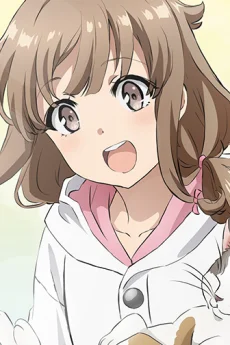
High school arc (volumes 1–7): Volume 1 is the Mai invisibility arc, the setup for everything. Volume 2 (Tomoe Koga, time loop) is lighter in tone. Volumes 3–4 follow Rio Futaba across the body-duplication and quantum consciousness arcs. Volume 4 also handles Nodoka Toyohama’s body-swap with Mai, which digs into identity and expectation in ways that land harder than the title suggests. Volume 5 is Kaede Azusagawa — Sakuta’s sister, dissociative amnesia, cyberbullying. That one lands differently than the others because the stakes are personal rather than external. Volumes 6–7 are the Shoko arc, the emotional core of the high school story.
Bridge arc (volumes 8–9): Volume 8 is the most devastating volume in the series. Kaede’s original personality resurfaces in volume 8, and Kamoshida does not soften what that means for Sakuta. Fair warning if you’re invested by this point. Volume 9 follows Rio’s college decision and Sakuta’s transition to Fujisawa for university.
University arc (volumes 10–15): Sakuta and Mai are now long-distance while Sakuta navigates new Adolescence Syndrome cases in college. Volume 10 opens with Ikumi Akagi’s idol arc. Volumes 11–12 continue the university cast. Volumes 13–15 close out with the Touko Kirishima arc and the series finale. The pacing here is slower and more introspective than the high school arc. The payoff in volumes 13–15 is worth the slower middle.
What Does the Light Novel Add That the Anime Leaves Out?

The anime is a faithful adaptation. That’s both its strength and its ceiling. What it cannot show is Sakuta’s interior.
The novels give you his full internal monologue during every scene — the deadpan observations, the emotional reasoning, the moments where he consciously decides how to respond to someone. A lot of his warmth as a protagonist comes from those moments, and the anime can only show the result, not the process. He also processes his own trauma more explicitly in the novels. Volume 5 and especially volume 8 are better on the page because of this.
Physical affection between Sakuta and Mai is significantly toned down in the anime. The novels are warmer in that regard, which matters for how their relationship reads. Mai is more openly affectionate in print than on screen.
Rio’s quantum mechanics monologues in volumes 3–4 are longer and more detailed in the novels. The extended explanations add texture to her character and her emotional state. If you thought the anime’s science-explanation scenes were too brief, the novels have more.
For a detailed look at specific scene differences between the anime and the source material, I covered that in the full anime vs. light novel comparison for this series.
What Are the Real Criticisms Worth Knowing Before You Start?

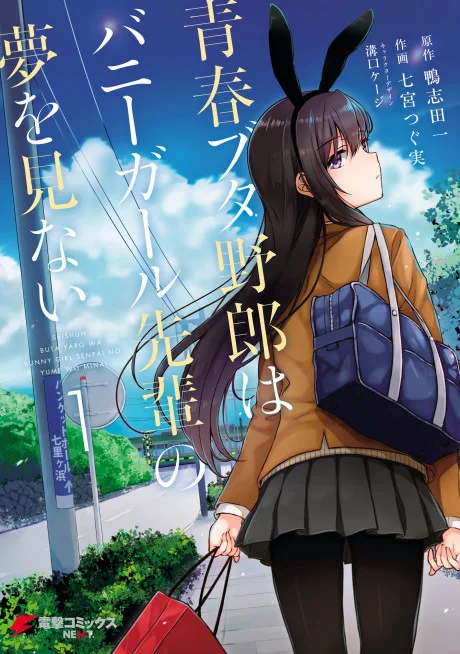
The title is genuinely bad for what the series actually is. “Bunny Girl Senpai” as a title attracts readers expecting fan service and scares off readers who would connect with the story. The Japanese title (Seishun Buta Yarou, roughly “Youth Pig Boy”) is not better. Multiple Reddit threads document people avoiding the series for years because of the title and cover art, then loving it once they started. The marketing mismatch is real and has cost this series readers who would have been exactly its audience.
The arc structure in volumes 1–5 is episodic. Each volume is largely self-contained. The pattern: character has an emotional crisis, Sakuta investigates, Rio provides pseudoscience framing, crisis resolves, girl joins the supporting cast. If that rhythm bothers you by volume 3, it’s not going to stop. The formula breaks meaningfully in volumes 6–7 and further in volume 8. But the first five volumes run on it.
Volume 11 ended on a cliffhanger, published December 2020. The university arc continuation took years in Japan, and English readers had the same wait. If you’re catching up now, you’re catching up to a complete series — all 15 main volumes are out. But readers who were following along in real time spent years on that cliffhanger.
The quantum mechanics explanations are handwavy. Rio invokes Schrodinger’s cat loosely. If you need the sci-fi mechanics to hold up under scrutiny, they don’t. The series frames the physics as metaphors for emotional states rather than literal rules, and most readers find that an acceptable trade. Some don’t.
Who Should Read Rascal Does Not Dream of Bunny Girl Senpai?
Anime watchers who finished the films. If you’ve seen the 13-episode series, the 2019 “Dreaming Girl” film, and the 2023 theatrical pair covering volumes 8–9, you’ve consumed nine volumes worth of story. Volume 10 through the finale at volume 15 is novels-only until the season 2 anime finishes. That’s the clearest recommendation: watch everything available, then pick up from volume 10.
OreGairu readers. Both series have a male protagonist who is cynical-but-caring, emotionally intelligent female leads, and high school social dynamics examined with precision. OreGairu runs colder and more psychologically dense. BGS runs warmer and more supernatural. They share a readership constantly and are frequently cited together as the two peaks of smart high school romance LN.
Monogatari readers who found Monogatari too puzzle-heavy. BGS borrows Monogatari’s template (protagonist solves supernatural problems connected to girls’ psychological states, heavy character dialogue) and applies it with more emotional directness. Less puzzle-box structure, more straightforward connection between the supernatural premise and the character’s actual feelings.
New romance LN readers. Volume 1 is a strong entry point to the genre because Sakuta breaks most bad conventions of the LN protagonist type. He’s funny without being a pushover. He’s committed without being possessive. His relationship with Mai is, across 15 volumes, the most functional major romance I’ve found in the genre. If someone asks me where to start with romance light novels, I say BGS or OreGairu. BGS is the easier entry.
Frequently Asked Questions
Do I need to read the light novel if I’ve seen the anime?
If you finished the 2018 anime and both sets of theatrical films, you’ve seen adaptations covering volumes 1–9. Volumes 10–15 (the university arc) have no complete anime adaptation as of April 2026. Season 2 (2025, CloverWorks) began adapting the college arc, but it’s ongoing. Reading from volume 10 onward is the only way to get the full story right now.
How many volumes does the series have and is it finished?
How many volumes does the series have and is it finished?
15 main volumes, complete in both Japanese and English. For full publication dates, translator info, pricing, and details on supplemental volumes, see the complete series status article.
Where should I start: volume 1 or pick up after the anime?
Volume 1, always. Even after watching the full anime and both film releases. The internal monologue, physical warmth in the Mai relationship, and bonus scenes add enough that re-reading the adapted content in novel form is worth the time. If you’ve watched the anime plus all three film releases and you’re pressed for time, picking up from volume 10 is the one acceptable shortcut the community generally accepts.
Is the university arc as good as the high school arc?
Different, not worse. The college arc paces more slowly and runs more introspective. Volumes 10–12 take time to establish Sakuta’s university life and the new Adolescence Syndrome cases. Volumes 13–15 deliver the payoff. Volume 8 remains the emotional peak of the entire series for most readers, but the university arc’s finale in volume 15 is a proper ending to the full story across all 15 volumes.
What light novels are similar to Bunny Girl Senpai?
What light novels are similar to Bunny Girl Senpai?
I wrote a full breakdown of seven light novels that scratch the same itch as Bunny Girl Senpai, covering OreGairu, Monogatari, Toradora, Spice and Wolf, and more. Short answer: OreGairu is the closest match for smart high school romance. Monogatari shares the supernatural-as-metaphor structure.