
This article contains affiliate links. If you buy through these links, we earn a small commission at no extra cost to you.
Here’s every volume in order, what each one covers, where the anime adaptations diverge from the source material, and the one decision you need to make before starting: volume 1 or volume 10.
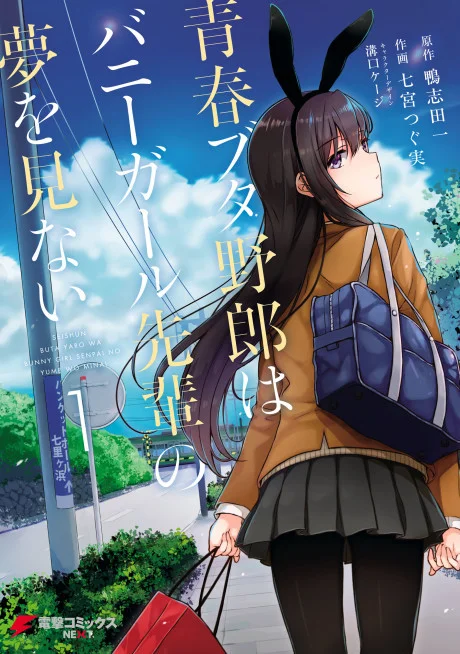
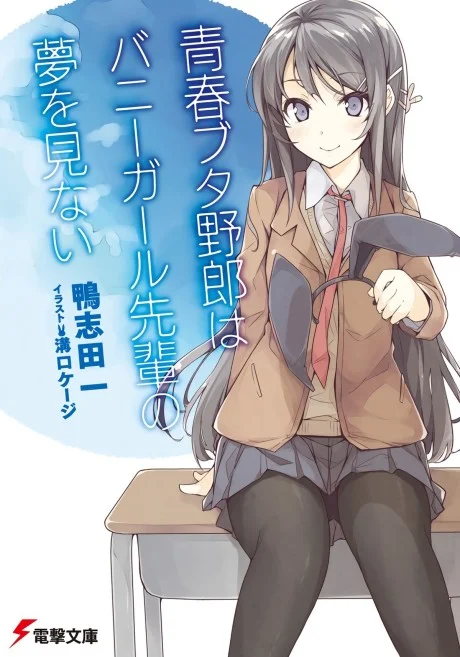
The series runs 15 main volumes. One continuous story, no spinoffs slotting between entries. The catch that confuses new readers: each volume carries a different subtitle (“Bunny Girl Senpai,” “Petite Devil Kohai,” “Logical Witch”) because the Japanese editions don’t print volume numbers on the cover. On a shelf, they look like separate books. They’re not. Yen Press numbers the English spines. Check the spine.
What Is the Correct Reading Order for Rascal Does Not Dream of Bunny Girl Senpai?
One series, fifteen volumes, read in order. No “.5” entries that slot between main volumes. No alternate routes. The catch that trips up new readers: each arc carries a different subtitle (e.g., “Bunny Girl Senpai,” “Petite Devil Kohai,” or “Logical Witch”), so it is not obvious that they are the same series on the shelf. Japanese editions do not print volume numbers on the cover. Yen Press’s English editions number the spines. If you are buying physical copies, check the spine.
The complete list:
| Vol | Subtitle | Arc / Character | Adolescence Syndrome |
|---|---|---|---|
| 1 | Bunny Girl Senpai | Mai Sakurajima | Social invisibility (Quantum Eraser) |
| 2 | Petite Devil Kohai | Tomoe Koga | Time loop (Laplace’s Demon) |
| 3 | Logical Witch | Rio Futaba | Body duplication (Schrodinger’s cat) |
| 4 | Siscon Idol | Nodoka Toyohama | Body swap (identity crisis) |
| 5 | Sister Home Alone | Kaede Azusagawa | Dissociative amnesia (cyberbullying) |
| 6 | Dreaming Girl | Shoko Makinohara | Temporal paradox |
| 7 | His First Love | Shoko arc concludes | Temporal paradox resolution |
| 8 | Sister Venturing Out | Kaede | Original personality resurfaces |
| 9 | Knapsack Kid | Rio Futaba | College-decision existential crisis |
| 10 | Lost Singer | Ikumi Akagi | University arc begins |
| 11 | Nightingale | Miori Mitou | Music / voice |
| 12 | His Student | Juri Yoshiwa | n/a |
| 13 | Santa Claus | Touko Kirishima pt. 1 | n/a |
| 14 | His Girlfriend | Touko pt. 2 + Mai arc | n/a |
| 15 | Dear Friend | Series finale | n/a |
Start from Volume 1 regardless of whether you have watched the anime. The series runs on Sakuta’s internal voice: his observations, his self-deprecating reasoning, his way of processing everything that is happening to him and the people around him. The anime adapts the events faithfully. It cannot fully adapt the monologue. That is where the series lives.
Yen On paperbacks are $15.00. Digital editions are $7.99 on Kindle. You can find the full series on Amazon here.
How Does the Anime Map to the Light Novels?
The 2018 Season 1 anime (CloverWorks, 13 episodes) adapts Volumes 1 through 5. The 2019 theatrical film “Rascal Does Not Dream of a Dreaming Girl” covers Volumes 6 and 7. In 2023, two more films released in Japan: “Sister Venturing Out” (June 2023) adapts Volume 8, and “Knapsack Kid” (December 2023) adapts Volume 9. A 2025 Season 2 anime covers the university arc from Volume 10 onward. A fourth film, “Dear Friend,” is slated for October 2026 and adapts Volumes 14 and 15.
The adaptation quality is high. CloverWorks cut very little from the core plot across the anime and films. What does get cut is internal monologue. In this series, that matters. The LN version of Sakuta is funnier and more emotionally legible than what the screen can convey. Physical affection between Sakuta and Mai is also more present in the novels than the anime portrays.
For a detailed breakdown of what each adaptation changes and where the two formats diverge most, see the full Bunny Girl Senpai light novel vs. anime comparison.
Where Should Anime Watchers Start Reading?

The community consensus (I agree with it) is to start from Volume 1. I know that means re-covering ground you have already seen adapted. The LN versions of the Mai and Rio arcs are better than their screen counterparts once you have Sakuta’s full inner voice. The experience is different enough that it does not feel like repetition after the first chapter or two.
The one acceptable shortcut: if you have seen all the screen adaptations through Volume 9, Volume 10 is a valid jump-in point. You will miss some of Sakuta’s interiority in the earlier arcs, but the plot context is there. The emotional setup for the university arc lands harder from the novels, though. That is the trade-off.
My actual recommendation: pick up Volume 1 and read through to Volume 9 before the university arc. The Kaede payoff in Volume 8 hits differently when you have lived through Volume 5 in prose form. You will understand why I was sitting in that Starbucks.

What Happens in the High School Arc (Volumes 1-9)?

Volumes 1 through 9 follow Sakuta through the end of high school at Minegahara. Each arc centers on a different girl experiencing a different form of Adolescence Syndrome (the series term for supernatural phenomena that emerge from adolescent psychological states). One girl per arc, more or less. The pattern: Sakuta notices something is wrong, investigates using pseudo-scientific frameworks, and resolves the situation by engaging with the emotional root cause. The physics is metaphor. The emotions are real.
Volume 1: Bunny Girl Senpai (Mai’s Arc)
Mai Sakurajima is a working actress and Sakuta’s upperclassman. She has become literally invisible to most people around her. No one except Sakuta can see her anymore. He cannot explain why. The arc uses the quantum observer effect as its framing: Mai has removed herself from public life, and the world is behaving as if she has ceased to exist.
This is where the series establishes its central relationship and what makes it work. Mai is not a passive love interest. She has a career and strong opinions. Zero patience for nonsense. She is skeptical of Sakuta and makes him earn every inch. Their early exchanges are the sharpest writing in the arc. Volume 1 moves fast. By the end, you have the hook and the central relationship. The reason to keep reading is clear.
Volume 2: Petite Devil Kohai (Tomoe’s Arc)
Tomoe Koga, a first-year classmate, is caught in a time loop, reliving the same few weeks to avoid a social mistake she made. She asks Sakuta to pretend to date her as a cover story. The mechanics are Groundhog Day by way of high school social anxiety. Tomoe is the most initially frustrating character in the series. She makes obviously bad decisions for understandable reasons, and that tension is the point. Her arc resolution is more satisfying than it has any right to be.
Volumes 3-4: Logical Witch and Siscon Idol (Rio and Nodoka)
Rio Futaba is Sakuta’s science-club friend and the in-universe source of the Adolescence Syndrome explanations. Her arc: she has split into two versions of herself, one who attends school and one who does not. The Schrodinger’s cat framing here is the most overtly science fiction in the series, and it earns it. Rio cannot decide who she wants to be. The split is literal.
Nodoka Toyohama’s arc in Volume 4 is shorter and runs directly off the Mai relationship. Nodoka is Mai’s younger half-sister, an idol trying to step out of a famous sibling’s shadow, and their body swap is a direct manifestation of that identity crisis. The arc handles the Mai-Nodoka dynamic without flattening either of them.
Volume 5: Sister Home Alone (Kaede’s Arc, Part One)
Sakuta’s younger sister Kaede developed a dissociative alternate personality as a protective response to severe cyberbullying. The Kaede that exists in Volume 5 is not the original Kaede. She is afraid of the outside world. She cannot remember the years before the bullying. But she has bonded deeply with Sakuta in the time since. This volume is set up. The payoff comes in Volume 8. But the setup matters. Do not skip it.
Volumes 6-7: The Shoko Arc
Shoko Makinohara is a mystery the series has been threading through the background since Volume 1. Her arc spans two volumes and involves a temporal paradox tied to Sakuta’s past: a childhood near-death experience and the scars on his chest that he deflects every time someone asks about them. Volume 7 requires Sakuta to make a real sacrifice. The 2019 theatrical film adapts this arc, and the film is good. The LN gives the paradox more room to breathe and Sakuta’s emotional reasoning more texture.
The Shoko arc is the emotional core of the entire high school period. If the series has a thesis statement, these two volumes deliver it.
Volume 8: Sister Venturing Out (Kaede’s Arc, Part Two)
The Kaede payoff. Her original personality resurfaces. The Kaede that Sakuta spent years protecting, the one who was afraid to go outside and only had him, is gone. The original Kaede does not remember any of it. Does not remember her bond with Sakuta. Does not remember how far she had come. Sakuta has to grieve someone who is still alive and right in front of him.
Volume 8 is the best volume in the high school arc. I was not prepared for it. The 2023 film “Sister Venturing Out” adapts it faithfully, but read this one in prose if you can. The interiority is what makes it work.
Volume 9: Knapsack Kid (Rio’s Arc, Part Two)
Rio returns for a college-decision arc. She has to figure out who she is when she stops defining herself by academic achievement. Sakuta is also preparing to move to Fujisawa for university. Volume 9 functions as a bridge: it closes the high school period and establishes the new dynamics that carry into the university arc. It reads fast. The emotional weight of Volume 8 is still present in the background the whole way through.
What Is the University Arc About (Volumes 10-15)?

Volumes 10 through 15 follow Sakuta at university in Fujisawa. He and Mai are now in a long-distance relationship. She has a rising acting career in Tokyo; he is a student meeting new Adolescence Syndrome cases in a new city. The emotional stakes are higher than the high school arc. The consequences are more permanent.
The university arc moves at a slower pace than Volumes 1 through 9. Each volume is longer and more introspective. Some readers find the pacing frustrating after the tighter structure of the high school arcs; the community notes it regularly. The payoff in Volumes 13 through 15 is worth the buildup. The Touko Kirishima arc across Volumes 13 and 14 is where the series earns its conclusion, and Volume 15 closes everything with surprising efficiency.
Volumes 10-11 (Lost Singer, Nightingale): Sakuta navigates new Adolescence Syndrome cases in a university setting: Ikumi Akagi (an idol) in Volume 10, Miori Mitou (a singer with a voice-related condition) in Volume 11. These volumes establish the university arc’s tone and introduce the recurring supporting cast while Sakuta adjusts to long-distance life with Mai.
Volume 12 (His Student): Juri Yoshiwa’s arc. The quietest volume in the university stretch. Its importance is primarily structural: it places Sakuta in a specific emotional position for what Volume 13 is about to do to him.
Volumes 13-14 (Santa Claus, His Girlfriend): The Touko Kirishima arc. Two volumes, the first mysterious and the second genuinely difficult. Volume 14 raises the stakes for Mai’s role in the story in a way that reframes everything about their relationship. I will not say more than that. Do not skip ahead.
Volume 15 (Dear Friend): The finale. All threads close. Kamoshida does not overstay his welcome. The ending is earned and it moves fast.
Is the Rascal Does Not Dream of Bunny Girl Senpai Light Novel Finished?
Yes. The main 15-volume series concluded in Japan on October 10, 2024. Yen Press released the English translation of Volume 15 on January 27, 2026. The story is complete in both languages.
There is a supplemental volume, “Beach Queen+,” released in Japan in July 2025. It is outside the main narrative, bonus content for existing fans rather than essential story. English release date is still TBA. A possible additional volume “Doctor Pig” was announced for October 2026 but details remain unclear. Neither is required for the main series.
The 2025 Season 2 anime adapts the university arc starting from Volume 10. A fourth film covering Volumes 14 and 15 is announced for October 2026. More adaptations are coming. But the novels are already complete and the university arc is the better reading experience in prose.
What Should I Read After Finishing This Series?
Two series come up every time this question is asked in the community, and both recommendations hold up.
OreGairu (My Teen Romantic Comedy SNAFU) is the most accurate comparison in the romance light novel space. Cynical-but-genuine male protagonist, emotionally complex relationships, sustained critique of high school social performance. OreGairu is darker and more introspective than Bunny Girl Senpai. If Sakuta’s voice was what worked for you, Hachiman is the longer, harder version of the same idea. The LN is significantly better than the anime adaptation. I say this as someone who likes the anime.
The Monogatari Series by Nisio Isin covers similar territory structurally: a male protagonist solving supernatural afflictions that affect the girls around him, with heavy dialogue and psychological framing. Monogatari is denser, more formally experimental, harder to enter. Bunny Girl Senpai reads as the warmer and more emotionally direct version of a similar concept. Good entry sequence: read Bake first, see if the dialogue style works for you.
For romance with emotional gut-punches: Toradora. For psychological school setting with a colder protagonist: Classroom of the Elite (Ayanokoji is a very different character from Sakuta, more manipulative and less warm). For dialogue-heavy character romance: Spice and Wolf.
Frequently Asked Questions
What is the correct reading order for Rascal Does Not Dream of Bunny Girl Senpai?
Read Volumes 1 through 15 in order. The series has a single continuous narrative across all 15 volumes with no spinoffs or side series that slot between the main entries. The high school arc is Volumes 1-9 and the university arc is Volumes 10-15. All 15 volumes are available in English from Yen Press.
Where do I start reading after watching the anime?
Start from Volume 1 for the full experience. The 2018 anime adapts Volumes 1-5; the 2019 film covers Volumes 6-7; the 2023 films cover Volumes 8-9. If you have seen all of the above, Volume 10 is the minimum jump-in point for new material. Volume 1 is still the better starting point because of the internal monologue the adaptations cannot fully carry.
How many volumes does the Rascal Does Not Dream of Bunny Girl Senpai light novel have?
Fifteen main volumes. The series is complete. The Japanese release ended in October 2024 and Yen Press finished the English release with Volume 15 on January 27, 2026. One supplemental volume (Beach Queen+) exists outside the main story but is not required reading.
Does the light novel add anything the anime does not have?
Yes. Significantly more internal monologue from Sakuta: his humor, self-awareness, and emotional reasoning come through more clearly in prose. Physical affection between Sakuta and Mai is more present in the novels than the anime depicts. Volumes 10-15 (the complete university arc) are only available through the light novels, with the films and Season 2 anime adapting portions of it over 2025-2026.
Does the university arc pay off after the slower pacing?
Yes. The university arc (Volumes 10-15) moves slower than the high school arc. The emotional stakes are higher. The consequences are more permanent. The Touko arc in Volumes 13-14 is where the series makes its strongest case for itself, and the finale in Volume 15 pays off everything Kamoshida built across all 15 volumes.