

This article contains affiliate links. If you buy through these links, we earn a small commission at no extra cost to you.
The title keeps readers away who would love this series. “Rascal Does Not Dream of Bunny Girl Senpai” sounds like generic fan service with a costume gimmick. Multiple Reddit threads document people avoiding it for years because the name and cover art screamed harem LN. Then they actually read it. The title is a disaster for what the series actually is.
What it actually is: a 15-volume supernatural romance where every fantastical element literalizes an emotional state the character can’t express otherwise. A girl becomes invisible because the world stopped acknowledging her. A girl loops the same two weeks to avoid a choice. Paired with that concept is Sakuta Azusagawa, direct and unambiguously in love with one person, comfortable with his own weirdness in a way most LN protagonists aren’t. For the full review, I covered what makes the series work in detail. But if you’ve finished the novels and want something to read next: here are seven picks.
TL;DR
- Aobuta is supernatural romance built on metaphor — Adolescence Syndrome turns emotional crises into physics problems (invisibility, time loops, body duplication)
- Closest match for the smart banter and emotional depth: OreGairu (My Teen Romantic Comedy SNAFU)
- Best for the supernatural-as-metaphor structure: Monogatari Series
- Best completed romance with the same gut-punch warmth: Toradora and Spice and Wolf
- All seven recommendations share a specific quality with what makes Aobuta work — not just the genre label
What Makes Rascal Does Not Dream of Bunny Girl Senpai Hard to Replicate?
Three things work together in Aobuta that most series only manage one of at a time.
The Adolescence Syndrome concept grounds every supernatural element in something emotionally true. You don’t need to care about quantum physics to understand why Shoko’s arc in volumes 6–7 hits the way it does. The sci-fi framing is a costume the emotional content wears. Kamoshida never lets the costume become the point. Rio Futaba’s quantum superposition explanation in volume 3 is there to make you feel the specific pain of someone who can’t figure out which version of herself is real — not to pass a physics exam.
Sakuta’s voice carries the whole series in a way the anime can only approximate. His inner monologue in the novels is funnier, more self-aware, and does more structural work than any adaptation manages to convey. The comedy lives in the timing of his thoughts relative to what he says aloud, and print captures that relationship better than voice acting can.
The Mai/Sakuta relationship earns its position as the emotional anchor. They’re together early. The series trusts that a functional relationship with real warmth is interesting enough to sustain fifteen volumes without manufacturing artificial tension. It’s right about that. The seven picks below all share at least one of these qualities. None are carbon copies. The matchmaking note at the top of each entry explains what specifically carries over.
Is My Teen Romantic Comedy SNAFU the Best Light Novel If You Loved Bunny Girl Senpai?

Author: Wataru Watari | Publisher: Yen Press | Volumes: 14 (complete)
Yes, for smart high school romance LN. OreGairu and Aobuta are cited together constantly in the same Reddit threads, and the comparison holds up. Both treat adolescent social anxiety as a subject worth taking seriously. Both use a male lead with genuine wit and genuine damage. Both pay off across a full series arc rather than manufacturing a new crisis per volume.
Hachiman Hikigaya is the inversion of Sakuta. Where Sakuta is direct and comfortable with his weirdness, Hachiman has built an entire defensive philosophy around his outsider status. He is more damaged and more reluctant to accept help, and watching him process that over 14 volumes is the structural engine of the series. The banter with Yukino runs at a similar wit level to Sakuta/Mai, but the edges are sharper because neither of them will admit what they don’t have to. The romance resolves. Both series land cleanly.
Honest caveat: OreGairu’s pacing is deliberate in a way that tests patience. A single cultural festival arc runs across two full volumes. If the measured tempo of the slower Aobuta stretches tested you, OreGairu runs longer on the same quality. The payoff is real. Yen Press has the complete 14-volume series in English. Start from volume 1.
Read this if: you want the emotional depth of Bunny Girl Senpai with a more psychologically fractured male lead and sharper social commentary.
Does Monogatari Series Match the Supernatural Romance of Bunny Girl Senpai?
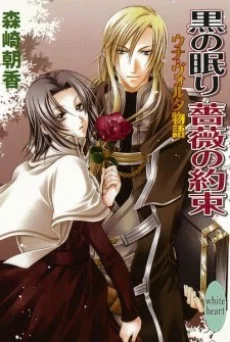
Author: Nisio Isin | Publisher: Kodansha | Volumes: 30+
More than the surface difference in tone suggests. The structural core is similar: a male protagonist who can perceive supernatural problems afflicting people around him, where each problem literalizes something emotional. Araragi’s inner monologue operates at roughly the same register as Sakuta’s — self-aware, verbally overextended, processing real feelings through ironic deflection. His tendency to absorb other people’s damage at cost to himself is the Sakuta parallel taken to an extreme.
Bakemonogatari volume 1 opens with Hitagi Senjougahara, a girl who lost her physical weight after a supernatural encounter. The weight is a literalized emotional burden. Kamoshida’s Adolescence Syndrome and Nisio Isin’s oddities are the same structural idea — use fantastical phenomena to make emotional states tangible and visible. Aobuta is warmer and moves faster. Monogatari goes further in the same direction, for readers willing to follow it there. The Araragi/Senjougahara banter in Bakemonogatari has the same charged wit as Sakuta/Mai: two intelligent people communicating sideways through sustained sparring.
Honest barrier: 30+ volumes, a non-linear release order, and prose that deliberately slows down for extended dialogue at the expense of plot momentum. The harem framing is present and real, where Aobuta sidesteps it. Entry point: Kizumonogatari (the prequel volume, published later but chronologically first). If three volumes don’t grab you, stop there. If they do, you’ve found a run that goes further in this direction than anything else on this list. Kodansha has the full series in English.
Read this if: you want the supernatural-as-metaphor structure pushed further, with denser prose and a larger cast.
Will Toradora Hit the Same Emotional Notes as Bunny Girl Senpai?

Author: Yuyuko Takemiya | Publisher: Seven Seas | Volumes: 10 (complete)
Toradora is the emotional gut-punch comparison. Where Aobuta runs warm — Sakuta and Mai are content together for long stretches, and the series trusts that — Toradora runs on more traditional romantic pain. Ryuuji and Taiga spend most of the series helping each other pursue the wrong people while the obvious answer builds in the background. When the ending lands, it earns it.
The Aobuta connection is tone and trust. Both series take their characters’ feelings seriously without manufacturing melodrama for its own sake. Minori Kushieda is one of the more interesting secondary characters in the genre: deliberately ambiguous for most of the series in a way that pays off when her actual reasoning finally surfaces around volume 7. Her clarity at that point retroactively reframes everything she did earlier. Kitamura’s arc in the later volumes gets overshadowed by the main romance but adds context that changes how the finale reads.
Honest negative: Taiga in the early volumes can be exhausting. The tsundere framing is period-appropriate to 2006, but the real character behind it takes time to become legible. Stick through volume 3 before deciding. Seven Seas has the complete 10-volume series in English.
Read this if: you want the same warmth and emotional honesty as Aobuta in a completed series with more conventional romantic tension.
What Is Gimai Seikatsu and Why Does It Compare to Bunny Girl Senpai?
Author: Ghost Mikawa | Publisher: Seven Seas | Volumes: 7+ (ongoing)
This is the recent one. Two students whose parents remarry become step-siblings. Both have been burned by their respective parents’ romantic failures in different ways. They make an explicit agreement to maintain emotional distance — no developing feelings, no complications. The series is then about watching them carefully, conscientiously honor that agreement while obviously falling for each other anyway.
The Aobuta connection is structural restraint creating emotional charge. Sakuta and Mai work partly because the relationship is functional rather than manufactured tension. Gimai Seikatsu works because the restraint is structural — they genuinely cannot act on what they feel, so every small interaction carries weight. Shared meals, side-by-side studying, silence that means something. Both characters are aware of the weight and choosing not to acknowledge it. Ghost Mikawa makes you feel every unacknowledged thing.
The pacing is slow. No external plot driving the story beyond two people managing their feelings in close quarters. For readers who loved the quieter domestic stretches of Aobuta more than the supernatural arcs, this one hits differently. Got an anime adaptation in 2024. Seven Seas, ongoing in English.
Read this if: you loved the warmth and quiet charge of the Sakuta/Mai relationship and want that same quality in a purely domestic setting without the supernatural angle.
Can Classroom of the Elite Fill the Smart-Protagonist Gap from Bunny Girl Senpai?
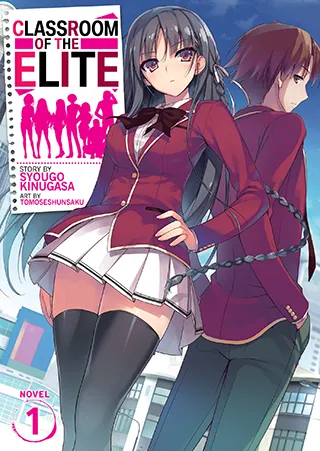
Author: Syougo Kinugasa | Publisher: Yen Press | Volumes: Year 1 complete (11.5 vols), Year 2 ongoing
Partially, and in a specific direction. Kiyotaka Ayanokouji is placed in Class D — the school’s failure tier — and proceeds to invisibly manage events around him toward goals he won’t explain. The surface overlap with Sakuta is there: both protagonists are observant outsiders operating in a school environment who see through what other people are performing. The core difference matters. Ayanokouji isn’t weird-comfortable like Sakuta. His detachment is the actual structure of who he is, not a coping strategy over something real.
The series rewards readers who want a hidden-information protagonist. You see Ayanokouji’s moves without understanding his full hand, and the series delays revealing what’s behind the curtain for multiple volumes. The classroom competition mechanics drive most of the plot. Romance is subordinated to game theory. That’s either the feature or the dealbreaker depending on what drew you to the Aobuta formula.
Warning: the Year 2 volumes (from around volume 5 onward) generate real quality complaints. The competition structures that work in Year 1 start feeling repetitive at scale. The first 11 volumes are where the concept works best. Yen Press, ongoing.
Read this if: you want the cynical observant protagonist and school setting without the romance as the primary engine.
Does Spice and Wolf Match the Dialogue-Heavy Romance of Bunny Girl Senpai?

Author: Isuna Hasekura | Publisher: Yen Press | Volumes: 25 (complete main series)
Yes, specifically the talking.
The Sakuta/Mai dynamic works because both characters are intelligent and their banter runs at a real wit level. Spice and Wolf delivers that same quality across 25 volumes via Kraft Lawrence and Holo: two people who enjoy each other’s company and express it through extended verbal sparring, building a relationship in the space between what they say and what they mean. The medieval trading economics is not the point. It’s a backdrop for character work, and Hasekura knows it — the economics chapters exist so the two of them have something to argue about while they figure out what they are to each other.
Different genre, different setting. No Adolescence Syndrome equivalent. No high school social dynamics. But for the specific appeal of watching a male lead who is witty and not passive interact with a female lead who is intelligent, established, and doesn’t need saving. Spice and Wolf runs that dynamic longer than anything else on this list. Holo is consistently cited as the stronger character in the pairing, which is not a common thing to say about LN female leads. Yen Press has the complete 25-volume main series. The 2024 anime reboot is also excellent if you want to sample first. The full series is on Amazon through Yen Press.
Read this if: you want the Sakuta/Mai banter dynamic sustained across a longer arc, in a completely different setting.
Should You Read Bottom-Tier Character Tomozaki After Bunny Girl Senpai?
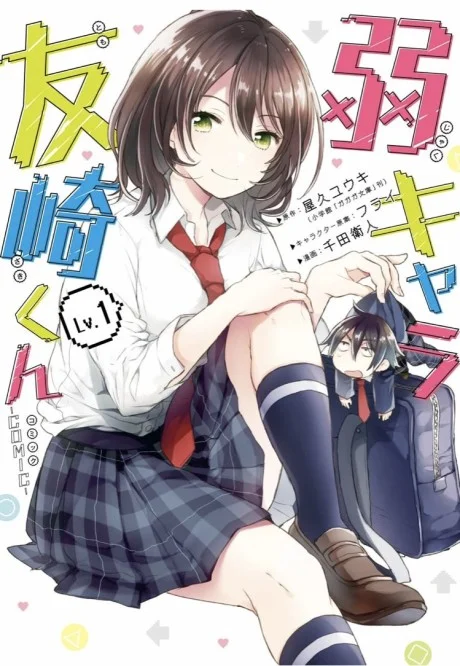
Author: Yuki Yaku | Publisher: Yen Press | Volumes: 12 (complete)
Closer in structure than in tone. Fumiya Tomozaki is top-ranked in a competitive video game and functionally invisible in every other area of his life. The most popular girl in school, Aoi Hinami, recruits him to treat social interaction as a system to be analyzed and mastered. He accepts.
Both series use a protagonist who is an outsider analyzing social mechanics from outside them. The difference matters. Sakuta doesn’t analyze social mechanics — he just doesn’t care about them, and that indifference is what frees him. Tomozaki cares and is trying to learn the system. Hinami functions like a harder, more manipulative version of an Aobuta supporting character. She has an agenda behind the mentorship that takes several volumes to fully crack open. Volumes 4–5 (the school festival arc) is where her framework starts to fracture in ways that retroactively complicate the earlier ones.
The romance is slower than Aobuta and less structurally central. Hinami is a more fascinating character than the romance interest in quite a margin. Complete at 12 volumes via Yen Press, which is a genuine advantage over ongoing series.
Read this if: you want a social-analysis protagonist and a manipulative female lead with real interiority, plus a complete 12-volume arc.
Frequently Asked Questions About Light Novels Like Bunny Girl Senpai
What is the closest light novel to Rascal Does Not Dream of Bunny Girl Senpai?
My Teen Romantic Comedy SNAFU (OreGairu) is the most recommended companion series. Both treat high school social anxiety as a serious subject. Both use a witty male lead with real emotional depth and pay off across a full series arc. OreGairu is the darker, more introspective version; Aobuta is warmer and uses supernatural framing. The community treats them as the two peaks of smart high school romance LN.
Are any of these light novels already complete in English?
Yes. Toradora (10 volumes, Seven Seas), Spice and Wolf (25 volumes, Yen Press), Bottom-Tier Character Tomozaki (12 volumes, Yen Press), and OreGairu (14 volumes, Yen Press) are all complete in English. Gimai Seikatsu is ongoing. Monogatari Series is 30+ volumes and still publishing.
Does Monogatari Series use the same supernatural metaphor structure as Bunny Girl Senpai?
Yes. Both use supernatural phenomena as literalized emotional metaphors — each character’s problem is a physical manifestation of their psychological state. Monogatari is denser and more literary, with a harem framing absent in Aobuta. The Araragi/Senjougahara dynamic in Bakemonogatari carries similar charged wit to Sakuta/Mai. Entry point is Kizumonogatari, then Bakemonogatari volume 1.
Which light novel has the best romance payoff if you loved Sakuta and Mai?
For a completed romance with the same warmth: Toradora (complete, 10 vols) and Spice and Wolf (complete, 25 vols main series). For the dynamic of a functional couple as emotional anchor: OreGairu, though it takes longer to resolve. Gimai Seikatsu is ongoing but the trajectory is clear. Classroom of the Elite is the one to avoid if a clean romantic resolution matters to you.