

This article contains affiliate links. If you buy through these links, we earn a small commission at no extra cost to you.
OreGairu ran for nearly a decade. The first volume dropped in Japan in March 2011, and by the time Wataru Watari wrapped up volume 14 in November 2019, the series had won three consecutive Kono Light Novel ga Sugoi! awards and put over 10 million copies in circulation. If you’re wondering whether to commit to all 18 volumes, the short answer is yes — and yes, it’s done.
TL;DR: Series Status
- Yes, the OreGairu light novel is complete. The main series ended with volume 14 in November 2019.
- The full series totals 18 volumes: 14 main entries plus short story compilations at 6.5, 7.5, 10.5, and 14.5.
- Yen Press completed the English release on October 18, 2022, with all 18 volumes now available.
- An official canon sequel, Shin OreGairu (6 short volumes), exists but has no English license as of 2025.
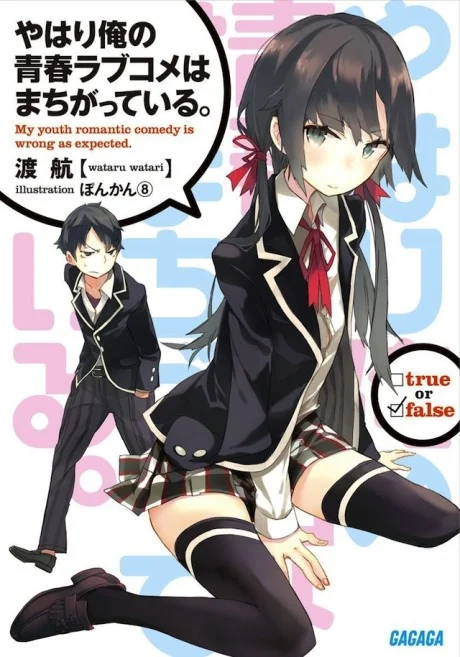
Is the My Youth Romantic Comedy Is Wrong, As I Expected Light Novel Finished?
Yes. Wataru Watari concluded the main OreGairu narrative with volume 14, published in Japan by Shogakukan’s Gagaga Bunko imprint on November 19, 2019. The series ran for eight and a half years from the first volume in March 2011. The gaps between later volumes were sometimes brutal. The wait between volumes 11 and 12 stretched over two years. The supplementary short story volume 14.5 followed in April 2021, wrapping up loose ends in slice-of-life format before the series fully closed.
Yen Press finished the English localization on October 18, 2022, with translator Jennifer Ward completing all 18 volumes. That’s a six-year localization run that started with volume 1 in September 2016. The entire run is on shelves now. No waiting.
| Details | |
|---|---|
| Series Status | Complete |
| Total Volumes | 18 (14 main + 4 short story) |
| JP Final Volume | Vol 14.5 — April 20, 2021 |
| EN Final Volume | Vol 14.5 — October 18, 2022 |
| EN Publisher | Yen Press (Yen On imprint) |
| Author | Wataru Watari |
| JP Publisher | Shogakukan (Gagaga Bunko) |
| Canon sequel | Shin OreGairu (6 vols, EN unlicensed) |
How Many Volumes Does My Youth Romantic Comedy Is Wrong Have?
18 total, split into two categories.
Main volumes (14): Volumes 1 through 14 carry the primary narrative: Hachiman Hikigaya running the Volunteer Service Club alongside Yukino Yukinoshita and Yui Yuigahama. The arc structure matters for how the reading experience shifts:
- Volumes 1–6: Service Club setup, school events, episodic problem-solving with Hachiman’s cynical first-person narration at full tilt
- Volumes 7–11: The emotional pivot: Hachiman’s “I want something genuine” breakdown, Iroha Isshiki introduced around volume 10, the series becoming something darker
- Volumes 12–14: The final arc: prom planning serves as the catalyst while Watari cashes in everything built over 11 volumes
Short story volumes (4): Volumes 6.5, 7.5, 10.5, and 14.5 are companion compilations of shorter stories set across the main series’ timeline. Don’t skip them. Volume 10.5 has character beats that add real texture to volumes 11 and 12, and volume 6.5 is the Watari who makes you laugh before he makes you feel things. Volume 6.5’s stories span two separate time periods (between volumes 6–7 and volumes 9–10), but reading it at the Yen Press publication point works fine.
Where Can I Read the OreGairu Light Novel in English?

Yen Press holds the English rights and has published all 18 volumes under their Yen On imprint. Physical copies are available at major retailers. Digital through Amazon Kindle and BookWalker. I read most of this series on Kindle between 2018 and 2022 and had no complaints about the digital editions.
Jennifer Ward’s translation includes cultural notes at the end of each volume explaining Japanese references. That’s a notable editorial choice. Watari’s prose is dense with Japanese wordplay and cultural context, and the notes help English readers navigate it without breaking the reading flow. Pick up the complete OreGairu series on Amazon — all 18 volumes are in print and on Kindle. Yen Audio also offers audio editions.
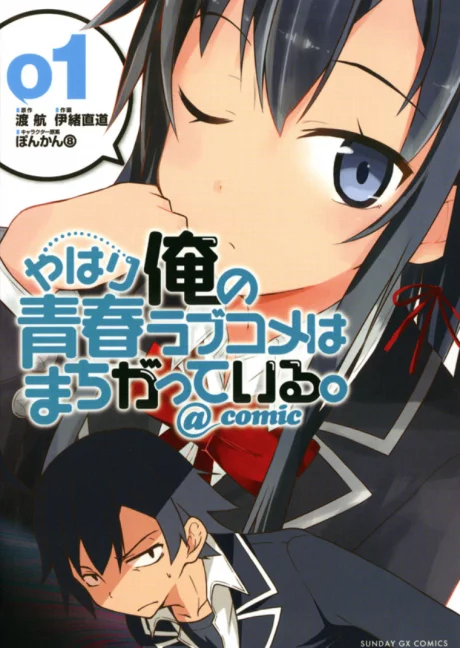
Yen Press also publishes the @comic manga adaptation in English. The manga cuts even more internal monologue than the anime does, so treat it as a companion piece rather than a substitute for the novels.
What Is the Best Reading Order for My Youth Romantic Comedy Is Wrong?
Publication order is reading order. Start with volume 1 and go straight through to 14.5. Community reading guides are consistent on this, and I’d agree without reservation.
There’s one option floated for post-anime readers: if you’ve seen all three seasons, start at volume 7 to get fresh story content. I don’t recommend it. Volumes 1–6 in prose form are a different experience from the anime. Hachiman’s internal monologue fills pages that the anime handles with a reaction shot. The cultural festival arc in volume 3 and the Valentine’s arc in volume 6 both contain extensive LN-exclusive interior scenes that build the foundation everything else depends on. Skipping them means you’ve missed the actual work the series does.
The four .5 volumes are where new readers hesitate. Push through that hesitation. They’re short, they run Watari’s comedy at full power, and volume 10.5 sets up emotional texture that pays off hard in volume 11. The Watari who wrote those lighter short stories is the same one who’ll hit you in the chest in volume 12 — you want both sides of him.
Is There a Sequel to OreGairu After Volume 14?
Two things exist past volume 14.5: one canon, one not.
Shin OreGairu is the official canonical sequel. Released as 6 short volumes bundled with Season 3 Blu-ray discs starting September 24, 2020, the combined length equals roughly two regular LN volumes. It picks up one week after volume 14’s conclusion and follows Hachiman navigating his relationship with Yukino. As of 2025, Yen Press has not licensed Shin OreGairu for English. English readers have to track down fan translations.
ANOTHER is the non-canon spin-off — 7 short volumes released as Season 2 Blu-ray bonuses, presenting alternate relationship routes including a Yui-centric path. Watari explicitly stated ANOTHER is not the main story and is non-canonical. No English license exists for this either.
The ANOTHER release stirred up years of shipping-war arguments when it dropped. Some Yui fans used the alternate route to push back against the main series ending. Watari’s public statement was clear on canonicity. My read: the main series ending is the one that matters, and Shin OreGairu is the extension worth finding if you want more time with these characters.
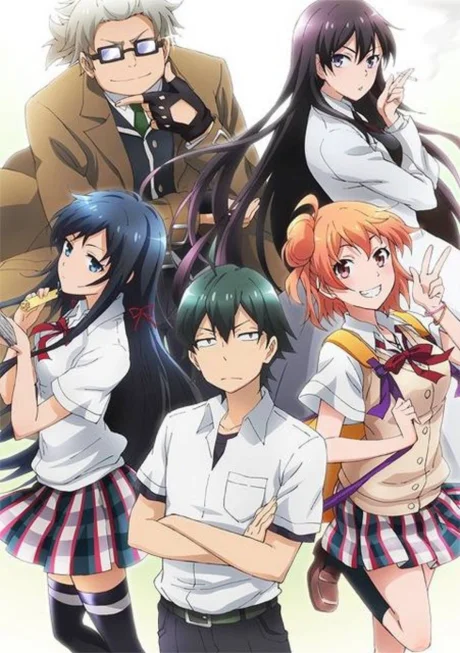
How Does the OreGairu Light Novel Compare to the Anime?
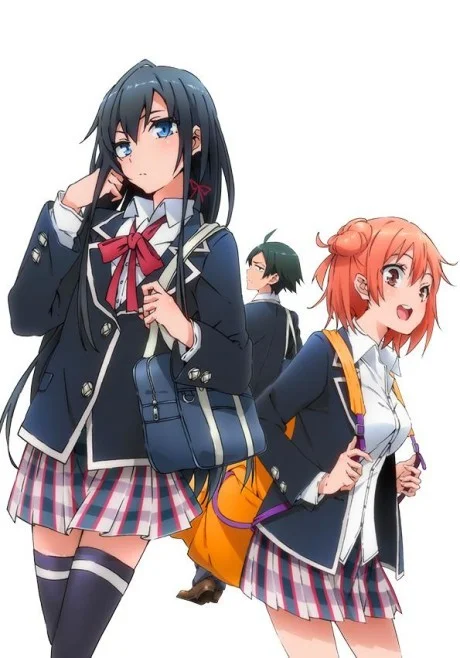
This is where the case for reading the novels is strongest. I’ve gone through both formats, and the gap is significant enough that calling them equivalent would be wrong.
Hachiman’s internal monologue is the engine of OreGairu as a reading experience. The anime cuts an estimated 70–80% of it. What you get on screen is behavior without psychology. You see him act, but you don’t get the six pages of self-aware social analysis that preceded the action. That’s the difference between a good character and a genuinely memorable one.
Season 1 (Brain’s Base, 2013) covers volumes 1–6 across 13 episodes, plus one anime-original beach episode that has no LN counterpart. The cultural festival in volume 3 and the Valentine’s arc in volume 6 both lose extensive interior scenes — passages the anime can only convey through facial expressions and sparse narration.
Season 2 (Feel, 2015) adapts volumes 7–11 and represents the biggest divergence in emotional buildup. The climax (Hachiman’s classroom breakdown) is present in both, but in the novels it follows hundreds of pages of accumulation that the anime compresses into a fraction of the space. The Rumi Tsurumi subplot has additional LN scenes that develop her arc beyond what the anime shows.
Season 3 (Feel, 2020) covers volumes 12–14 and is the most faithful of the three seasons. Iroha’s character arc, tracing her growth from flighty student council president to someone more genuine, has interior scenes that clarify her motivations during the final arc. The LN epilogue also contains additional content not present in the anime finale.
All four short story volumes (6.5, 7.5, 10.5, 14.5) were entirely unadapted across all three seasons. The fan-favorite slice-of-life moments (holiday episodes, character interactions outside the main plot) exist only in the novels.
I’ve written a full breakdown of what the anime cuts and changes in the OreGairu light novel vs. anime comparison.
Is OreGairu Worth Reading If You’ve Already Watched the Anime?
Yes. No asterisk.
This isn’t a case where the anime is a comparable experience, and you’re re-reading for flavor details. The novels are the primary work. The anime is an adaptation with structural limitations that matter. If you watched all three seasons and thought the series was good, the novels will show you why people put it next to seriously literary fiction.
My personal experience: I watched Season 1 when it aired in 2013, went cold on the franchise for a few years, then started the Yen Press volumes in 2018. By volume 4 I was annoyed I’d waited so long. By volume 11 I understood why OreGairu sits at the top of every serious light novel ranking. The gap between watching and reading is not small.
The middle stretch — volumes 4 through 9 — has slow points. The episodic Service Club format gets repetitive before Iroha’s introduction around volume 10 reshapes the dynamic. Some fans argue the series was padded to extend its run for additional anime seasons, and the over-two-year gap between volumes 11 and 12 does nothing to counter that argument. Push through it anyway. The payoff in volumes 11 through 14 earns everything Watari built in those quieter middle entries.
One real criticism worth acknowledging: volume 14’s ending divided the fandom. After 13 volumes deconstructing romance and social performance, Hachiman ends up in a conventional relationship with Yukino — a resolution some readers argue contradicts the series’ anti-romcom premise and Watari’s pre-publication statement that the ending would be “bittersweet.” I think the ending works. But it’s not an unreasonable read to find the final volume’s nearly 300-page buildup to a conventional confession slightly at odds with the philosophical groundwork before it.
What Should I Read After Finishing OreGairu?
Bottom-tier Character Tomozaki (Yuki Yaku, Yen Press) is the closest match. Socially withdrawn male protagonist, analytical deconstruction of social performance, a sharp female lead who pushes him to engage with the world. The premise maps almost directly onto OreGairu’s. Start there.
Rascal Does Not Dream of Bunny Girl Senpai (Hajime Kamoshida) runs on a similar frequency — sardonic male lead with genuine depth, a complex female lead, emotional weight beneath the banter. The early Sakuta/Mai dynamic has the same underlying tenderness as Hachiman and Yukino, framed differently. Sakuta is softer and less damaged than Hachiman, which either makes the series more or less interesting depending on what you want from the genre.
Hyouka (Honobu Yonezawa) is technically a mystery, but Houtarou Oreki’s deliberate energy conservation hits exactly like Hachiman’s social withdrawal. Both get pulled into club activities against their stated preferences. Both feature literary-quality prose and a careful slow-burn dynamic with the lead female character. Oreki and Eru Chitanda as a pairing is the most natural comparison to Hachiman and Yukino in terms of how the relationship is constructed.
Classroom of the Elite (Syougo Kinugasa) goes darker and more psychological. The hyper-analytical outsider navigating a school hierarchy is the same archetype, but the series leans into thriller mechanics over romance. The Year 1 volumes especially are strong; later entries generate real quality complaints from readers.
Toradora! is the classic comparison for the romance structure — same initial-hostility-to-genuine-connection arc shape. Without OreGairu’s philosophical density, it’s a warmer read. If the internal monologue was what hooked you, Toradora may feel lighter than you want.
Frequently Asked Questions
Is the My Youth Romantic Comedy Is Wrong light novel finished?
Yes. The main OreGairu series concluded with volume 14, published in Japan on November 19, 2019. Supplementary volume 14.5 followed April 20, 2021. Yen Press completed the English localization on October 18, 2022. The full 18-volume series is available in English now.
How many volumes does OreGairu have in total?
18 volumes. The 14 main numbered volumes plus four short story compilations labeled 6.5, 7.5, 10.5, and 14.5. All 18 are available in English from Yen Press.
Is there an OreGairu sequel?
Yes. Shin OreGairu is the official canon sequel, released as 6 short volumes bundled with Season 3 Blu-ray discs starting in 2020 — set one week after volume 14’s conclusion. As of 2025, no English license has been announced. The ANOTHER spin-off (7 volumes, non-canonical) also has no English release.
Does the OreGairu anime cover the full light novel?
The anime adapts all 14 main volumes across three seasons. Season 1 covers volumes 1–6, Season 2 covers volumes 7–11, Season 3 covers volumes 12–14. However, the anime cuts an estimated 70–80% of Hachiman’s internal monologue, and all four short story volumes remain unadapted.
Where can I buy the OreGairu light novel in English?
All 18 volumes are published by Yen Press and available through Amazon (Kindle and paperback), BookWalker (digital), and major bookstores. Yen Audio offers audio editions of the series as well.