

Finishing OreGairu‘s 14 main volumes (18 if you count the short story .5 books) leaves a specific kind of void. Not the generic “what do I read next” void that most series leave. The sharper one where you realize the genre is full of series that do parts of what OreGairu does, and nothing that does all of it at once.
Hachiman’s first-person narration is the hardest piece to replace. Not just the cynicism, which is common enough in LN protagonists. The specific thing is the way the cynicism is layered: defensive, self-aware, and gradually revealed to be covering something real. By volume 7, when the “I want something genuine” arc builds to its emotional peak, you’ve spent hundreds of pages inside that shield. It costs something when it finally cracks. That’s not a prose trick you can fake.
I’ve been chasing that combination since I finished volume 14 in 2022. These seven series came closest.
This article contains affiliate links. If you buy through these links, we earn a small commission at no extra cost to you.
TL;DR
- OreGairu’s core is Hachiman’s layered first-person narration — the cynicism is a defense, not an aesthetic. Finding a full substitute is basically impossible, but these picks come close.
- Hyouka and Bunny Girl Senpai are the closest in prose quality and emotional restraint.
- Classroom of the Elite and Tomozaki-kun take the analytical outsider protagonist in different directions: darker and more calculated for the former, more redemptive for the latter.
- Toradora! is the best entry point into the seishun genre lineage that OreGairu came from.
What Makes OreGairu Specifically Hard to Replace?
Most recommendation lists treat OreGairu as a “smart protagonist” series and leave it there. It’s more specific than that.
Hachiman’s narration in volumes 1–6 operates at one level: sharp social commentary, decent laughs, self-deprecation that works. Then volumes 7–11 (the Season 2 material) shift. The commentary starts turning inward. His analysis of other people becomes indistinguishable from his avoidance of his own feelings. Volume 8’s cultural festival arc — that outburst — lands because the prose spent hundreds of pages building to it. It’s not a dramatic beat; it’s a pressure release.
The anime exists, and Season 2 covers this arc. But the adaptation cuts somewhere between 70–80% of Hachiman’s internal monologue, and what remains is the behavior without the texture. If you’ve only watched the anime and haven’t read the source material, you’ve seen the shape of the story but missed most of what makes it resonate. The full breakdown of what the anime cuts is here.
What I’m looking for in substitutes: writing that treats interiority seriously, with social dynamics carrying real weight and romance that earns its resolution rather than rushing it.
Is Hyouka Worth Reading for Fans of OreGairu’s Writing Quality?

Hyouka is technically a mystery novel series. What makes it a consistent OreGairu recommendation is Houtarou Oreki, a protagonist defined by his energy-conservation philosophy. He refuses to expend effort on anything not strictly required. Forced into the Classics Club by his sister’s letter, he gets pulled into low-stakes mysteries by Eru Chitanda, whose enthusiasm for investigation is the exact opposite of his default state.
The parallel to Hachiman is structural. Both protagonists withdraw deliberately. Chitanda pulls Oreki out of that withdrawal the same way Yukino draws Hachiman in, operating from genuine curiosity rather than social calculation. Both series treat high school as a setting where ordinary events carry real emotional stakes.
Where Hyouka differs: it’s lighter. Oreki’s energy conservation isn’t a defense mechanism born from social trauma. It’s more of a philosophical position, and the series is gentler about complicating it. The mystery-of-the-week format in volumes 1–4 gives way in volume 5 (The Niece of Time) to a longer arc that’s considered the series’ literary peak. That volume in particular is the kind of prose you slow down to re-read rather than skim.
One honest caveat: the English release from Yen Press has been slow. As of early 2024, three volumes are out. The Japanese run is complete at five volumes, and the fan translation community has covered the full series for anyone who doesn’t want to wait. Pick up Hyouka on Amazon.
Does Rascal Does Not Dream of Bunny Girl Senpai Match OreGairu’s Emotional Depth?
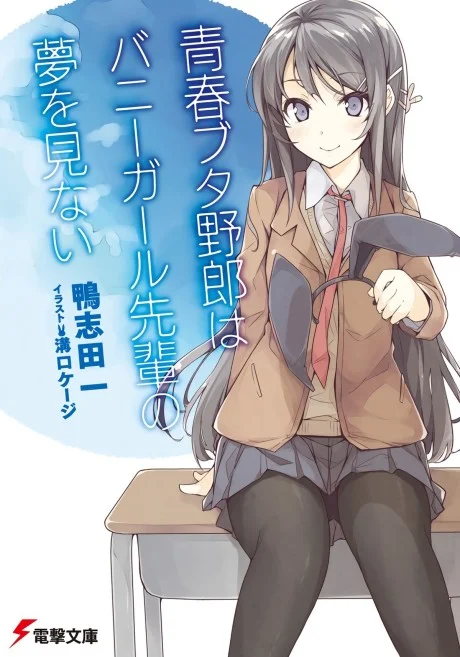
Bunny Girl Senpai uses a supernatural hook — Adolescence Syndrome, a phenomenon that physically manifests teenagers’ psychological crises — to examine the same social anxieties OreGairu addresses through dialogue and interior monologue. Each arc introduces a character dealing with some form of social erasure, identity fragmentation, or relationship damage. The supernatural element is not the point; it’s a framing device for the emotional problem underneath.
Sakuta Azusagawa is the protagonist. He’s softer than Hachiman, more openly weird in a way he’s already comfortable with rather than hiding. His banter with Mai Sakurajima (the actress who becomes literally invisible to everyone around her due to Adolescence Syndrome) runs at a similar wit level to Hachiman and Yukino’s exchanges. The difference is that Sakuta doesn’t have the wall. He’s already processed most of his damage before volume 1 starts, which makes him a fundamentally different kind of narrator.
Volumes 1–3 are strong and covered by the anime. The post-anime material (volumes 7 onward) is where the series gets heavier. The Shouko arc in particular deals with time-loop elements and carries the most emotionally demanding writing in the series. Yen Press, 9+ volumes in English, ongoing. Pick up Bunny Girl Senpai on Amazon.
Is Bottom-Tier Character Tomozaki-kun the Closest Equivalent to OreGairu?

Tomozaki is a top-ranked competitive gamer who applies none of his optimization instinct to real life. No friends, no social presence. He gets recruited by Aoi Hinami — the most popular student in school — who proposes treating social interaction as a game with learnable rules and measurable progress. He agrees.
The OreGairu comparison that keeps showing up in fan communities: both protagonists analyze social performance rather than just participating in it. Hachiman observes and refuses to perform. Tomozaki observes and learns to perform, which creates an entirely different set of complications as the series develops. By volumes 4–5 (the school festival arc), the series starts interrogating whether Hinami’s system is actually good for Tomozaki, or just optimizes him into something that works for her.
Hinami is the reason Tomozaki-kun stays interesting across its full run. She functions like a harder, more instrumentally calculating version of Yukino. Her actual motivations take multiple volumes to surface, and when they do, the earlier instruction sequences read differently in retrospect. Complete at 12 volumes in Japan, Yen Press. Pick up Tomozaki-kun on Amazon.
How Dark Does Classroom of the Elite Go Compared to OreGairu?

Advanced Nurturing High School covers all student expenses and offers total academic freedom — except Class D gets no points, no privileges, and no explanation. Kiyotaka Ayanokouji, placed in Class D, proceeds to invisibly orchestrate events while the rest of his class scrambles to understand the rules they’re playing by.
Ayanokouji is not Hachiman. Hachiman’s detachment is a coping mechanism sitting over genuine pain. Ayanokouji’s detachment has a different origin, gradually revealed across Year 1, and it’s not protection. It’s structure. He doesn’t deflect because things hurt; he deflects because visible involvement would cost him precision. That philosophical gap between the two characters is what makes the comparison productive rather than redundant.
Year 1 (volumes 1–11.5, all available from Yen Press in English) is where the series earns its reputation. The social manipulation mechanics are explicit, constructed to reward readers who track the underlying logic carefully. Year 2 is more contested among fans: volume 5 onward of Year 2 draws real quality complaints, with classroom competition arcs that feel mechanical at scale. Read through Year 1 and assess from there. Pick up Classroom of the Elite on Amazon.
Is Toradora! Still Worth Reading After OreGairu?
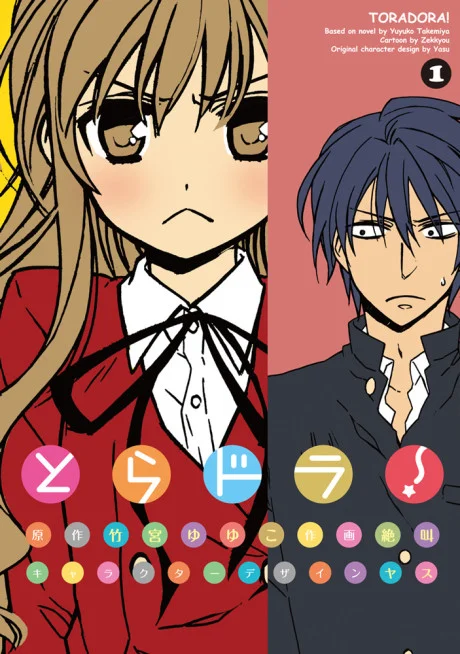
Toradora! is the direct predecessor in the seishun lineage. Ryuuji Takasu (intimidating face, domestically competent) and Taiga Aisaka (small, sharp, socially catastrophic) reach a mutual-assistance agreement based on their respective crushes on each other’s best friends. The premise is sitcom-level. The execution isn’t.
What Toradora! does that earns it permanent genre status: the relationship between Ryuuji and Taiga develops through proximity and shared inconvenience rather than manufactured dramatic moments. By the series’ back half (volumes 6–10) you’re watching two people who actually know each other, history and all, rather than the anime-convenient version of knowing each other.
The comparison to OreGairu is most visible in how both series build their female leads. Taiga and Yukino occupy different emotional registers, but both are constructed around the distance between a defensive exterior and a real interior. The hostile-to-tender arc in Toradora! is more direct than OreGairu’s, but the character work underneath holds. Complete at 10 volumes, Seven Seas in English. Pick up Toradora! on Amazon.
Does The Melancholy of Haruhi Suzumiya Hold Up for OreGairu Fans?
Haruhi is where the tradition of the witty, self-aware first-person male narrator in light novels gets fully established. Kyon (referred to only by that nickname) is dragged into the SOS Brigade by Haruhi Suzumiya, who is searching for aliens, time travelers, and espers. Kyon’s narration is his defining trait: sardonic, observational, filtered through resigned acceptance that gradually reveals something more complicated underneath.
The Kyon-to-Hachiman line of influence is real. Both narrators use running commentary as a form of distance. Both get pulled into club activity by a compelling female lead whose stated goals mask a deeper problem. The dynamics are different: Haruhi is a force acting on Kyon, while Yukino is more of a genuine counterpart to Hachiman. But the prose register is clearly related. Haruhi came first (2003), and Watari almost certainly read it.
Practical caveat: 11 volumes, and the later books are slower going. Volumes 1–2 (The Melancholy and The Sigh) are the most immediately rewarding. Volume 9 (The Dissociation) and beyond require patience, as they were written during the infamous hiatus period and the pacing shows. Read at least through volume 4 before deciding whether to continue. Yen Press in English, complete Japanese run. Pick up Haruhi Suzumiya on Amazon.
Is Haganai (Boku wa Tomodachi ga Sukunai) Worth Reading as an OreGairu Follow-up?

Haganai is the “loners forced into a club” premise played more comedically than OreGairu. Kodaka Hasegawa, misread as a delinquent due to his blond hair, stumbles into a club formed by Yozora Mikazuki (who has been carrying on conversations with an imaginary friend) and Sena Kashiwazaki, a rich, popular girl who is somehow also incapable of making real friends.
The structural comparison to OreGairu is fair: characters who’ve built specific self-images to avoid the pain of genuine connection, forced into proximity by a club, gradually complicating each other. What Haganai does differently is lean into the comedy of that setup rather than the tragedy. The stakes are lower, the series doesn’t build toward the same emotional weight, and that’s fine — it’s not trying to.
Where it earns a spot: the Yozora and Sena dynamic is one of the funnier and more character-specific rivalries in the genre. Their hostility is rooted in actual personality conflict rather than comedic shorthand, and watching both characters grudgingly develop across 7–8 volumes is genuinely satisfying. The ending is divisive among fans: the series was caught in a shipping war that the author seemed to struggle to resolve. Read volumes 1–7 for the good run, and approach the finale with calibrated expectations. Complete at 13 volumes in Japan, Yen Press. Pick up Haganai on Amazon.
Where Should You Start From This List?
For prose quality and emotional register closest to OreGairu: start with Hyouka, then Bunny Girl Senpai. Both take the interiority seriously and don’t rush their resolutions.
For the analytical outsider protagonist taken in a different direction: Classroom of the Elite Year 1. It’s colder and more calculated than OreGairu, but the “protagonist dissecting social hierarchy from the outside” element is fully present.
For the genre lineage: Toradora! first, then Haruhi. They’re the two series that built the framework Watari was working in. Reading them after OreGairu, you can see the influences clearly — and they both hold up on their own terms.
Tomozaki-kun is the pick if you want a series in active conversation with what OreGairu does, updating the formula rather than just repeating it. Haganai covers the “lighter, same DNA” slot if you need a break from heavier character studies.
None of them replicate the experience of being inside Hachiman’s head from volume 1 through 14. But that’s a reasonable standard to not meet.