
Most light novels are written for teens. The protagonists are high schoolers. The conflicts are coming-of-age. The romances are chaste. That’s fine. But if you’re past that stage and want light novels that deal with adult themes, complex morality, real consequences. Characters old enough to drink, the options are better than you’d think.
TL;DR
- Most light novels are written for teens. These aren’t. Adult themes, complex morality, real consequences. Characters old enough to drink.
- Spice and Wolf leads the list. Economics, mature romance, and a protagonist who solves problems by understanding currency.
- 11 series that treat you like an adult. From Overlord’s political drama to 86’s military realism to Boogiepop’s existential horror.
I don’t mean “adult” as a euphemism. I mean series where the writing respects your intelligence, the protagonists face problems that can’t be solved by powering up. The themes go somewhere that young adult fiction won’t. War crimes. Economic manipulation. Moral compromise. The cost of trauma on a person who can’t just “get stronger” and move on.
These eleven light novels earn the label. Some are dark. Some are just mature. All of them assume you’ve read enough fiction to not need your hand held.
Spice and Wolf
Author: Isuna Hasekura | Publisher: Yen Press | Volumes: 17 (complete, plus sequel series)
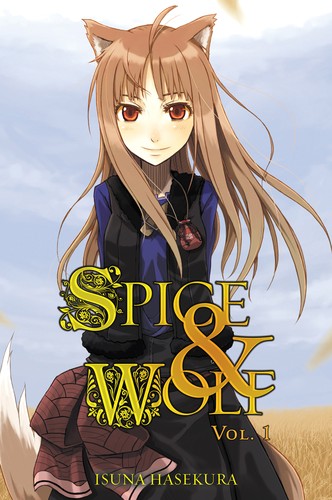
A traveling merchant and a wolf goddess argue about currency exchange rates while slowly falling in love. That’s the pitch. And it’s genuinely one of the best romance light novels ever written, because Hasekura treats economics the way other authors treat sword fights.
Lawrence is an adult. He has a career. He worries about profit margins and trade route disruptions. Whether the woman he’s traveling with will outlive him by centuries. The conflict in Spice and Wolf comes from market crashes and currency manipulation. Merchant guild politics. The romance develops through negotiation, banter, and two people who are too proud to say what they feel directly. It’s the most adult light novel in tone even though nothing extreme happens. I reread Volume 5 (the bankruptcy arc) after starting my own business and it hit completely differently from how it did at twenty.
Why it’s for adults: The economic plots require actual attention. Lawrence’s financial calculations drive the tension. If you’ve ever had to think about money seriously, this resonates in a way it can’t for teenagers.
The Apothecary Diaries
Author: Natsu Hyuuga | Publisher: J-Novel Club | Volumes: 12+ (ongoing)
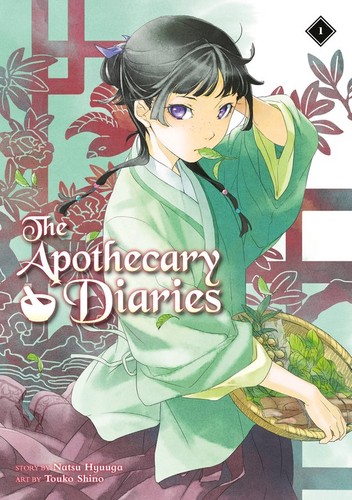
Maomao is a pharmacist’s daughter working as a servant in the imperial rear palace. She solves poisoning cases, medical mysteries, political conspiracies. All using chemistry, herbalism, and a borderline sociopathic level of curiosity. The setting is a fictionalized Chinese imperial court. The tone is measured, smart, and surprisingly dry.
The Apothecary Diaries handles themes that most LNs avoid entirely: sex work in the rear palace (treated matter-of-factly, not salaciously), poisoning as a political tool, the lives of women with zero agency in a patriarchal court system. Maomao navigates all of it with scientific detachment that makes her unlike any other protagonist in the medium.
Why it’s for adults: Court politics. Medical ethics. A protagonist who processes the world through pharmacology rather than emotions. The anime is excellent, but the LN gives you Maomao’s full analytical process. I recommend this to people who don’t read LN at all. It transcends the format.
86: Eighty-Six
Author: Asato Asato | Publisher: Yen Press | Volumes: 13+ (ongoing)
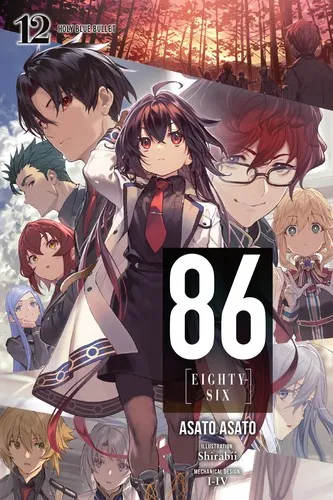
A country wages war using soldiers it has legally classified as subhuman. They’re sent to fight in units designed to get them killed. The republic’s citizens are told the war is fought by unmanned drones. 86 is about systemic racism, state propaganda, and what happens when a privileged officer discovers the truth about the people she’s been sending to die.
Asato doesn’t flinch. Characters die. The survivors carry it. The political system that created the Eighty-Six isn’t defeated by heroes. It collapses under its own contradictions, slowly, while people die waiting for justice that may never come.
Why it’s for adults: Racial persecution, military ethics, PTSD, survivor’s guilt. The emotional weight requires life experience to fully absorb. This isn’t power fantasy dressed up as war fiction. Volume 1 made me put the book down and stare at a wall for ten minutes. That doesn’t happen often.
Overlord
Author: Kugane Maruyama | Publisher: Yen Press | Volumes: 18 (complete)
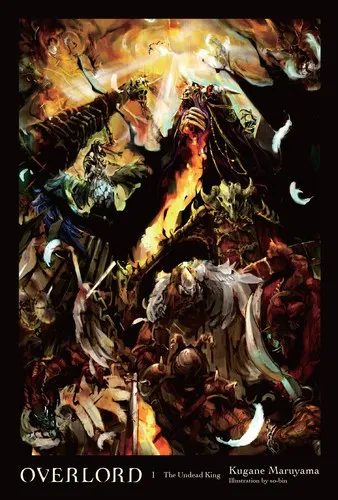
Ainz Ooal Gown is an undead overlord running a guild of NPCs who worship him as a god. He’s also a salaryman who has no idea what he’s doing and covers his incompetence with overwhelming force. Overlord is funny until it isn’t. Ainz does genuinely terrible things to innocent people, and Maruyama writes those scenes from the victims’ perspective so you feel the horror of being on the wrong side of an isekai protagonist.
The series is a sustained examination of what happens when an amoral entity with godlike power decides to “build a kingdom.” The political maneuvering is complex. The cast is enormous, and every faction has its own agenda. It reads like dark political fantasy that happens to have an isekai premise.
Why it’s for adults: Moral ambiguity played straight. Ainz isn’t a villain you root against or a hero you root for. He’s both, simultaneously. The series never resolves that tension. I finished all 18 volumes rooting for Ainz while knowing he’s a monster. Maruyama earned that contradiction.
Mushoku Tensei
Author: Rifujin na Magonote | Publisher: Seven Seas | Volumes: 26 (complete)
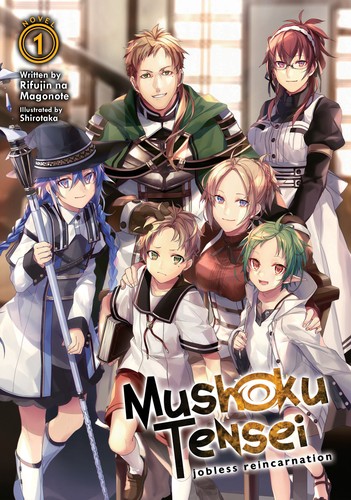
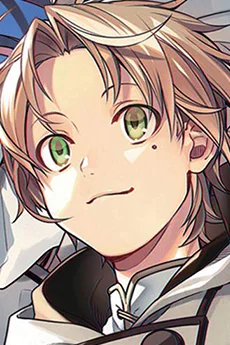
A 34-year-old shut-in dies and reincarnates as a baby in a fantasy world. He remembers everything. The series follows his entire second life, from infancy to old age, as he tries to become a person worth being. Mushoku Tensei is my favorite isekai, and it’s also the one I have the most complicated feelings about.
Rudeus starts the series as a deeply flawed person. His behavior in the early volumes is uncomfortable by design. The series doesn’t excuse it. It makes him confront it, slowly, across twenty-six volumes. The growth is genuine, but it takes time, and some readers never forgive the starting point. That’s valid.
Why it’s for adults: A protagonist reckoning with who he was in his previous life while trying to be better in this one. Themes of regret, second chances, parenthood, and mortality. The back half is about raising children and facing death. That doesn’t hit the same way at sixteen.
Re:Zero
Author: Tappei Nagatsuki | Publisher: Yen Press | Volumes: 37+ (ongoing)
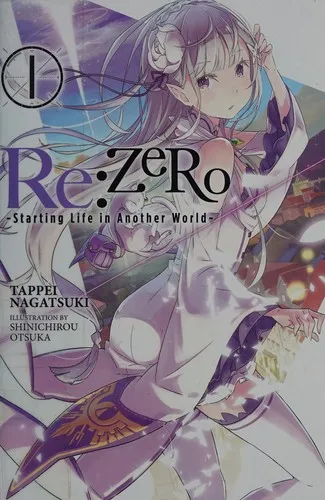
Subaru Natsuki dies repeatedly. Each death resets him to a checkpoint. He remembers everything. Nobody else does. Re:Zero uses this mechanic to explore psychological breakdown in a way I haven’t seen any other LN attempt. Subaru doesn’t get stronger through death loops. He gets more broken. The deaths accumulate as trauma.
Arc 4 (Volumes 10-15) is the peak. Subaru trapped in the Sanctuary, dying dozens of times, losing his mind, unable to save everyone. Nagatsuki writes mental collapse with specificity that goes beyond “protagonist is sad.” Subaru’s coping mechanisms deteriorate. His relationships fracture because he can’t tell anyone what he’s going through.
Why it’s for adults: Psychological horror, PTSD, the ethics of sacrificing others to get a better outcome. The time loop isn’t a power. It’s a curse that Subaru can’t escape.
The Empty Box and Zeroth Maria
Author: Eiji Mikage | Publisher: Yen Press | Volumes: 7 (complete)
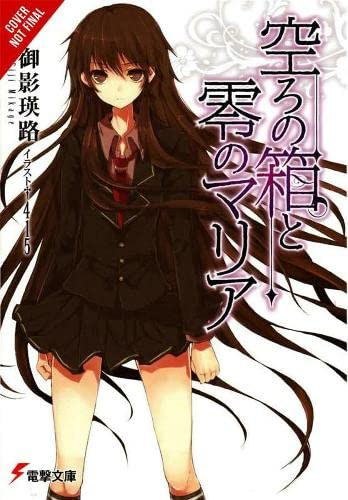
Kazuki Hoshino’s ordinary high school life gets shattered when a mysterious girl named Maria transfers in carrying an empty box. She claims she can grant any wish. The catch: previous wishes have created time loops, death games, psychological prisons that Kazuki is already trapped in without knowing it.
HakoMari (the fan abbreviation) is a psychological thriller that gets genuinely dark. The “wishes” twist reality in ways that force characters to confront their worst impulses. The non-linear structure means you’re constantly reassessing what you thought you understood. It’s seven volumes. Tight, complete, no filler.
Why it’s for adults: Psychological manipulation, moral ambiguity, a narrative structure that demands active reading. Not a series you can skim. I read it twice. The second time was better because I caught what Mikage was hiding in the early chapters.
Goblin Slayer
Author: Kumo Kagyu | Publisher: Yen Press | Volumes: 16+ (ongoing)
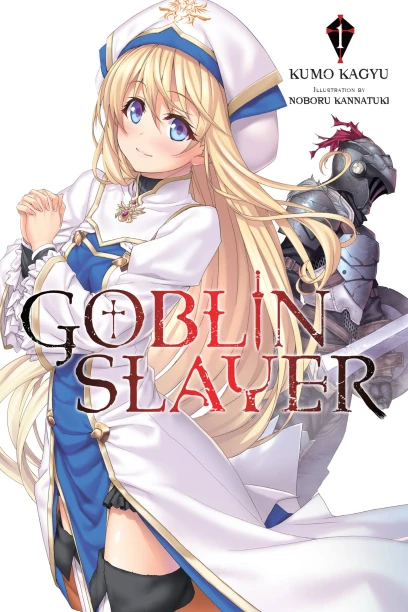
A man in battered armor who only kills goblins. That’s his entire identity. Goblin Slayer treats its fantasy setting like a tabletop RPG where the low-level quests are the most dangerous because nobody takes them seriously. The violence is explicit. The goblins do terrible things to the people they capture. The protagonist’s trauma is the engine of the plot.
Beyond the shock value (which is overstated in the discourse), Goblin Slayer is a tactical series. He uses cheese, flour dust, poison, water, scroll bombs. He fights like someone who has studied his enemy for years and refuses to take any risk he doesn’t have to. That methodical approach is more interesting than any flashy battle scene.
Why it’s for adults: Graphic violence, sexual violence (implied, not depicted in detail after Volume 1), and a protagonist driven by trauma rather than ambition. The series doesn’t romanticize what happened to him.
Boogiepop
Author: Kouhei Kadono | Publisher: Seven Seas | Volumes: 23+ (ongoing)
The godfather of modern light novels. Published in 1998, Boogiepop basically created the template that every LN after it followed. Each volume tells a fragmented story from multiple perspectives, out of order. Something dangerous is happening. Different people witness different pieces. You assemble the truth.
Boogiepop, the entity, appears when the world is in danger. But Boogiepop isn’t the protagonist. The high school students caught up in whatever crisis is unfolding are the real focus. Kadono writes teenagers with the weight of adults. They make hard choices. Some of them don’t survive.
Why it’s for adults: The fragmented narrative structure. Kadono trusts you to keep track of timelines and unreliable narrators. The thematic connections between volumes. It’s literary fiction wearing a light novel’s clothes. I put off reading it for years because the 2019 anime confused me. The books are nothing like that adaptation.
Torture Princess: Fremd Torturchen
Author: Keishi Ayasato | Publisher: Yen Press | Volumes: 16 (complete)
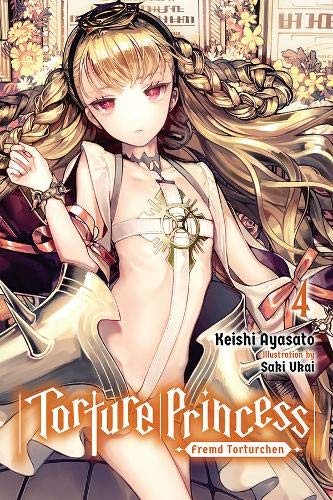
Elisabeth Le Fanu is the “Torture Princess,” tasked with hunting and executing fourteen demons. Her methods are exactly as brutal as the title implies. Kaito Sena is a boy from Earth who becomes her butler after dying. The violence is extreme, gothic, and unflinching.
Ayasato’s prose is dense. It reads more like European dark fantasy than typical Japanese LN fare. The world is cruel. The stakes are real. Elisabeth’s relationship with Kaito develops through shared suffering rather than rom-com beats. The series earns its darkness. It’s not edgy for the sake of it.
Why it’s for adults: The most graphically violent mainstream light novel series. Gothic horror prose that demands patience. Not a quick or easy read. I needed breaks between volumes. That’s a compliment.
Oregairu (My Youth Romantic Comedy Is Wrong, As I Expected)
Author: Wataru Watari | Publisher: Gagaga Bunko (JP), Yen Press (EN) | Volumes: 14 (complete, plus sequel)
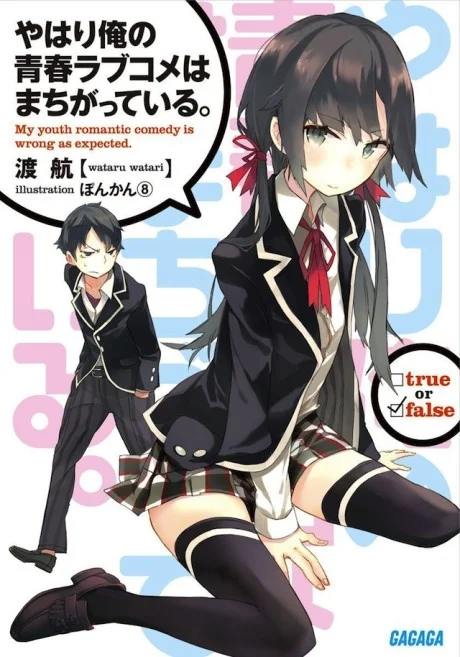
On paper, it’s a high school rom-com. In practice, it’s a dissection of social dynamics and emotional manipulation. The gap between what people say and what they actually want. Hachiman Hikigaya is a loner who sees through social performance. He’s put in a club with two girls and told to help people with their problems. He solves them in ways that work but make everyone uncomfortable, including himself.
Watari writes Oregairu like a character study that happens to be set in high school. Hachiman’s internal monologue is sharp, cynical, and self-aware enough to know that his cynicism is also a defense mechanism. The later volumes tackle the cost of emotional self-sufficiency. What happens when someone who built their identity around not needing people starts needing someone?
Why it’s for adults: The social dynamics are workplace-applicable. Hachiman’s observations about how groups function, how people perform for each other, how genuine connection requires vulnerability? That hits differently after you’ve spent a few years in an office. I read Oregairu in college and thought it was a rom-com. Reread it at twenty-eight and realized it was about me.
FAQ
What light novels are good for adults?
Spice and Wolf (economics and romance), 86 (war and systemic racism), Overlord (moral ambiguity), and The Apothecary Diaries (court politics and medical mystery) are all written with adult readers in mind. Mushoku Tensei and Re:Zero deal with mature psychological themes.
Are light novels only for teenagers?
No. While the format originated as young adult fiction, many series tackle themes and moral ambiguity that exceed typical YA fare. Series like Boogiepop, Torture Princess, and Overlord are aimed squarely at adult readers.
What is the most mature light novel?
Torture Princess is the most graphically violent. 86 is the most emotionally heavy. Spice and Wolf is the most intellectually demanding. Overlord is the most morally complex. “Most mature” depends on what kind of maturity you’re looking for.
Are there light novels with adult protagonists?
Yes. Spice and Wolf’s Lawrence is a working merchant. Overlord’s Ainz was a salaryman. The Apothecary Diaries’ Maomao is a young adult working in the imperial court. Goblin Slayer’s protagonist is a professional adventurer, not a student. Many isekai protagonists were adults before reincarnating.
What dark light novels should I read?
Start with Goblin Slayer or Overlord for dark fantasy. 86 for war fiction. Torture Princess for gothic horror. The Empty Box and Zeroth Maria for psychological thriller. Re:Zero for psychological horror with isekai elements.