

This article contains affiliate links. If you buy through these links, we earn a small commission at no extra cost to you.
I’ve been thinking about this adaptation since the announcement in March, and I keep circling back to the same concern. The thing that makes the Magical Explorer LN work is Kousuke’s internal game-knowledge monologue, the constant tactical calculation running underneath every fight and every social interaction. And that’s exactly what anime adaptations are worst at preserving. WHITE FOX has the pedigree. Re:Zero, Steins;Gate, Goblin Slayer. But those series had different strengths that translated to screen more naturally. This one is going to test them differently.
The anime premieres October 2026 and I’m cautiously optimistic, leaning toward nervous. Here’s why.
TL;DR
- WHITE FOX’s Magical Explorer anime (Fall 2026) faces a core adaptation challenge: Kousuke’s internal game-knowledge monologue drives the LN, and that’s the hardest thing to animate. The scarf combat should translate well visually. The eroge humor will likely get toned down. Director Kazuki Ohashi (Shadows House) is a solid pick for atmosphere but unproven with action-heavy isekai. Read the LN first — Kousuke’s tactical thinking is the series’ best feature and some of it will inevitably be lost in adaptation.
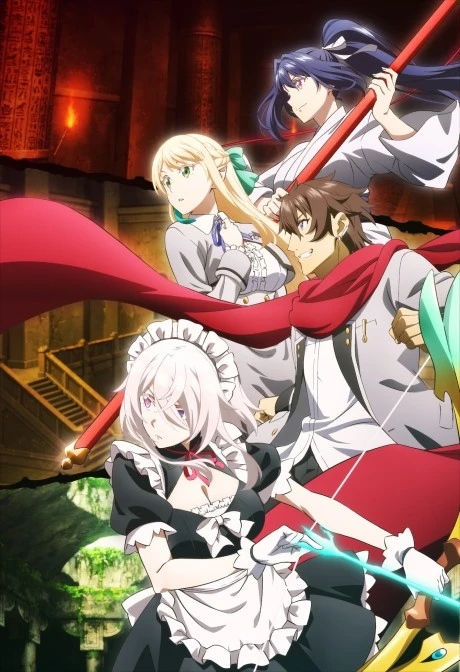
The Internal Monologue Problem
This is the big one, and I don’t think there’s a clean solution.
In the LN, Kousuke narrates constantly. He’s running game calculations during combat. Which skill to deploy, which pattern the boss follows, whether to use a consumable now or save it for the next floor. Outside combat, he’s evaluating social situations through the lens of eroge route flags, predicting which actions will trigger which events based on his playthrough knowledge. This inner voice is maybe 40% of the reading experience. It’s what separates Magical Explorer from a generic dungeon isekai.
Anime can’t do this well. Internal monologue in anime either becomes voiceover narration (which kills pacing if overused) or gets cut entirely (which removes the tactical depth). Re:Zero had a similar issue with Subaru’s inner desperation, but Subaru’s emotions are visible — you can animate fear and panic. Kousuke’s game calculations aren’t emotional, they’re strategic. There’s no facial expression for “I’m calculating whether the skill point investment in Scarf Extension Level 3 pays off against this boss’s attack pattern.”
I watched Shadows House, which this director (Kazuki Ohashi) handled, and his atmospheric pacing is strong. But Shadows House is a mystery-thriller with slow reveals. Magical Explorer needs moment-to-moment tactical commentary during fast combat. Those are different muscles. I’m not saying he can’t do it. I genuinely don’t know, and that uncertainty is the whole thing for me going into October.
What Should Translate Well
The scarf combat. This is where I think WHITE FOX could actually elevate the source material. Kousuke’s fighting style is inherently visual. Extending, hardening, and whipping a magic scarf while combining it with hand-to-hand martial arts. Prose can only approximate that. Iris writes good action choreography, but prose can only approximate the spatial dynamics of a guy using a cloth weapon as a third arm in mid-air. Animation can show that directly.
If WHITE FOX’s animation team invests in the combat sequences the way they invested in Re:Zero’s action peaks, the scarf fights could become the series’ signature in a way they aren’t quite able to be in text. I’ve been imagining the volume 3 dungeon boss fight animated since I read it, and I think it could be genuinely impressive if they give it the sakuga treatment.
The character designs should work too. Kousuke’s scarf is a natural visual anchor. The heroines are distinctive enough in the LN illustrations (Kannatsuki does good work) that translating them to animation shouldn’t be the problem. The academy setting gives the animators a consistent environment to work with, which helps with production scheduling.
What Will Probably Get Lost
The eroge meta-commentary. Kousuke’s running joke about recognizing route flags and triggering events by accident, treating the heroines’ interest as game mechanics rather than genuine romance. This layer will almost certainly get toned down or cut. It’s the series’ most distinctive comedic element in the LN, but anime studios are cautious about eroge references in non-adult productions. Yen Press already softened “eroge” to “dating sim” in the English title. The anime will probably continue that sanitization.
The skill system depth. In the LN, Kousuke’s decisions about which skills to level and which to sacrifice are a resource management minigame running alongside the plot. The anime will show results — “Kousuke used Scarf Extension and won” — without the decision tree behind it. This is the same compression that every game-system isekai adaptation suffers from. Overlord had it, Slime had it, Solo Leveling had it.
I keep going back and forth on whether that matters as much as I think it does. On one hand, the tactical depth is what distinguishes Magical Explorer from generic isekai. On the other hand, people watched and enjoyed Solo Leveling without the stat screens, so maybe the action carries it regardless. I honestly don’t have a prediction here — it depends on how much WHITE FOX trusts the audience to engage with game mechanics versus just wanting flashy fights.
Should You Read the LN Before Watching?
Yes. I’m biased because I read the series before the anime was even announced, but the reasoning is straightforward: the LN’s best feature is something the anime can’t fully replicate. Kousuke’s internal monologue. The tactical layer. The game-knowledge commentary that makes every fight feel like a strategy puzzle rather than a power showcase.
If you watch the anime first, you’ll get a functional isekai with good action and a unique weapon concept. That might be enough. But if you read the LN first, you’ll understand why Kousuke makes the choices he does, and the anime fights will feel richer for having that context. I watched Re:Zero before reading the LN and I would have gotten more out of it in reverse order. I’m not making that mistake again with Magical Explorer.
Volume 1 is the weakest entry — I’ve said this in every article about this series and I’ll keep saying it until the anime airs and people start asking. Push through to volume 2. The full review has more on why.