

One of the worst things about reading ongoing light novels is getting 8 volumes deep into something and then waiting 18 months for the next one. Or worse: the series goes on hiatus and never comes back. No Game No Life, I’m looking at you.
This article contains affiliate links. If you buy through these links, we earn a small commission at no extra cost to you.
TL;DR
- Spice and Wolf is the best completed light novel series. 22 volumes. Economics, slow-burn romance, Holo. Nothing else has the same combination.
- Oregairu and Monogatari round out S-tier. Both finished, both earned their endings, both worth the commitment.
- 15 completed series ranked. Every entry on this list is fully available in English. No waiting, no hiatuses, no cliffhangers.
So here’s a list of completed series only. Every entry on this list has a definitive ending in English. You can start and finish them without waiting on anyone. That’s a rare thing in this hobby and worth celebrating.
I’ve ranked these loosely by how strongly I’d recommend them, but honestly any tier here is worth your time.
TL;DR — Quick Reference
| Series | Volumes | Genre | Best For |
|---|---|---|---|
| Spice and Wolf | 22 + side stories | Economic fantasy / romance | Best completed series overall |
| Oregairu | 14 | Slice of life / romance | Best character writing in the genre |
| Toradora | 10 | School romance | Best if you want to cry |
| Monogatari | 28 (First + Second + Final seasons) | Supernatural / mystery | Best prose in any LN series |
| Haruhi Suzumiya | 11 | Sci-fi / slice of life | Best for genre history |
| Baccano! | 22 | Historical action | Best nonlinear storytelling |
| Durarara!! | 13 | Urban thriller | Best ensemble cast |
| Empty Box and Zeroth Maria | 7 | Psychological thriller | Most underrated series here |
| Konosuba | 17 main + 2 epilogue | Isekai comedy | Best comedy in LNs |
| Violet Evergarden | 2 | Drama / literary fiction | Best if you only have a weekend |
| I Want to Eat Your Pancreas | 1 (standalone) | Slice of life / tragedy | Best standalone novel |
| Three Days of Happiness | 1 (standalone) | Literary fiction | Best for non-LN readers |
| Devil Is a Part-Timer | 21 | Isekai comedy | Best slow burn payoff |
| Grimoire of Zero | 7 | Fantasy adventure | Best short completed series |
| Full Metal Panic | 12 | Action / mecha / romance | Best action series that’s actually done |
S-Tier: Read These First
Spice and Wolf — Isuna Hasekura (22 volumes)
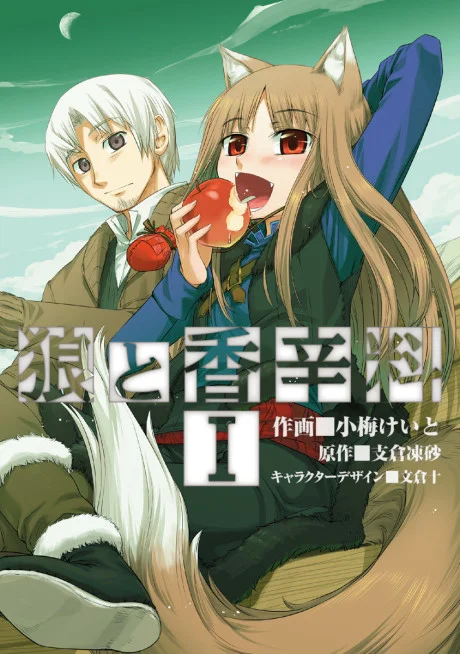
If you’ve been in LN spaces for more than five minutes, someone has already told you to read Spice and Wolf. They’re right. This is the one series I’d recommend to someone who actively dislikes light novels, it’s smart, the romance is earned over 22 volumes rather than teased indefinitely, and it’s complete. Holo and Lawrence’s dynamic is the best slow-burn relationship in the genre and it sticks the landing.
The economics hook sounds dry but it works. Hasekura does actual research; the trade route plotting and currency debasement arcs have real logic to them. You end up understanding medieval merchant economics while also getting deeply invested in whether two people with a complicated emotional dynamic are going to admit they’re in love. Vol. 17 payoff is one of the best moments in any light novel I’ve read.
Yen Press has the full run in English. The 2024 anime reboot is also good and a reasonable entry point, but the LN has substantially more material and a more satisfying conclusion.
More light novel guides
Also see: Vampire Hunter D Light Novel vs Anime.
Oregairu (My Youth Romantic Comedy Is Wrong, As I Expected) — Wataru Watari (14 volumes)
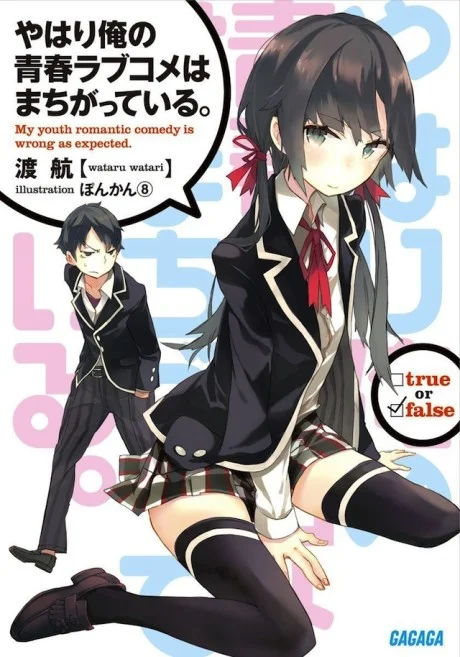
Oregairu is the best character writing I’ve encountered in the light novel format. Hachiman Hikigaya is a deliberately unreliable narrator who spends most of the series being wrong about himself in interesting ways. Watari writes high school social dynamics with enough specificity that it stops feeling like genre fiction and starts feeling like something observed.
The main triangle between Hachiman, Yukino, and Yui gets resolved in Vol. 14. After years of “which girl wins” discourse, Watari actually commits. The ending is divisive because some people wanted a different resolution, but it’s a real ending, not an ambiguous non-conclusion. That alone puts it above most romance LNs.
The anime (Brains Base then Brain’s Base again for S2, then feel. for S3) adapts it well through S2. S3 compresses badly and the LN version of the finale is significantly better. Read Vol. 12-14 even if you watched the anime.
More light novel guides
Also see: Vampire Hunter D Light Novel vs Anime.
Monogatari Series — Nisio Isin (28 volumes across three seasons)
Monogatari is the hardest LN series to recommend because it’s genuinely demanding and the prose is doing things that don’t survive translation perfectly. Nisio Isin writes in wordplay, puns, and kanji-level visual jokes that an English translator can approximate but not fully replicate. You’re reading a translation of something that was partly untranslatable.
With that caveat: it’s the best prose in the light novel format. Shaft’s anime is iconic and most people come to the books after watching it, but the books have more content, more of Araragi’s voice, and arcs the anime doesn’t touch. The Final Season wraps up cleanly. Vertical/Kodansha has the full English release.
Recommended entry: Watch the anime through Owarimonogatari first. Then read the books if you want more. Don’t start with Bakemonogatari Vol. 1 cold, the density is rough without the anime as context.
More light novel guides
Also see: Vampire Hunter D Light Novel vs Anime.
A-Tier: Excellent, Specific Strengths
Toradora! — Yuyuko Takemiya (10 volumes)
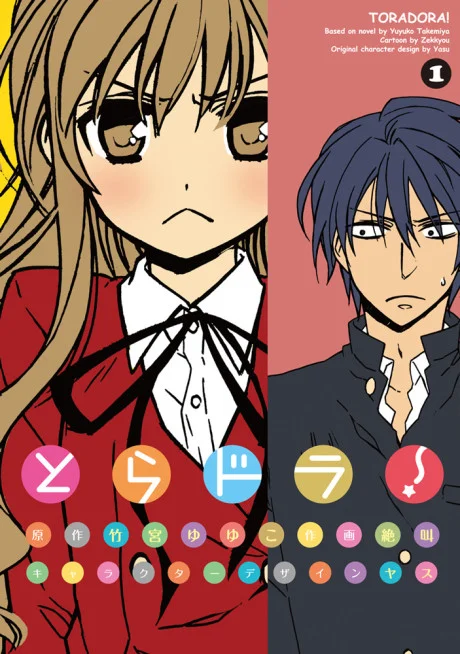
Toradora is still the gold standard for school romance LNs after almost 20 years. Ryuji and Taiga’s relationship works because Takemiya writes the friendship first and lets everything else follow from that. The romance doesn’t feel manufactured; it develops from two people who actually know each other, which is rarer than it should be in this genre.
Vol. 8 and 9 hit hard if you’ve been reading from the beginning. The ending is clean and earned. The anime adaptation (J.C. Staff, 2008) is excellent and covers the full story, so if you’ve seen it you already know the ending, but the LN has more interiority, particularly for Ryuji, and the Christmas Eve arc hits differently in prose.
Seven Seas has the full English release. 10 volumes is a reasonable commitment for the quality you get.
More light novel guides
Also see: Vampire Hunter D Light Novel vs Anime.
Haruhi Suzumiya — Nagaru Tanigawa (11 volumes)
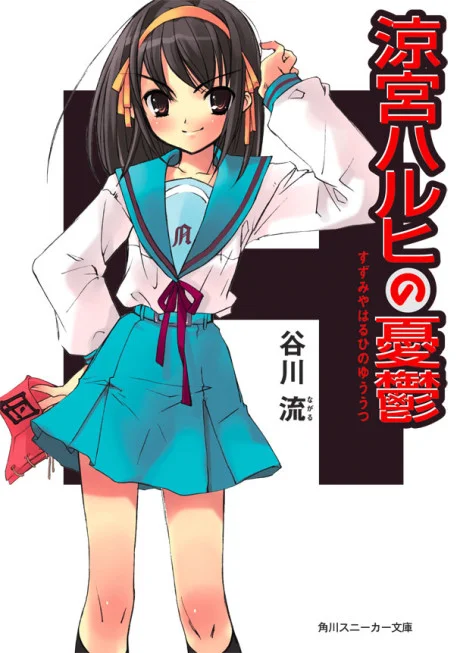
Haruhi is the series that made light novels mainstream outside Japan. The 2006 anime adaptation was a cultural moment, and Kyoto Animation’s direction was doing things that nobody else was doing at the time. The books hold up well — Tanigawa’s writing has a dry wit that translates cleanly, and Kyon’s narration is still funny.
The honest note: the series lost momentum badly after the Disappearance arc (Vol. 4). Volumes 5-9 are meandering, and the series went on a nearly decade-long hiatus before Vol. 10 and 11 appeared. The ending exists, which puts it in the “completed” column, but it’s not a triumphant conclusion. Volumes 1-4 are essential; 5-11 are for completionists.
Yen Press has the full English release. The Disappearance film is one of the best anime films ever made. Read Vol. 4 if you’ve only seen the TV series.
More light novel guides
Also see: Vampire Hunter D Light Novel vs Anime.
Baccano! — Ryohgo Narita (22 volumes)
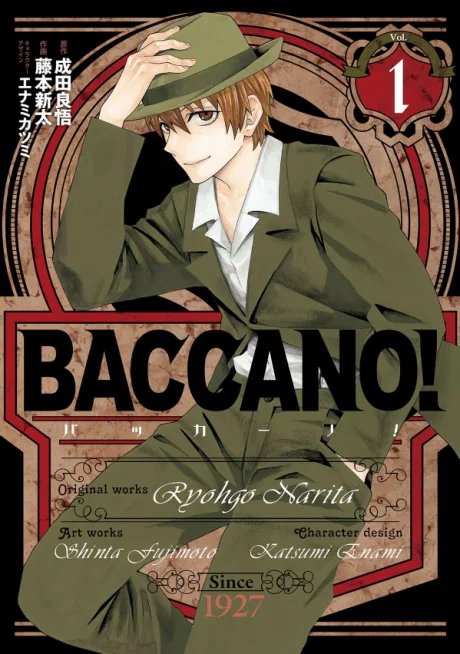
Baccano is historical action fiction set in Prohibition-era America with an immortal alchemist subplot, and it works completely. Narita writes nonlinear narrative better than almost any other LN author, multiple storylines, dozens of characters, converging timelines, and it never becomes incoherent. The 1930s volumes are where it peaks.
The anime (Brain’s Base, 2007) covers volumes 1-5 and is still excellent. The books go much further and include later 1930s arcs and a 2000s-era epilogue sequence. Yen Press has the full English release. If you’ve only watched the anime, you’ve seen a fraction of the story.
More light novel guides
Also see: Vampire Hunter D Light Novel vs Anime.
Durarara!! — Ryohgo Narita (13 volumes)
Same author as Baccano, different setting. Durarara moves to contemporary Ikebukuro and trades historical action for urban thriller with a massive ensemble cast. Celty the headless rider is one of the best characters in the genre; the Dollars gang storyline runs through the full series and pays off in the final volumes.
The anime covers the first arc well. The later arcs in the books are where things get genuinely complicated in a good way. Yen Press has the full English run. Read this if you want completed urban fantasy with real stakes and an ending that doesn’t feel rushed.
More light novel guides
Also see: Vampire Hunter D Light Novel vs Anime.
Empty Box and Zeroth Maria — Eiji Mikage (7 volumes)
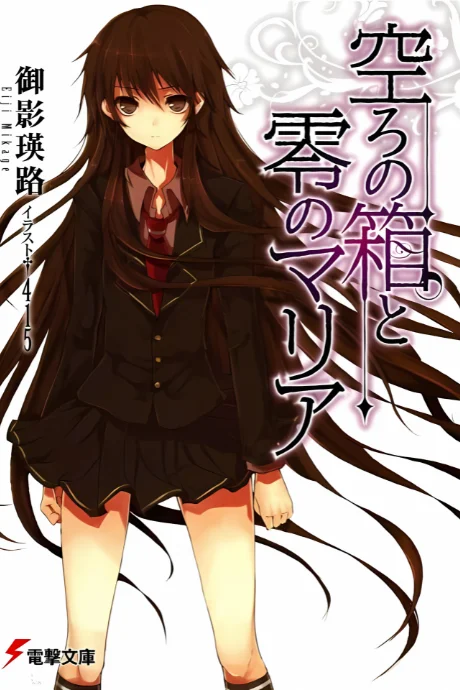
Empty Box is the most underrated series on this list and I will die on this hill. It’s a psychological thriller disguised as a high school LN, the “wish boxes” premise sounds gimmicky but Mikage uses it to build genuinely disturbing scenarios. The Rejecting Classroom arc (Vol. 1) alone justifies the whole series.
Seven volumes, complete, no anime adaptation (as of 2026). The ending is satisfying in a way that psychological thrillers rarely manage. If you’ve ever recommended Classroom of the Elite for its game-theory school politics angle, this is sharper, darker, and done in a fraction of the volume count.
Yen Press has the English release. Go in blind if you can, knowing the twists ruins what makes the series work.
More light novel guides
Also see: Vampire Hunter D Light Novel vs Anime.
B-Tier: Solid, Know What You’re Getting
Konosuba — Natsume Akatsuki (17 main + 2 epilogue volumes)
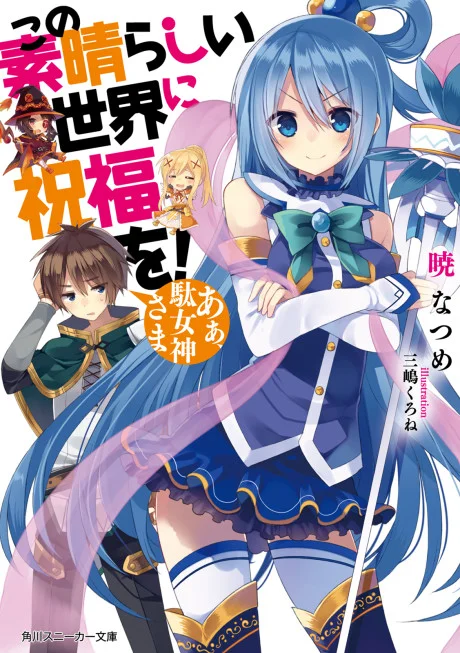
Konosuba is the best comedy in light novels and it’s not particularly close. Akatsuki has a gift for comic timing that translates into prose, the bit where Aqua spends an entire arc crying about her stat allocation is funnier in the LN than in the anime, which I didn’t think was possible. The party dynamic (Kazuma as pragmatic straight man, Aqua as useless god, Megumin as explosion-obsessed one-trick, Darkness as masochist tank) never gets old because Akatsuki keeps finding new angles on it.
The main series ended at Vol. 17 and two epilogue volumes wrapped things up. The Megumin and Dust spinoffs are also complete — grab those if you can’t let go of the cast. No complaints about the ending, it’s the right length and goes out on its terms.
More light novel guides
Also see: Vampire Hunter D Light Novel vs Anime.
Violet Evergarden — Kana Akatsuki (2 volumes)
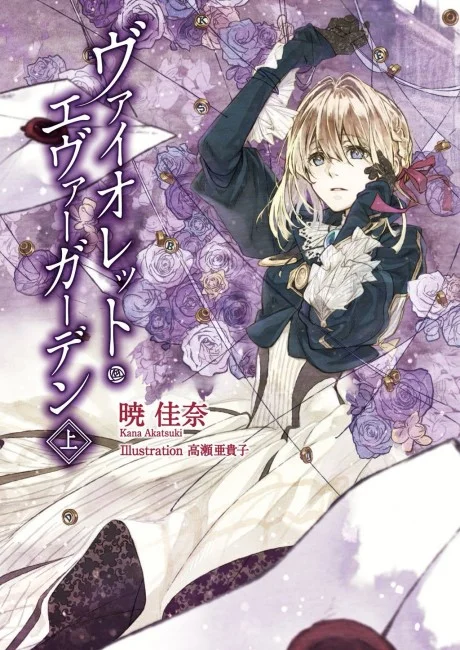
Two volumes, completely self-contained, beautiful. Violet Evergarden is structured as episodic stories about an ex-soldier learning to write emotional letters for clients, which sounds slight but hits hard. Each chapter is essentially a short story about grief or regret or love that Violet helps process through writing. The frame narrative about her own emotional awakening ties it together.
The Kyoto Animation anime is gorgeous and worth watching regardless. The books have chapters the anime didn’t adapt and the prose has a different register than the visual storytelling, quieter, more interior. If you have a weekend and want to read something genuinely affecting, start here.
I Want to Eat Your Pancreas — Yoru Sumino (1 volume)
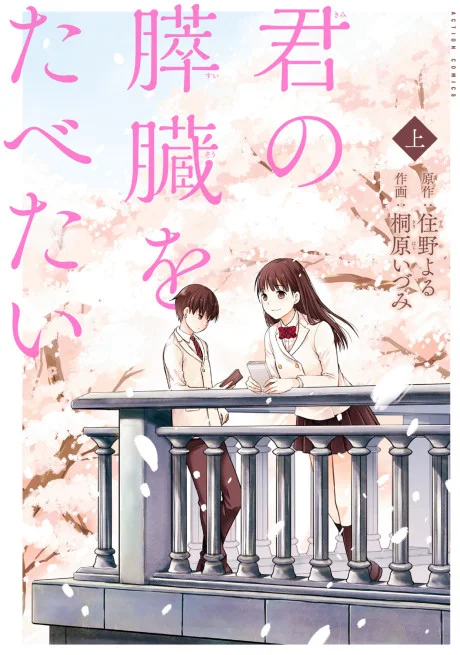
A standalone novel, not a series. A terminally ill girl and a deliberately nameless narrator spend time together before she dies; the story is about what that does to both of them. The title sounds gimmicky, it’s a Japanese idiom for wanting to absorb someone’s life force, but the book earns it by the end.
It’s not isekai, not fantasy, not action. It’s a straight literary fiction YA novel published under a light novel imprint. If you want to recommend one LN to someone who doesn’t read the genre, this is the one. The anime film adaptation is also excellent.
More light novel guides
Also see: Vampire Hunter D Light Novel vs Anime.
Three Days of Happiness — Sugaru Miaki (1 volume)
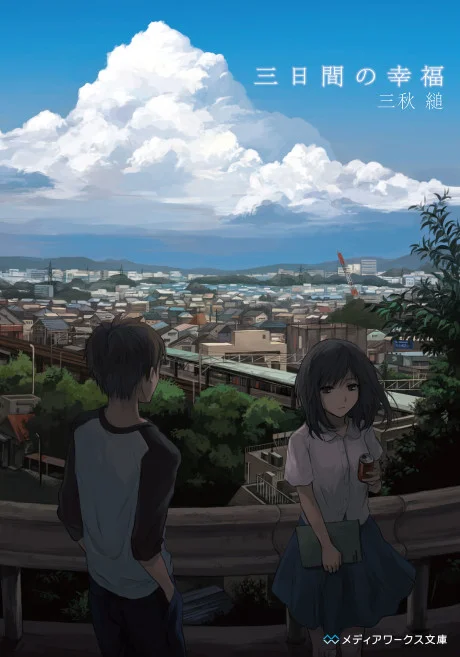
Another standalone. In a world where you can sell years of your remaining lifespan for money, a young man sells most of his life away and has to figure out how to spend what’s left. It’s melancholy in the best way, not wallowing, but genuinely contemplative about what a life is worth and what makes time meaningful.
Seven Seas published this. It’s short, there’s no series commitment, and it sticks with you in a way that most multi-volume series don’t. Good entry point if you’re skeptical about light novels as a format.
More light novel guides
Also see: Vampire Hunter D Light Novel vs Anime.
Devil Is a Part-Timer! — Satoshi Wagahara (21 volumes)
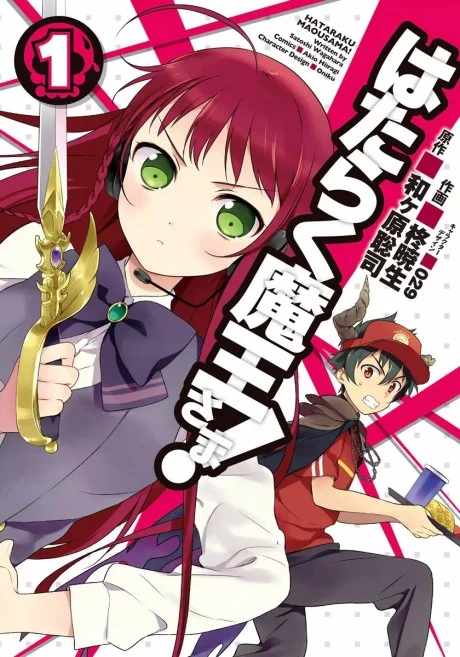
The premise, Demon Lord Satan flees to modern Tokyo and has to work at MgRonald’s to survive, is a great joke. Wagahara runs with it for 21 volumes, which sounds like too many, but the series earns the length by actually developing the overarching plot instead of stalling forever. The back half of the series gets legitimately serious and pays off threads set up in early volumes.
The anime (White Fox, 2013) covers the first couple of volumes and is excellent but leaves you nowhere near the ending. The Yen Press release has the full run. If you watched the anime and wondered what happened to the Maou x Emi relationship: it gets resolved, eventually, and the resolution is satisfying.
More light novel guides
Also see: Vampire Hunter D Light Novel vs Anime.
Grimoire of Zero — Kakeru Kobashiri (7 volumes)
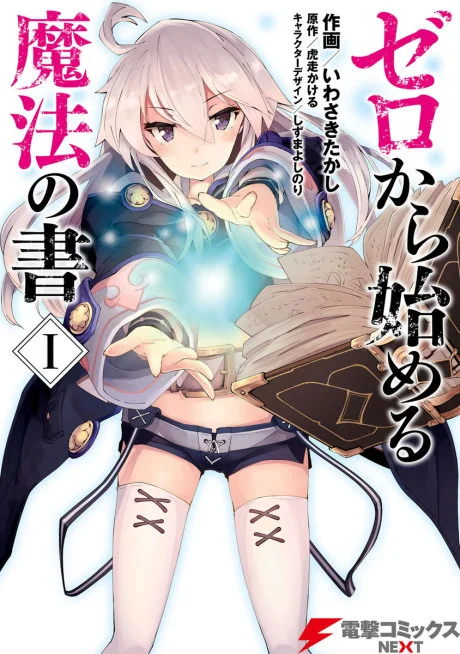
Seven volumes, complete, and a genuinely good fantasy adventure. A half-beast mercenary and a witch named Zero travel together to recover a stolen grimoire that’s being used to destabilize the world. The dynamic between them does what Spice and Wolf does but faster and with more action.
The anime (White Fox, 2017) covers the first volume adequately. The books go further and complete the arc properly. Yen Press has the English release. If you want a finished fantasy series that doesn’t demand 20+ volumes, this is the cleanest option on the list.
Full Metal Panic! — Shoji Gatoh (12 volumes)
Full Metal Panic is military action and high school romantic comedy in alternating chapters, and it shouldn’t work as well as it does. Gatoh balances the tones better than the premise suggests, the comedy chapters are genuinely funny, the action arcs are genuinely tense. Sousuke’s inability to function in civilian life is the engine of the comedy; his competence in actual combat is the engine of the action. Both work.
12 volumes, fully complete. Multiple anime adaptations exist (GONZO for S1, Kyoto Animation for the Fumoffu comedy spinoff and S2, XEBEC for S3). The books have the complete story including a proper ending that the anime didn’t fully reach. Yen Press has the English release.
A Note on “Completed”
For this list, “completed” means the English release has a definitive final volume available now. A few edge cases worth naming:
- No Game No Life — 12 volumes in Japanese, stalled indefinitely. Not included because the English release hasn’t caught up and the series has no confirmed ending. Treat as ongoing hiatus.
- Haruhi Suzumiya, technically complete at 11 volumes but had a 9-year gap mid-series. Included because Vol. 11 exists and wraps things up, even if imperfectly.
- Monogatari, the Final Season concludes the main narrative. Nisio Isin has continued writing Monogatari works since (Off Season, Monster Season), so depending on your definition it’s either done or ongoing. For the core story: done.
Frequently Asked Questions
What light novel series are fully complete in English?
Fully complete English runs include: Spice and Wolf (22 volumes, Yen Press), Oregairu (14 volumes, Yen Press), Toradora (10 volumes, Seven Seas), Konosuba (17 main volumes, Yen Press), Haruhi Suzumiya (11 volumes, Yen Press), Baccano (22 volumes, Yen Press), Durarara (13 volumes, Yen Press), Empty Box and Zeroth Maria (7 volumes, Yen Press), Devil Is a Part-Timer (21 volumes, Yen Press), and Violet Evergarden (2 volumes, Yen Press).
What is the best completed light novel series?
Spice and Wolf for overall quality and a satisfying ending. Oregairu for character writing. Empty Box and Zeroth Maria if you want something underrated and genuinely surprising. For something short, Violet Evergarden (2 volumes) or I Want to Eat Your Pancreas (standalone) both deliver complete, emotionally resonant stories without the multi-volume commitment.
Is Overlord completed?
Overlord‘s Japanese release ended at Volume 17 in 2024 — Maruyama confirmed it as the final volume. The English Yen Press release is still catching up as of 2026, so it’s not yet complete in English. It’ll get there. Don’t start it expecting to finish in English right now unless you’re okay stopping where the translation currently sits.
What short completed light novels are worth reading?
For short completed series: Violet Evergarden (2 volumes), I Want to Eat Your Pancreas (1 volume standalone), Three Days of Happiness (1 volume standalone), and Grimoire of Zero (7 volumes). All have definitive endings and none require a massive time investment.
Is No Game No Life finished?
No. As of 2026, No Game No Life has 12 volumes in Japanese but Yuu Kamiya has been on an indefinite hiatus since 2019. The English Yen Press release is also not current. It’s the most painful example of an unfinished LN series in the community, strong start, no ending in sight. Don’t go in expecting closure.