

Light Novels Like Classroom of the Elite — 7 Recommendations
Finding something that scratches the same itch as Classroom of the Elite is harder than it should be. The community consensus on every recommendation thread is some variation of “honestly, nothing’s quite like it.” And that’s true. The specific combination of school politics, exam-based competition, a protagonist who hides his competence, and the first-person psychological interiority that makes Ayanokoji interesting is genuinely unique to COTE.
This article contains affiliate links. If you buy through these links, we earn a small commission at no extra cost to you.
TL;DR
- Nothing’s quite like COTE. The community consensus on every recommendation thread is “honestly, nothing matches it.” The school politics + exam competition + hidden genius protagonist combo is genuinely unique.
- These 7 picks each scratch a specific part of the itch. Psychological games, strategic protagonists, school settings, or the first-person interiority that makes Ayanokoji interesting.
- Manage your expectations. COTE’s specific formula doesn’t exist elsewhere. These are the closest.
But the itch isn’t one thing. It’s multiple things. You might want the strategic mind games. The school-as-arena setting. The manipulative protagonist. The “who can I trust” paranoia. Or just a light novel that’s as compulsively readable as COTE was at its best. These recommendations each hit at least one of those notes hard enough to be worth your time.
More about Classroom of the Elite
- Is Classroom of the Elite Light Novel Finished?
- Classroom of the Elite Reading Order
- Classroom of the Elite Light Novel Review
- Classroom of the Elite Season 4: What the Anime Left Out
1. Rokka: Braves of the Six Flowers
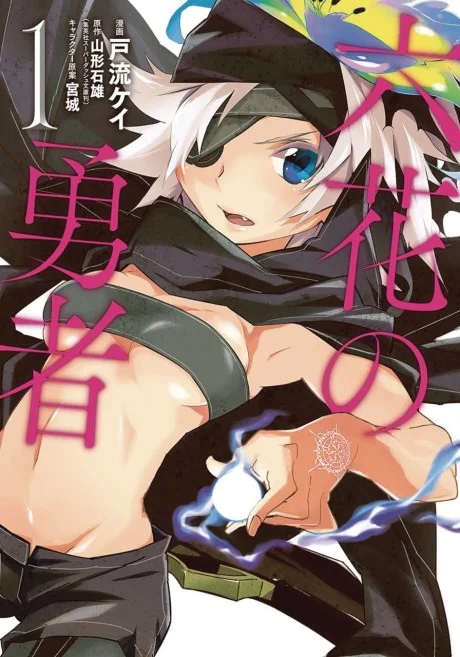
This is the most-recommended series in every “similar to COTE” thread I’ve read, and for good reason. The setup is deceptively simple: six heroes are chosen to fight the Demon God. Seven show up. One of them is a fake. Figure out who.
What makes Rokka feel like COTE is the deduction. The entire first volume is a locked-room mystery in a fantasy setting, with every character presenting alibis, motives, and evidence while the reader tries to solve it alongside the protagonist. Adlet Mayer isn’t an Ayanokoji-style genius. He’s brash and overconfident. But he’s smart in the way that matters for this kind of story: he catches details other characters miss and builds logical chains from them. Each subsequent volume introduces a new mystery within the same group, and the trust dynamics shift constantly.
The honest negative: it’s on hiatus. Six volumes were published, the seventh has been waiting since 2015. The story doesn’t resolve. You’ll get an excellent locked-room mystery experience across six books, but don’t expect a conclusion. If incomplete series frustrate you, be warned. Published by Yen Press in English, all six volumes available.
2. The Empty Box and Zeroth Maria (Utsuro no Hako to Zero no Maria)

If COTE’s appeal for you was the psychological manipulation and the question of what a person will do when pushed to their limits, HakoMari is the rec. The premise sounds like a time-loop story (and it starts as one) but quickly becomes something more disturbing and personal. Kazuki Hoshino gets trapped in a repeating cycle, and the way he and the people around him respond to it reveals who they actually are under pressure.
Maria Otonashi is the character who’ll remind you of Ayanokoji. She arrives at school already knowing what’s happening, already several steps ahead of everyone else, and her methods for solving the mystery are methodical and sometimes genuinely cold. The first volume is a complete mystery. The subsequent volumes each introduce a new “box” with different rules, and the psychological stakes escalate sharply. Volume 7 is one of the most intense final volumes in any LN series I’ve read.
Seven volumes, complete. Published by Yen Press. The pacing is tight because there’s no filler. Every volume matters. If you want the mind games without the school exam wrapper, this is it.
3. Liar Liar

The closest structural match to COTE that actually exists. Students at an elite academy are ranked by star count, compete in games and exams to climb, and use strategy, deception, and alliances to gain advantage. The twist: the protagonist cheated his way to the top rank on day one and now has to maintain a position he doesn’t deserve while hiding the fact that he’s basically a fraud.
The fun of Liar Liar is the reverse COTE dynamic. Where Ayanokoji hides his competence, Hiroto hides his incompetence. He’s not actually smart enough to be ranked first. He just bluffed his way there and now has to keep bluffing while genuinely skilled opponents challenge him. The exam scenarios are creative and the bluffing mechanics are entertaining when they land.
The honest negative: it’s lighter than COTE. The psychological depth isn’t there. Hiroto doesn’t have the inner complexity that makes Ayanokoji interesting. It’s more of a fun con-artist story in a school setting than a character study. If you’re coming to COTE for the psychology, Liar Liar will feel shallow. If you’re coming for the school competition mechanics, it’s solid. Published by Yen Press, ongoing.
4. Oregairu (My Youth Romantic Comedy Is Wrong, As I Expected)
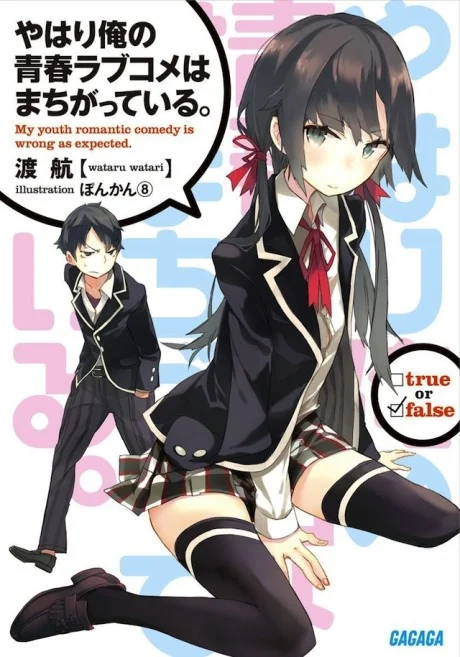
Oregairu isn’t a strategic thriller. Nobody is plotting exam victories or manipulating class rankings. But it shares something more fundamental with COTE: a protagonist whose worldview is built on cynicism, who watches people from a calculated distance, and whose inner monologue is the actual story. If you read COTE for Ayanokoji’s head (not his plans), Hachiman Hikigaya is the closest you’ll get to that voice in another series.
Hachiman’s cynicism is a defense mechanism. He’s been hurt, he’s decided that social interaction is a game he refuses to play by the rules of, and he solves problems through self-sacrifice and social engineering. He’s not hiding superhuman competence like Ayanokoji. He’s hiding vulnerability. The series earns its emotional moments because it spends volumes building up the walls Hachiman constructs and then slowly, carefully taking them apart.
Fourteen volumes, complete. Published by Yen Press. The anime is excellent but the LN’s first-person narration gives you Hachiman’s internal commentary in a way the adaptation can’t fully reproduce. If Ayanokoji’s inner monologue was the part of COTE that hooked you, start here.
5. Dungeon Defense
Not a Japanese light novel. It’s a Korean web novel by Yoo Heonhwa. I’m including it because it came up repeatedly in COTE recommendation threads with comments like “basically COTE but better” and “the closest thing to Ayanokoji’s mindset in another series.” That’s a bold claim. It’s not wrong.
The protagonist reincarnates as the weakest Demon Lord in a strategy game he’s already beaten. He has no combat ability. His only advantage is knowledge of the game’s systems and an understanding of how people think. He manipulates everyone around him through rhetoric, psychological pressure, and calculated performances. The first volume is one of the most tightly constructed strategic narratives I’ve encountered in the format.
The honest negatives: it’s not officially translated in English (fan translations only), it’s Korean rather than Japanese (different narrative conventions), and the author’s publication has been inconsistent. Five volumes exist with the story unfinished. The worldbuilding is strong and Dantalian (the protagonist) is genuinely compelling as a manipulator who knows he’s the weakest person in any room. If unofficial translations don’t bother you and you want the strategic manipulation aspect of COTE pushed further, this is worth tracking down.
6. Mushoku Tensei: Jobless Reincarnation
This recommendation confused me the first time I saw it. Mushoku Tensei is an isekai fantasy with magic schools and demon continents. COTE is a modern-day psychological thriller set in a Japanese high school. What do they share?
Addictiveness. Multiple people in the community describe the same experience: reading COTE and Mushoku Tensei with the same inability to stop. Both series have first-person protagonists whose internal thought processes you become invested in, both build long-term character arcs that pay off over many volumes, and both reward the reader’s patience with the slow early volumes. Rudeus isn’t Ayanokoji. He’s deeply flawed in completely different ways. But the reading experience (picking up the next volume immediately because you need to know what happens) is comparable.
25 volumes, complete. Published by Seven Seas Entertainment. If you’ve already read Mushoku Tensei, you already know whether this comparison works for you. If you haven’t, and you’re looking for your next long series after COTE, this is the one the community most consistently puts in the same tier. We have a full Mushoku Tensei light novel vs anime comparison if you want to know how the adaptation stacks up.
7. The Genius Prince’s Guide to Raising a Nation Out of Debt
A strategic protagonist in a political setting where every conversation is a negotiation and every alliance is temporary. Prince Wein wants to sell his failing kingdom and retire. His plans keep accidentally succeeding, making the kingdom stronger against his will. The comedy is genuine, but the political strategy underneath it is surprisingly sharp.
Wein shares Ayanokoji’s ability to read situations and manipulate outcomes, but his personality is the opposite. He’s expressive, frustrated, and genuinely funny. The appeal for COTE readers is the strategic thinking applied to real stakes. Wein isn’t competing in exams. He’s managing alliances between nations that would happily absorb his country if he shows weakness. The scope is different but the mental chess is similar.
Thirteen volumes, ongoing. Published by Yen Press. The anime covered the early volumes competently but the LN gives you Wein’s internal strategic calculus, which is where the COTE comparison actually lands. If you want strategic manipulation in a lighter, funnier package, this works.
Frequently Asked Questions
What light novel is most similar to Classroom of the Elite?
Rokka: Braves of the Six Flowers is the most commonly recommended for its deduction and trust dynamics. Liar Liar is the closest structural match with its school ranking system and exam competitions. The Empty Box and Zeroth Maria is the best match for psychological intensity. No single series replicates the full COTE experience.
Are there any light novels with a protagonist like Ayanokoji?
Maria Otonashi from The Empty Box and Zeroth Maria shares Ayanokoji’s calculating, steps-ahead approach. Dantalian from Dungeon Defense (Korean web novel) is the closest personality match: weakest person in the room who wins through manipulation and psychology. Hachiman from Oregairu shares the cynical internal monologue but uses self-sacrifice rather than manipulation.
Is Liar Liar like Classroom of the Elite?
Structurally, yes. Both feature elite school settings with ranking systems, exam-based competitions, and strategic gameplay between students. The key difference: Liar Liar’s protagonist is hiding incompetence (he cheated to rank first), while Ayanokoji hides competence. Liar Liar is lighter and less psychologically complex than COTE.
Should I read Oregairu if I like Classroom of the Elite?
If you read COTE for Ayanokoji’s inner monologue and psychological complexity, yes. Hachiman Hikigaya has a similarly compelling first-person voice. Oregairu doesn’t have exam competitions or strategic manipulation, but it shares the cynical protagonist and deep character work that makes COTE’s non-exam scenes compelling.
Is Classroom of the Elite the best psychological light novel?
It’s one of the most popular, but “best” depends on what you prioritize. The Empty Box and Zeroth Maria is more tightly constructed. Rokka has better mystery plotting. Oregairu has deeper character work. COTE’s strength is the combination of school competition mechanics with psychological first-person narration, which no other series does at the same scale.