

Yes. The Rascal Does Not Dream of Bunny Girl Senpai light novel is finished. The main 15-volume series closed out in Japan on October 10, 2024, and Yen Press dropped the final English volume on January 27, 2026. If you’ve been holding off until the story was complete, you can start reading right now.
The main 15-volume series closed out in Japan on October 10, 2024. Yen Press dropped the final English volume on January 27, 2026. If you’ve been holding off until the story was complete, you can start reading right now with no cliffhangers waiting at the end.
Here’s everything you need to know about the series status, what the anime covers versus what it doesn’t, and where to jump in.
TL;DR: Series Status
The Bunny Girl Senpai light novel is complete at 15 main volumes. Japanese run ended October 10, 2024; English translation finished January 27, 2026 via Yen Press. The series splits into a 9-volume high school arc and a 6-volume college finale. Both halves are required reading. The main story is done.
What Is the Current Series Status?
| Details | |
|---|---|
| Series Status | Complete (main series) |
| Total Volumes | 15 main volumes |
| JP Final Volume | Vol 15 — October 10, 2024 |
| EN Final Volume | Vol 15 — January 27, 2026 |
| EN Publisher | Yen Press (Yen On imprint) |
| Author | Hajime Kamoshida |
| JP Publisher | Dengeki Bunko (ASCII Media Works) |
| Supplemental | Beach Queen+ (Jul 2025, EN TBA); Doctor Pig (announced Oct 2026, TBD) |
How Many Volumes Does Bunny Girl Senpai Have?

15 main volumes. One continuous series, published under Dengeki Bunko from April 10, 2014 to October 10, 2024. No spin-offs within the main count, no confusing parallel arcs. The story divides into two clear sections: the high school arc (Volumes 1–9) and the university arc (Volumes 10–15).
Here’s the full breakdown:
| Vol | Subtitle | Focus | Arc |
|---|---|---|---|
| 1 | Bunny Girl Senpai | Mai Sakurajima | High school |
| 2 | Petite Devil Kohai | Tomoe Koga | High school |
| 3 | Logical Witch | Rio Futaba | High school |
| 4 | Siscon Idol | Nodoka Toyohama | High school |
| 5 | Sister Home Alone | Kaede Azusagawa | High school |
| 6 | Dreaming Girl | Shoko Makinohara | High school |
| 7 | His First Love | Shoko arc conclusion | High school |
| 8 | Sister Venturing Out | Kaede | High school bridge |
| 9 | Knapsack Kid | Rio Futaba | High school bridge |
| 10 | Lost Singer | Ikumi Akagi | University |
| 11 | Nightingale | Miori Mitou | University |
| 12 | His Student | Juri Yoshiwa | University |
| 13 | Santa Claus | Touko Kirishima (pt. 1) | University |
| 14 | His Girlfriend | Touko pt. 2 + Mai arc | University |
| 15 | Dear Friend | Series finale | University |
New readers sometimes get confused because each volume has a different subtitle and the Japanese editions don’t print volume numbers on the cover. Yen Press’s English paperbacks number the spines. If you’re buying physical copies, check the spine. If you’re going digital, sort by release date.
Is the University Arc Part of the Main Series or a Separate Continuation?

Same series. Not a spin-off, not a reboot. Dengeki Bunko published Volumes 1–15 as one unbroken run under the same title. Same author, same illustrator (Keiji Mizoguchi), same publisher. The “university arc” is community shorthand, not a publishing distinction.
This matters because there’s genuine confusion online. Some older threads and databases list the college volumes separately or label them as a “sequel series.” They’re not. If you stop at Volume 9, you’ve read the high school arc and the bridge chapters, but you haven’t finished the series. Volume 15 is where it ends.
I went into the college arc slightly skeptical. The energy of the high school volumes — Adolescence Syndrome as a device, the Fujisawa setting, the specific dynamics of Sakuta navigating his school life — felt tied to that period. But Kamoshida adapts. The university cases hit differently than the high school ones. More introspective. Higher personal stakes for Sakuta, because now he’s facing Adolescence Syndrome while managing a long-distance relationship with Mai and trying to figure out what he actually wants to do with his life.
The Touko arc in Volumes 13–14 is the college arc’s emotional centerpiece. And Volume 15 closes the loop on everything Kamoshida built across the full run. The ending is earned.
What Does the Anime Cover — and What Doesn’t It?
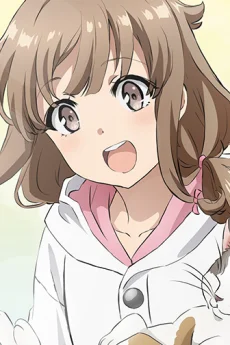
CloverWorks has been adapting this series in stages across several years. Here’s where every anime project lands in the light novel:
| Anime Project | LN Coverage | Release |
|---|---|---|
| Season 1 (13 episodes) | Volumes 1–5 | Oct–Dec 2018 |
| Film 1: Dreaming Girl | Volumes 6–7 (Shoko arc) | Jun 2019 |
| Film 2: Sister Venturing Out | Volume 8 (Kaede arc conclusion) | Jun 2023 |
| Film 3: Knapsack Kid | Volume 9 (Rio college arc) | Dec 2023 |
| Season 2 | Volume 10 (university arc start) | 2025 |
| Film 4: Dear Friend | Volumes 14–15 (series finale) | Oct 2026 |
As of April 2026: Volumes 1–10 have released anime adaptations. Volumes 11–13 remain LN-only. Film 4 covers Volumes 14–15 and releases in Japan in October 2026 — so if you want the complete ending before that film, the light novel is your only option right now.
One note on adaptation quality: CloverWorks cuts very little from the core plot. What they cut is Sakuta’s internal monologue. In this series, that’s a significant cut. The LN version of Sakuta — his comedic self-awareness, his processing of Adolescence Syndrome logic, the way he thinks about Mai without quite saying it out loud — runs deeper on the page than in the show. The show is good. The books are better. For a full comparison of the specific differences, see the Bunny Girl Senpai light novel vs. anime breakdown.
Is the English Translation Complete?

Yes. All 15 main volumes are available in English through Yen Press’s Yen On imprint. Volume 15 — the final volume — released January 27, 2026. Andrew Cunningham translated the entire run from Volume 1 through Volume 15, which means the comedic voice is consistent from page one of the series to the last page. That consistency matters more than it sounds. Sakuta’s inner monologue is the backbone of the whole series, and a translator change mid-run can break the rhythm of a character who relies on voice above almost everything else.
Current pricing: $15.00 paperback, $7.99 digital. The full series is on Amazon through Yen Press.
The English release schedule was compressed by design. Yen Press didn’t start the EN run until April 28, 2020 (six years after the JP series launched), releasing volumes every three to four months. English readers got the full arc without years-long waits between volumes. The audience catching up on the JP release in real time had a harder road, especially around the 2020–2022 period when the university arc was still publishing.
Are There More Bunny Girl Senpai Books Coming After Volume 15?

Possibly supplemental content, but the main story is done. Two things are in the pipeline:
Beach Queen+ released in Japan on July 10, 2025. This is an extra volume of bonus content — supplemental scenarios, not story continuation. Think of it as the kind of book that exists to give dedicated fans more time with the characters after the main narrative closes. No English release date from Yen Press has been announced yet.
Doctor Pig was announced for October 2026. As of April 2026, it hasn’t released and the nature of the content hasn’t been confirmed. Could be another supplemental volume. Could be a side story. The community is watching this closely but there’s no indication it’s a main-series continuation.
Neither of these changes the status of the main story. 15 volumes. Complete. The dedicated subreddit (r/SeishunButaYarou) is currently marking the series’ 11th anniversary and tracking any announcements closely. If Kamoshida publishes anything that continues the actual narrative, the community will surface it fast.
Should You Read the Light Novels If You’ve Already Watched the Anime?
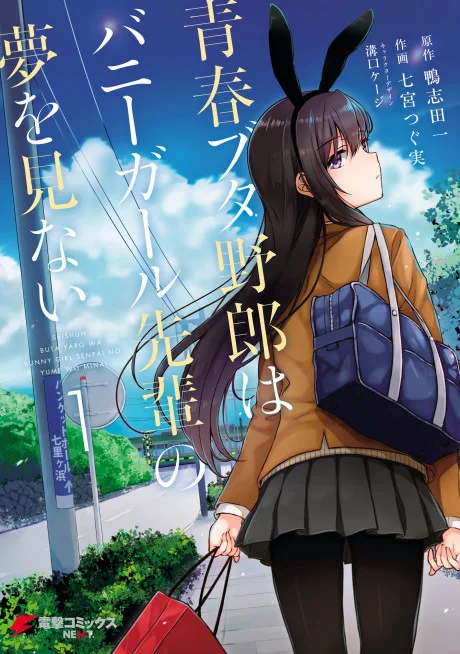
Yes. And not for the usual “the book is richer” reasons — though that’s true — but for a more practical one: if you watched the Season 1 anime and the 2019 Dreaming Girl film and left it there, you’ve seen Volumes 1–7 out of 15. You’ve read fewer than half the volumes.
Volumes 8 and 9 only got theatrical adaptations in Japan in 2023. Before those films, anime-only watchers had a four-year gap with no adaptation. Volumes 10–13 still have no released anime as of this writing. Film 4 covers Volumes 14–15 in October 2026. If you’re outside Japan, you probably haven’t seen any of this yet.
Beyond pure coverage, the light novel gives you Sakuta’s complete inner voice. The anime captures his wit in dialogue. The books show you the actual mechanics of his thinking: the self-deprecating loops, the emotional reasoning he never says out loud, the quiet way he decides Mai is worth everything before he’s even fully admitted it to himself. Volume 8 is the most emotionally devastating thing in the high school period. The Kaede arc conclusion hit the JP community hard in 2018, and reading it in print is a different experience from the film version.
Recommended entry point for readers who’ve watched everything through the 2023 films: start at Volume 10. You’ll pick up exactly where the anime coverage ends, and you’ll have the full Season 2 anime context behind you. If you want the uncut experience, start from Volume 1. The LN Mai arc adds enough that it doesn’t feel like repetition.
Is Volume 11’s Cliffhanger Actually Resolved in Later Volumes?
Yes. Volume 11 (Nightingale) ends on an unresolved note that frustrated the JP community for a significant stretch. Volume 11 published in December 2020. The college arc volumes that pick up the thread came across 2022–2024. Readers following the JP releases had a long wait with that cliffhanger hanging.
Volume 12 addresses it. I won’t say more than that, but Kamoshida didn’t leave it open by accident. It’s planned. The resolution fits the larger emotional arc of the college volumes.
If you’re reading in 2026, you can go from Volume 11 to Volume 12 immediately. No waiting required. The full run is available and the cliffhanger has an answer.
How Does Bunny Girl Senpai Stack Up Against OreGairu and Toradora?
These three occupy the top spots in most “best romance LN” discussions, and the comparison comes up constantly for good reason. All three are complete. All three are available in English. And they’re not in competition so much as they’re occupying different parts of the same territory.
OreGairu (My Teen Romantic Comedy SNAFU) is the most psychologically dense. Hachiman’s self-deception is the central mechanism. The series is smarter and darker, and it treats social dynamics with a level of cynicism Bunny Girl Senpai deliberately avoids.
Toradora is the most emotionally direct. It goes for the gut-punch and commits to it. Ryuuji and Taiga’s dynamic is the template that Bunny Girl Senpai pushes against: Kamoshida gets Sakuta and Mai together at the end of Volume 1, refuses to manufacture breakups for drama, and builds the tension from there instead.
Bunny Girl Senpai is the most optimistic of the three. The Adolescence Syndrome framing grounds the supernatural in emotional reality — quantum superposition as social invisibility, dissociative amnesia as a response to cyberbullying. The sci-fi is deliberately loose. But the emotional logic it serves is precise.
Sakuta Azusagawa is the real reason this series holds up across 15 volumes. He’s not the standard LN protagonist. He says what he means, he processes trauma out loud, he’s actually funny in a way that survives into the later college volumes without becoming a tic. The Mai/Sakuta dynamic is the strongest central couple in this genre because both characters are competent and established before they get together, and the series respects that.
My call: if you’re new to romance LN and want to know where to start, read Bunny Girl Senpai. It’s warmer than OreGairu, more structurally inventive than Toradora, and it comes with a complete 15-volume story you can read end-to-end right now.
Frequently Asked Questions
Is the Rascal Does Not Dream of Bunny Girl Senpai light novel finished?
Yes. The main 15-volume series is complete. The Japanese run ended October 10, 2024, and the English translation finished January 27, 2026 via Yen Press. The story has a full ending with no unresolved threads left open.
How many Bunny Girl Senpai light novel volumes are there?
15 main volumes. Volumes 1–9 cover the high school arc. Volumes 10–15 cover the university arc and serve as the series finale. A supplemental volume (Beach Queen+, released Japan July 2025) exists outside the main story count. A possible second extra volume (Doctor Pig) is announced for October 2026.
Does the anime cover the full Bunny Girl Senpai story?
No. The S1 anime (2018) covers Volumes 1–5. Four theatrical films cover Volumes 6–9. The S2 anime (2025) covers Volume 10. Volumes 11–13 are currently LN-only. Film 4 (Dear Friend, October 2026) adapts Volumes 14–15. To read the complete story before Film 4 releases, the light novel is your only option.
Where should I start reading if I’ve watched the anime?
If you’ve watched S1 and all films through 2023 (covering Volumes 1–9), start at Volume 10 to pick up where the anime leaves off. If you want the full experience, start from Volume 1. The LN adds significant internal monologue and scenes the anime cuts.
Is the English translation of Bunny Girl Senpai complete?
Yes. All 15 main volumes are available in English through Yen Press’s Yen On imprint. Volume 15 released January 27, 2026. Andrew Cunningham translated the full run. Paperback is $15.00, digital is $7.99.