

This article contains affiliate links. If you buy through these links, we earn a small commission at no extra cost to you.
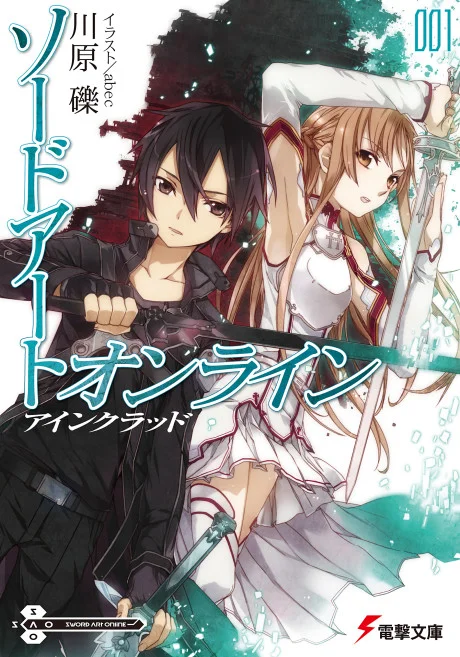
SAO was my first light novel. I picked it up in high school because the Aincrad arc lived in my head rent-free after watching it, and I wanted more of that world. Fifteen volumes later I realized I’d accidentally become a light novel reader. Twenty-eight volumes later I’m still here. Still reading. I have complicated feelings about this series.
That’s the honest framing for this review. SAO is not a series I can evaluate from a distance. It’s the one that started everything for me. I know where it’s great, know where it falls apart. I’ve read the community arguments about it for a decade. Here’s where I actually land.
TL;DR
SAO’s light novels are better than the anime suggests but worse than superfans claim. Aincrad is a strong start with pacing issues. Fairy Dance is the low point and it’s as bad as everyone says. Phantom Bullet is fine. Mother’s Rosario is genuinely moving. Alicization is where Kawahara finally wrote the series he’d been trying to write since volume 1, and it’s legitimately great. Progressive fixes Aincrad’s biggest structural problem. The ongoing Unital Ring arc is solid but feels like it’s still setting up. If you bounced off the anime, the novels won’t change your mind on the early arcs. If you liked the anime even a little, Alicization in print is worth the commitment.
How Does SAO Read as a Light Novel?
Fast. Kawahara Reki writes action prose that moves. Fight scenes read almost like choreography notes. Short paragraphs, punchy descriptions, minimal filler between plot beats. You can finish a volume in three or four hours without rushing.
The trade-off is depth. Early SAO volumes are thin on character interiority. Kirito’s internal monologue exists but it’s surface-level compared to what you’d get from a Re:Zero or Mushoku Tensei. He thinks about tactics, about game mechanics, about immediate survival. He rarely processes his own emotional state in a way that feels earned. That changes in Alicization. Dramatically. The difference is noticeable enough that the early volumes feel like a different author wrote them entirely, like Kawahara went through some fundamental shift in how he approaches character psychology between volumes 8 and 9.
Kawahara’s writing improved volume by volume. That’s not fan apologetics. Put volume 1 next to volume 15 and the craft gap is visible in every paragraph. The sentence-level prose, the emotional range of the narration, the willingness to sit with a moment instead of rushing to the next action beat. He grew into the writer the premise deserved, the kind of growth that makes you want to go back to volume 1 afterward just to see how far the gap actually stretches.

Which Arcs Work Best in Print?
Aincrad (Volumes 1-2): The arc that launched everything. Volume 1 covers what the anime spread across 14 episodes, and that compression actually hurts it. The side stories in volume 2 fill gaps the anime dramatized better. Aincrad reads more like a proof of concept than a polished novel. The bones are there. Rough, though.
Fairy Dance (Volumes 3-4): The low point. Sugou is cartoonishly evil. The Asuna rescue plot strips her of agency. The tentacle scene is worse in prose because you’re inside Kirito’s POV while it happens. I have no defense of this arc. None. Kawahara himself has said he’d rewrite it if he could.
Phantom Bullet (Volumes 5-6): Sinon carries this arc. Her PTSD backstory is handled with more care than most LN writers would give it, and her dynamic with Kirito is one of the few cross-gender relationships in the series that doesn’t default to romance. GGO as a setting has real atmosphere. The Death Gun mystery is predictable but functional, the kind of plot that works on first read because Sinon’s personal arc carries enough weight that you don’t mind seeing the twist coming from fifty pages away.
Mother’s Rosario (Volume 7): Yuuki’s story. This is where I first thought Kawahara could write genuine emotional weight. The Sleeping Knights guild, Yuuki’s condition, the final duel. It’s 200 pages and it hits harder than arcs three times its length. Asuna gets actual POV chapters here, the first time the series trusts a perspective other than Kirito’s.
Alicization (Volumes 9-18): This is the series people should be talking about. Kawahara had ten volumes to build a world. He developed characters outside the main cast. He wrote action sequences with actual stakes. Eugeo is the best character in all of SAO. His arc across these volumes does everything the series had been attempting since Aincrad but never quite landing. The Underworld as a setting has genuine philosophical weight. Administrator is a real villain with actual motivation. War of Underworld goes too long, has too many side character fights, and still manages to deliver an ending that earned its emotional payoff.
I’ll say it plainly: Alicization alone would be a good light novel series. Seriously. Strip the SAO branding and people who dismiss the franchise would read it without hesitation.

Progressive (Volumes 1-8): Kawahara going back to Aincrad and doing it right. One floor per volume, proper pacing, Asuna as a co-lead instead of a love interest waiting to happen. This is the version of SAO that the premise always promised. Floor-by-floor world building, actual NPC characterization, a slower burn that lets moments breathe. If you’ve ever said “SAO would be better if they actually explored the floors,” Progressive is literally that.

Unital Ring (Volumes 21-28, ongoing): The current arc. Open-world survival in a merged VR space. The full cast is back. Kawahara is writing with the confidence of someone 28 volumes deep. The pacing is measured, the stakes are real, the world building is ambitious. My honest take: it’s good but still in setup mode. Too early to call.
What About the Writing Quality?
Kawahara gets dismissed as a bad writer more often than he deserves. The web novel origins of early SAO are obvious. The prose is functional, not literary. Character descriptions can be generic. Internal monologue in the early volumes leans heavily on game terminology as a crutch.
But he improved. Measurably. By Alicization, he’s writing passages about consciousness, identity, and the nature of the soul that read nothing like the writer who described Kirito dual-wielding in Aincrad. Action writing was always his strength. The emotional side caught up around volume 9, and by the time you reach Eugeo’s arc in Alicization you realize Kawahara has been quietly learning how to write scenes that actually make you feel something beyond adrenaline.
The fan translations for later volumes are rough in places. Yen Press releases are the better reading experience for anything they’ve published. Their translation quality for SAO is consistent. The editing is clean. The physical volumes have BUNBUN’s illustrations, which are genuinely excellent. BUNBUN’s character art is some of the best in the LN space. The color plates alone justify buying physical copies.
Is SAO Worth Reading If You’ve Seen the Anime?
Depends entirely on which anime you’ve seen and how far you got before deciding the series wasn’t for you.
If you stopped after Season 1: the novels won’t redeem Fairy Dance but Phantom Bullet and Mother’s Rosario are solid reads, and Alicization is where the series becomes something else entirely. The anime adapted Alicization well, but the novels give you Kirito’s interiority during the Underworld sequences that the anime can only gesture at.
If you’ve seen everything including War of Underworld: the novels still add Kirito’s full internal processing, which matters more than you’d expect. The anime had to cut his philosophical reflections in the Underworld. In print, those reflections are where the real character work lives.
If you bounced off the anime entirely: the novels are the same story told with more internal access. They won’t fix the structural problems of Fairy Dance or the early harem elements. They will give you a Kirito who thinks more than the anime version, but the thinking doesn’t start being genuinely interesting until Phantom Bullet.
Progressive is the exception. The Progressive novels are worth reading regardless of your relationship with the anime, because they’re essentially a different series wearing SAO’s clothes.

How Does SAO Compare to Other LN Series?
SAO occupies a weird position. It’s the most commercially successful light novel franchise, the series that defined the genre for Western audiences, and also the one that gets the most criticism from the LN community itself.
Against Re:Zero or Mushoku Tensei, SAO’s character writing is shallower, especially in the early arcs. Subaru’s psychological breakdowns in Re:Zero make Kirito’s Aincrad trauma look underdeveloped. Rudeus in Mushoku Tensei has a character arc that spans 25 volumes of genuine growth. Kirito’s growth happens but it’s less visible, buried under action set pieces.
Against Overlord or Slime, SAO’s world building is more focused but less creative. Ainz and Rimuru get to explore what power means in their worlds. Kirito mostly uses power to solve immediate problems. The Underworld is the exception. That setting has the kind of depth you’d expect from a fantasy novel, not a game-world LN.
Where SAO wins: pacing and accessibility. No other LN series is this easy to pick up and read. The volumes are short. The prose is clean. The action moves. For someone new to light novels, SAO is still one of the best entry points, which is exactly what it was for me.
Frequently Asked Questions
Is the SAO light novel worth reading?
Yes, with the caveat that the early arcs (Aincrad and especially Fairy Dance) are rough. The series improves dramatically from Phantom Bullet onward. Alicization is genuinely excellent. Progressive is the best version of the SAO premise. If you can get through the first four volumes, the payoff is there.
How many SAO light novels are there?
28 main series volumes (ongoing), 8 Progressive volumes (ongoing), and the GGO Alternative spin-off (12 volumes). Yen Press publishes the official English translations. The main series has been running since 2009.
Is SAO better as a light novel or anime?
The anime is a solid adaptation of most arcs, especially Alicization. The novels add internal monologue and Kirito’s thought process, which matters most during Alicization and Mother’s Rosario. Progressive is significantly better in novel form due to the floor-by-floor pacing. Fairy Dance is equally bad in both formats.
Should I read SAO Progressive or the main series first?
Main series first. Progressive is a reimagining of Aincrad that assumes familiarity with the world, characters, and terminology. Reading Progressive without context from the main series would work but you’d miss the improvements Kawahara made and the references to events from the original.
Is the SAO light novel finished?
No. The main series (Unital Ring arc) is ongoing at 28 volumes. Progressive is also ongoing at 8 volumes. Kawahara has not indicated an end date for either series. The story is still actively being written and published.
How does SAO Alicization compare to the earlier arcs?
Night and day. Alicization spans 10 volumes with deeper world building, a genuine co-protagonist in Eugeo, philosophical themes about consciousness and AI, and action sequences with real stakes. Readers who dropped SAO after Fairy Dance and returned for Alicization consistently describe it as a different series.