

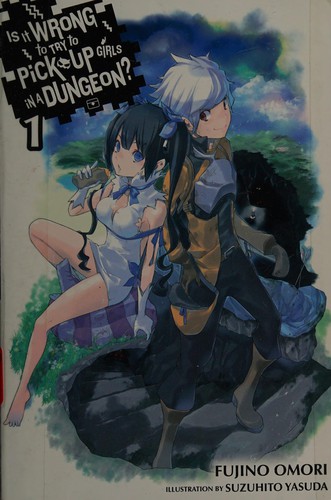
I didn’t expect to be writing this review. DanMachi was supposed to be a guilty pleasure. The anime with the Hestia ribbon memes. The “generic dungeon isekai” I’d burn through between heavier series. I picked up Volume 1 after Season 2 of the anime left me annoyed at how rushed everything felt, figuring I’d read a few volumes and move on.
This article contains affiliate links. If you buy through these links, we earn a small commission at no extra cost to you.
TL;DR
- DanMachi surprised me. I picked it up expecting a guilty pleasure dungeon crawler. What I got was a coming-of-age story with genuinely earned character growth and some of the best single-volume arcs in light novels.
- 19 main volumes + Sword Oratoria spinoff, ongoing. Published by Yen Press. The anime covers roughly volumes 1-14 across four seasons, but compresses heavily.
- Volume 14 is the peak. The Xenos arc payoff. If you’ve only watched the anime version of this arc, you got maybe 40% of what makes it work.
- Bell’s growth feels earned. He starts as the weakest adventurer in Orario and the series makes you believe every step of his progression. No cheat skills, no shortcuts that feel unearned.
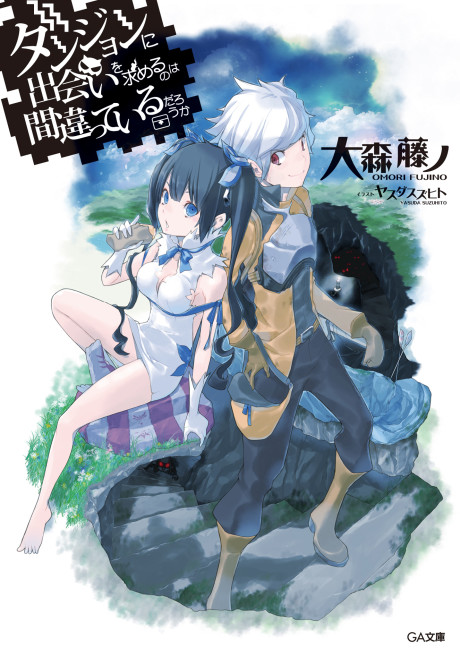
That was around 2020. I’m now 21 volumes deep, own the first 14 in physical, and I’ve read Sword Oratoria alongside it. DanMachi isn’t my favorite series. That’s Mushoku Tensei, and it probably always will be. But DanMachi earned something harder than love: respect. It got better every single arc. The author visibly improved. The world got deeper. And the best stretch of the series, Volumes 12-14, stands up against anything in the genre.
This review covers the full main series (21 volumes), touches on Sword Oratoria (16 volumes), and is honest about where the series drags. I’m biased toward it at this point. I’ll tell you where that bias shows.
Bell Cranel: The Protagonist Problem (and Why It’s Not a Problem)
The most common knock on DanMachi: Bell is a generic shonen protagonist. Nice guy, works hard, gets stronger, surrounded by girls who like him for unclear reasons. If you’ve only watched the anime, I get why you’d think that. Anime Bell comes across as a determination machine with a blank smile.
Light novel Bell is a different character.

You’re inside his head for every volume. You feel the fear. Early DanMachi Bell is terrified of the Dungeon in a way the anime can’t convey because it lives in his internal monologue. He walks into the upper floors and his thoughts are racing about survival, not heroism. When he faces the Minotaur in Volume 3, the anime gives you an action scene. The LN gives you a kid who is convinced he’s about to die and fights anyway because running would mean Ais saw him run.
His growth skill, Liaris Freese, is the clever part. It accelerates his stat growth based on the strength of his feelings. In practice, it means Bell levels up faster than anyone in Orario’s history. But the dependency on his feelings for Ais creates a vulnerability the series actually explores. His growth is tied to something he can’t control. When that emotional anchor gets complicated in later volumes, the skill becomes a source of tension rather than just a power-up.
By Volume 14, Bell is making decisions the Volume 1 version of himself couldn’t have conceived of. Not because he got stronger stats. Because his understanding of what heroism costs changed. The Freya arc forces him to confront what happens when the entire city turns against his idea of right and wrong. He doesn’t win by being stronger. He wins by being stubborn about a moral position that makes his life worse.
The community debates endlessly about whether Bell is “too nice.” My take: his kindness is genuinely tested in the Xenos arc (Volumes 9-11). Protecting intelligent monsters that all of Orario wants dead isn’t nice because it’s easy. It costs him his reputation, his relationships, and nearly his life. That’s the difference between a generic nice protagonist and one who chooses kindness when it’s the hardest option available. I covered the differences between LN Bell and anime Bell in more detail in our DanMachi LN vs anime comparison.
Orario: The Best Dungeon City in Light Novels
Strip away Bell’s story and DanMachi still has something most light novels don’t: a city that functions. Orario isn’t a backdrop. It’s an economy, a political system, and a social hierarchy that drives the plot as much as any character does.
The Familia system is what makes it work. Gods descended from Heaven and now live among mortals, forming groups called Familias. Each god grants their members a Status (literally RPG stat blocks updated through a ritual called Falna). Familias compete for resources, territory, and influence. Some are adventurer guilds that explore the Dungeon. Others are merchant guilds, craftsmen, or entertainment troupes. The power dynamics between Familias create natural conflict without needing external villains for most of the series.
The Dungeon itself is more than a setting. It spawns monsters. It has floors with distinct ecosystems. The deeper you go, the stranger things get. Sword Oratoria reveals that the Dungeon has something like intentions, and the implications of that reshape your understanding of what Orario actually is. The main series hints at this. Sword Oratoria confronts it directly.
Then there’s the economy. Adventurers kill monsters, collect magic stones, and sell them. The Guild regulates dungeon access and takes a cut. Familias pay taxes. Weapons need to be forged by smith Familias. Potions come from specific suppliers. None of this is window dressing. Plot points hinge on economic pressure, supply shortages, and trade disputes. When Apollo Familia targets Bell in Volume 5, the War Game resolution has financial stakes for both Familias. When Freya manipulates Orario in Volumes 12-14, she leverages economic and political power, not just brute force.
Compare this to other dungeon fantasy. SAO‘s Aincrad is a game world with game logic. Solo Leveling‘s gates are combat arenas with loot drops. Neither builds a functional society around its dungeon. Orario feels like a place where people live, work, argue about taxes, and occasionally die underground. That groundedness is what makes DanMachi’s bigger conflicts feel real.
The Arcs, Ranked
I’ve read everything available in English and followed JP discussions for the volumes ahead. Here’s how I’d rank the major arcs.
S-Tier
The Freya Arc (Volumes 12-14)

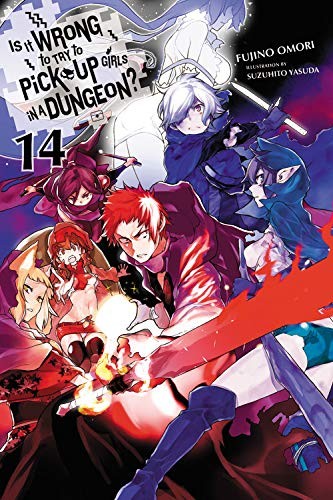
This is peak DanMachi. Not close. Ōmori took a character who’d been lurking in the background since Volume 1 and built the most psychologically intense arc in the entire franchise around her obsession with Bell.
Freya doesn’t attack Bell. She alters the memories of everyone in Orario so that Bell’s Familia, his friends, his allies all forget who he is. She replaces their memories with a version of reality where Bell belongs to her. The city Bell fought for, bled for, doesn’t recognize him. And the slow horror of Bell realizing what’s happened while everyone around him acts like nothing is wrong is Ōmori’s best writing.
Volume 14’s climax is the best single volume in the series. The Syr reveal is one of those twists that works because every piece of it was set up across 13 volumes. The community agrees. r/DanMachi polls consistently rank the Freya arc first, and Volume 14 is the volume that converted skeptics into fans.
The Xenos Arc (Volumes 9-11)
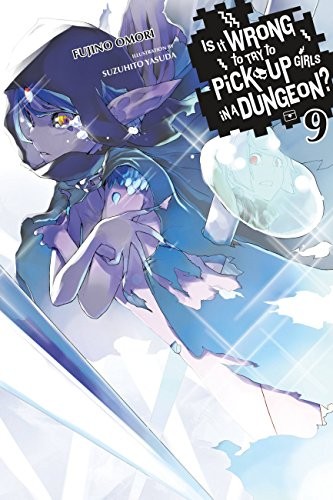
Bell’s hardest moral choice. Intelligent monsters called Xenos live in the deeper floors of the Dungeon. They can think, speak, and feel. They want to coexist with surface dwellers. Orario wants them dead.
Bell chooses to protect them. Not because it’s the heroic thing that everyone agrees with. Because the entire city turns against him for it. His reputation crumbles. Other Familias call him a traitor. The Guild can’t openly support him.
Ryuu Lion’s combat scenes in this arc are the best action writing in the series. Ōmori knows how to write a fight. But the reason this arc lands is Wiene, the Xenos girl Bell adopts. Her development from a scared creature to someone Bell would sacrifice everything for is more convincing across three volumes than it has any right to be.
A-Tier
The Wargame / Apollo Arc (Volumes 5-6)

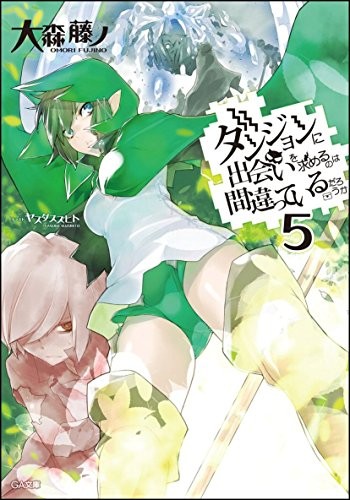
This is where the series clicks. Apollo targets Bell’s Familia through a War Game, a formalized conflict between gods that plays out as a military operation. The strategy sessions, the political maneuvering, Bell’s solo floor clear (a fan-favorite scene that the anime rushed through in about two minutes). Volume 5 is the first time DanMachi shows it can do more than dungeon crawling.
The Great Far East War (Volumes 15-17+)
The most ambitious arc. DanMachi leaves Orario. New factions. A broader conflict. Bell operating on a stage larger than anything previous. I’m still forming my opinion on this one since the EN translation is catching up and the arc is ongoing in Japan at Volume 21. But the scale is exciting, and Ōmori hasn’t lost the thread.
B-Tier
The Ishtar / Haruhime Arc (Volume 7)
Better in the LN than the anime. The anime compressed Haruhime’s backstory into a standard rescue mission. The LN develops her relationship with the Berbera, her self-loathing, and the way Aisha Belka functions as both captor and protector. Aisha is a standout character. But the structure is formulaic. Bell rescues a girl in danger. After the more complex Apollo arc, the Ishtar arc feels like a step backward structurally even if the character work is solid. What saves it: Freya’s background role. Her quiet manipulation of Ishtar’s downfall is the real story here, and you only see it clearly on a reread after the Freya arc.
The Early Volumes (1-3)
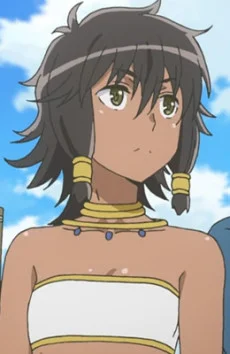
The foundation. Bell arrives in Orario. Meets Ais. Faces his first real challenge. Lili’s betrayal and redemption in Volumes 2-3 is one of the stronger early arcs. Welf joins as the third party member. The writing is rough. Ōmori’s prose in Volume 1 is noticeably weaker than his later work. Bell’s internal monologue carries these volumes, but the sentence-level writing hasn’t found its voice yet. The hook is the world, not the prose. Stick with it through Volume 3, judge the series after Volume 5.
C-Tier
Volume 8 (Ares Festival)
Breather volume. Hestia Familia takes a trip outside Orario. Lighter tone. Good Bell and Hestia development. Some Bell and Ais moments that build toward later payoffs. The anime skipped it entirely. Most fans didn’t notice. I’d still recommend reading it because the character moments matter for the emotional beats in Volumes 9-11 and beyond. But if someone asked me “can I skip Volume 8?” I’d say yes with a small asterisk.
The Writing: How Ōmori Grew Up
Fujino Ōmori won the 4th GA Bunko Award (Great Prize) with DanMachi, submitted under the title “Familia Myth.” The franchise has sold over 17 million copies. Those are impressive numbers. But the early volumes don’t read like award-winning prose.
Volume 1 is functional. The ideas are there. The worldbuilding is efficient. But the writing is standard light novel fare. Short declarative sentences. Action descriptions that get the job done without flair. Bell’s internal monologue is interesting in concept but the execution is workmanlike.
The improvement starts around Volume 5. The dialogue gets sharper. The pacing feels more controlled. Ōmori starts varying his sentence structure, letting scenes breathe instead of rushing from plot point to plot point.
Volumes 9-11 are where real confidence appears. Ryuu’s POV sections in the Xenos arc have a different rhythm than Bell’s chapters. Ōmori can write two distinct narrative voices in the same volume. The emotional beats hit consistently. The action writing finds a groove where it’s exciting without dragging.
Volumes 12-14 are genuinely great writing. Bell’s internal collapse when his memories are altered in the Freya arc is psychological horror done right in a light novel. The sentence-level prose, the pacing, the way Ōmori withholds information from the reader while Bell puts pieces together. It’s the work of an author who spent a decade getting better at his craft.
The Bad Stuff
I promised honest negatives. Here they are.
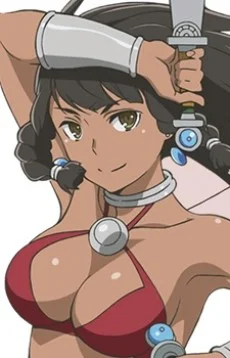
The harem gets worse over time. Bell attracts romantic interest from an increasing number of female characters. That’s fine as a genre element. The problem is that as the cast grows, the development per character shrinks. Haruhime, Lili, Hestia, Ais, Ryuu, Freya, Cassandra, Aisha. That’s too many romantic interests for a series that also wants to be a dungeon-crawling political thriller. Bell’s obliviousness about the romantic attention stops being endearing somewhere around Volume 10 and becomes a narrative crutch. The series would be tighter with half the romantic subplots.
Lefiya in Sword Oratoria. I’ll defend SO as a series worth reading. But Lefiya as a POV character is polarizing for good reason. Her anxiety, her hero worship of Ais, her internal spiraling. It drives the early SO volumes in circles. She does get better as a character in later volumes, but the damage to SO’s reputation is done. A significant chunk of readers bounce off SO because of Lefiya. I get it.
Combat descriptions run long. Ōmori loves writing fights. He’s good at it when he’s focused. But some sequences in Volumes 15-17 repeat similar beats across multiple chapters. One more paragraph of Bell dodging and counterattacking. One more description of a magic chant activation. These volumes could have been tighter with editing.
The Sword Oratoria anime exists. The SO anime (12 episodes, 2017) is the worst adaptation in the DanMachi franchise. It focused too heavily on Lefiya, underserved Ais, and left anime-only viewers thinking SO was a weak side story. The SO light novels are significantly better. But anyone who watched the anime first and quit the franchise has a valid reason. That adaptation hurt perception of the whole property.
Sword Oratoria: Read the LN, Skip the Anime
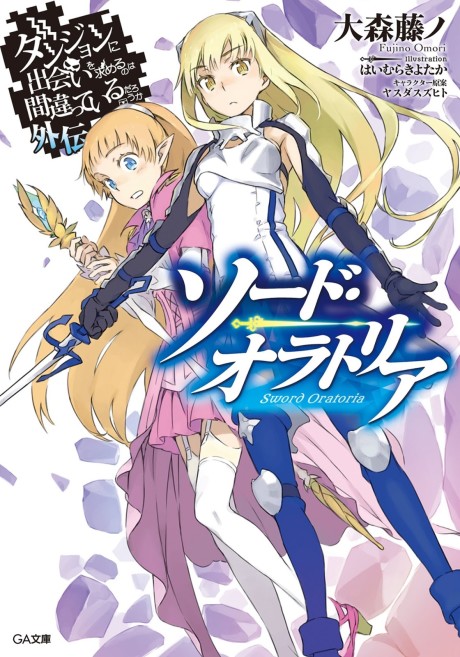
I covered this in the VS article, but it needs repeating here. If your only experience with Sword Oratoria is the anime, you haven’t experienced Sword Oratoria.
The SO light novels follow Ais Wallenstein and the Loki Familia through events that run parallel to the main series. Ais’s backstory is tragic and specific in ways the main series only hints at. The Loki Familia ensemble (Finn, Riveria, Gareth, the Hiryute twins, Bete) is arguably more interesting as a group than the Hestia Familia. And the Dungeon lore SO reveals, particularly about the deeper floors and what the Dungeon actually is, adds a layer to the main series that changes how you read it.
Read SO interleaved with the main series. I laid out the full order in our DanMachi reading order guide.
Who Should Read DanMachi?
If you liked SAO but wanted the world to feel real: Orario is what Aincrad could have been if it were a functioning society instead of a game server. Same dungeon-crawling energy. Better worldbuilding. I wrote a full SAO LN vs anime comparison if you’re curious about that series too.
If you liked Goblin Slayer but want lighter tone: Same adventurer guild structure. Party-based combat. But DanMachi doesn’t wallow in darkness. It goes dark when the story demands it (the Xenos arc, the Freya arc) and pulls back when it doesn’t. Our Goblin Slayer review covers what makes that series tick.
If you’re an anime-only fan who felt something was missing: That something is Bell’s internal monologue. Every anime season compresses it. The LN version of Bell is a more interesting, more frightened, more conflicted character. Start from Volume 1 even if you’ve watched everything.
If you love dungeon-crawling fantasy and want a long series: 21 main volumes plus 16 Sword Oratoria volumes. You’re not going to run out of reading material. The series is still ongoing with no end announced.
If harem elements are a dealbreaker: Don’t read DanMachi. They don’t go away. They get more prominent over time. I wish the series had fewer romantic subplots. It doesn’t. If that’s something you can’t tolerate, this isn’t your series, and no amount of good worldbuilding will fix that for you.
More on this series: light novels like DanMachi
The Verdict
DanMachi started as a guilty pleasure and became something I genuinely respect. Not a masterpiece. Not trying to be. But a series where the author spent a decade getting better at his craft, where the world got richer with every arc, and where the best stretch (Volumes 12-14) produced some of the strongest writing in the genre.
It’s not Mushoku Tensei. It’s not Re:Zero. It doesn’t need to be. DanMachi is a dungeon-crawling adventure that grew up alongside its protagonist. If that sounds like enough, start from Volume 1 and read it the right way.
Frequently Asked Questions
Is the DanMachi light novel worth reading?
Yes. The light novel adds Bell’s internal monologue, deeper worldbuilding, and character development that the anime compresses. The writing improves dramatically over the course of the series, and Volumes 12-14 (the Freya arc) are genuinely excellent.
Is DanMachi better as a light novel or anime?
The light novel is the better experience. The anime is a solid adaptation for most seasons, but it can’t convey Bell’s internal monologue. Season 2 and the Sword Oratoria anime are significantly weaker than their source material.
What’s the best DanMachi volume?
Volume 14 (the Freya arc climax) is widely considered the best. The community and I agree on this one. Volume 11 (Xenos arc conclusion) and Volume 5 (Wargame) are also frequently cited as highlights.
Should I read Sword Oratoria alongside the main series?
Yes, if you have the time. Reading them interleaved gives you both perspectives on major events and adds significant worldbuilding. The SO light novels are far better than the SO anime.
How does DanMachi compare to other isekai light novels?
DanMachi has stronger worldbuilding than most isekai. Orario is a fully functional city with economics and politics. The series is weaker on prose in early volumes but Ōmori improves significantly. The harem elements are a downside compared to more focused series like Mushoku Tensei or Re:Zero.
Is DanMachi still ongoing?
Yes. 21 main volumes in Japan, ongoing. English translations from Yen Press are at approximately Volume 18-19. Season 6 of the anime has been announced.