

DanMachi does something that most fantasy light novels don’t bother with. It builds a dungeon that actually matters. Orario isn’t just a backdrop for Bell to level up. It’s a functioning city where gods run familias like competing businesses, adventurers have economic roles, the dungeon has moods. The whole series runs on the tension between Bell’s earnest desire to be a hero and a world that treats heroism as a job description.
This article contains affiliate links. If you buy through these links, we earn a small commission at no extra cost to you.
TL;DR
- DanMachi builds a dungeon that actually matters. Orario isn’t a backdrop — it’s a functioning city with economic systems, competing familias, and a dungeon with moods. That combination is rare.
- These picks focus on: dungeon exploration, guild-based adventure, earnest protagonists, or cities that feel like real places.
- Bell’s specific underdog energy is hard to find elsewhere. Most LN protagonists start strong or get broken. Bell just keeps running forward.
Dungeon-crawling action, party dynamics, a protagonist who earns his growth, worldbuilding that extends past the battlefield. That combination is hard to replicate. I’ve read a lot of series trying to find that same energy after blowing through all 21 volumes. These seven come closest, each for different reasons.
More about DanMachi
Grimgar of Fantasy and Ash
Author: Ao Jyumonji | Publisher: J-Novel Club | Volumes: 22+ (ongoing)
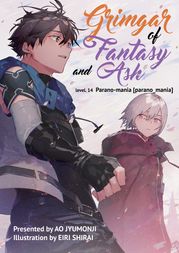
Bell’s early dungeon floors feel dangerous. Grimgar makes them feel lethal. A group of people wake up in a fantasy world with no memories. They join a volunteer army and spend an entire chapter trying to kill their first goblin. Not a pack. One goblin. The party nearly dies doing it.
The connection to DanMachi is the party combat. Both series are built around small groups learning to fight together, covering each other’s weaknesses. Victories come through coordination, not raw power. Haruhiro’s team doesn’t have a Sword Princess showing up to bail them out. When they mess up, people die permanently.
Where Grimgar differs: it’s quieter. Jyumonji spends pages on grief, on sitting around camp processing what just happened. DanMachi moves faster and has more spectacle. But if Bell’s early struggles on the upper floors hooked you, before he became the Rabbit, Grimgar keeps that energy for the entire series.
Read this if: you want DanMachi’s party combat and earned progression without the power fantasy payoff.
Sword Art Online
Author: Reki Kawahara | Publisher: Yen Press | Volumes: 30+ (ongoing)
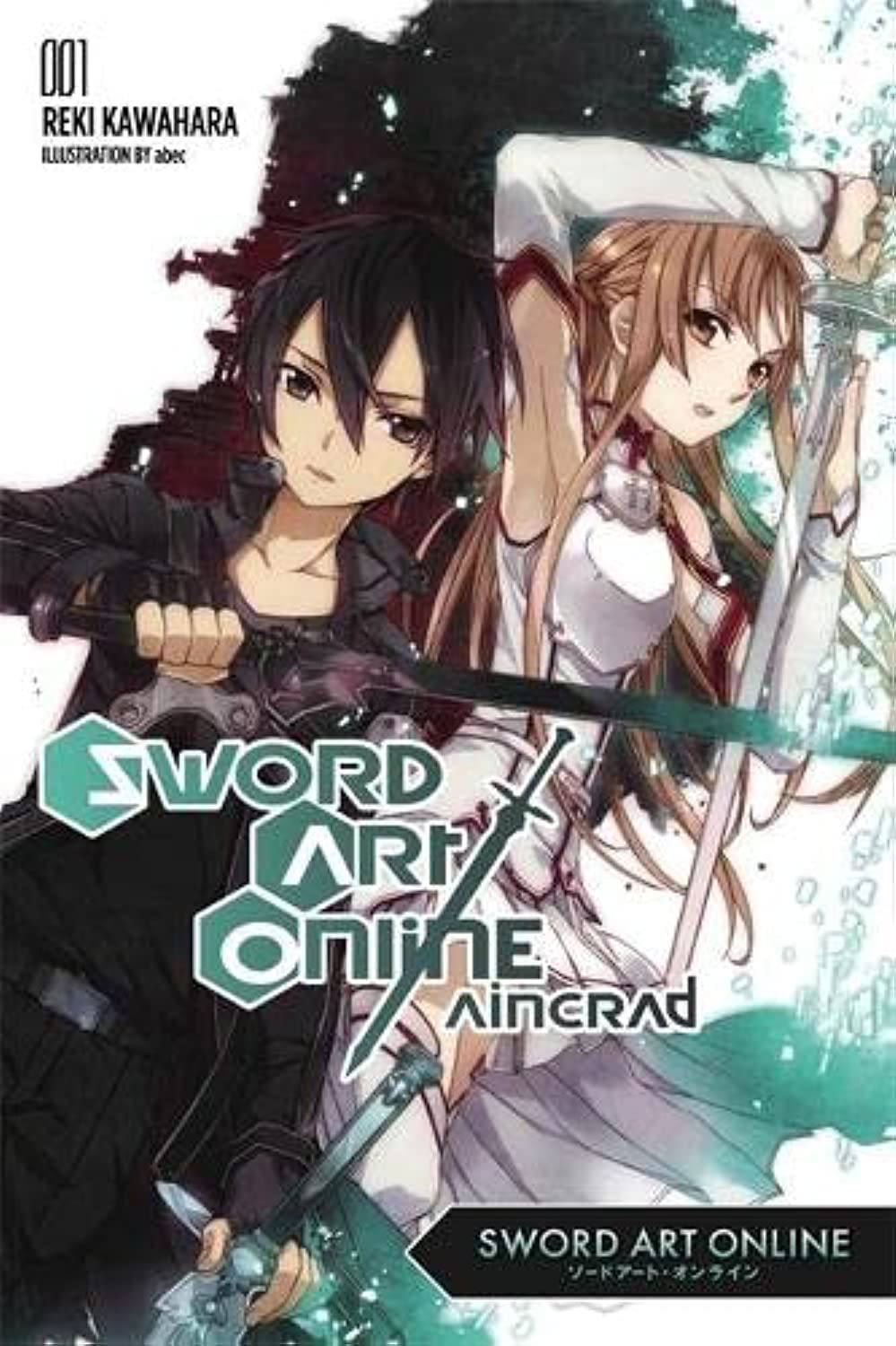
The obvious pick, and for good reason. Kawahara and Oomori are solving similar problems: how do you make dungeon-clearing feel meaningful when your protagonist keeps getting stronger? SAO does it by raising the stakes externally: death games, AI rights, interworld conflicts. DanMachi does it by deepening the dungeon itself. Different approaches, same underlying question.
Both series also pair their action with a central romance that actually progresses. Bell and Ais have more tension and less resolution than Kirito and Asuna, but the structural role is similar. The relationship gives the protagonist something to fight for beyond leveling up. The light novels handle Kirito’s interiority far better than the anime, especially during Alicization.
Fair warning: SAO’s quality is inconsistent across 30+ volumes. Aincrad and Alicization are excellent. Fairy Dance is rough. The Progressive side series, which retells the Aincrad arc floor by floor, is arguably the closest thing to DanMachi’s dungeon-crawling structure in the entire genre.
Read this if: you want floor-by-floor dungeon progression with a romance that actually goes somewhere.
Mushoku Tensei: Jobless Reincarnation
Author: Rifujin na Magonote | Publisher: Seven Seas | Volumes: 26 (complete)
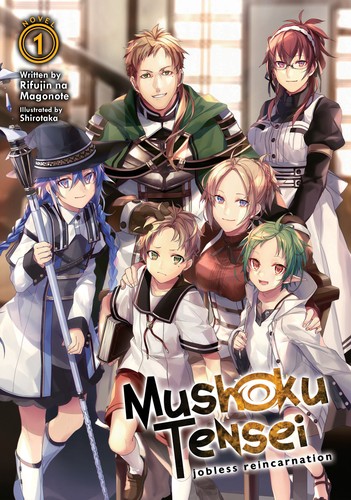
Bell Cranel starts weak and gets strong through sheer determination. Rudeus Greyrat starts weak, gets strong, then the story asks whether strength was ever the point. Mushoku Tensei is the series I’d recommend to anyone who loves DanMachi’s growth narrative but wants it pushed further. Across an entire lifetime, with consequences that don’t reset between arcs.
The worldbuilding scratches the same itch. Oomori built Orario as a city that functions beyond the plot. Magonote built an entire continent. The magic system has rules. Geography matters. Political factions have histories. Both authors clearly spent years on their settings before writing a single chapter.
The tonal gap is real, though. DanMachi is fundamentally optimistic. Bell’s earnestness wins people over. Mushoku Tensei’s protagonist is deeply flawed in ways that make some readers bounce hard off Volume 1. If you can push through, the payoff across 26 volumes is extraordinary. It’s complete, so you get the full arc.
Read this if: you want DanMachi’s worldbuilding depth and growth progression taken to its logical extreme.
Goblin Slayer
Author: Kumo Kagyu | Publisher: Yen Press | Volumes: 16+ (ongoing)
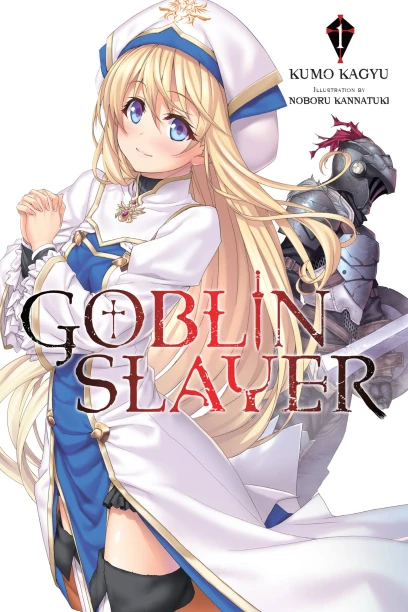
DanMachi’s Guild assigns quests by rank. Rookies get the easy floors. Veterans get the deep dungeon. Goblin Slayer takes that same adventurer-guild structure and asks: what happens to the guy who never moves past the “easy” quests? What if the easy quests aren’t actually easy?
The guild dynamics are the bridge here. Both series have functioning adventurer economies where quest difficulty and party composition actually matter. The difference is tone. Bell wants to be a hero. Goblin Slayer already gave up on heroism and just wants to be efficient. His party forms not out of shared ambition but practical necessity. Which makes their eventual bonds hit differently.
It’s darker than DanMachi. Volume 1 makes that clear immediately. But beneath the grimdark surface, Kagyu is writing about the same thing Oomori is: people finding purpose and connection through the work of killing monsters. The TTRPG bones are obvious too. Kagyu explicitly structures his world like a tabletop campaign.
Read this if: you want DanMachi’s guild structure and party dynamics with a much harder edge.
That Time I Got Reincarnated as a Slime
Author: Fuse | Publisher: Yen Press | Volumes: 22+ (ongoing)
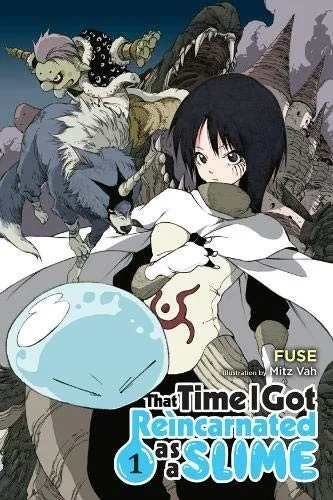
Rimuru starts as the weakest possible monster and builds a nation. Bell starts as a Level 1 nobody and builds a familia. The scale is different. Rimuru’s ambitions are political where Bell’s are personal. But both series are driven by a protagonist whose greatest strength is making allies out of former enemies.
The Jura Tempest Federation in Slime fills a similar role to Orario in DanMachi: a hub city that grows and changes alongside the protagonist. Fuse builds out economics, diplomacy, and faction politics the way Oomori builds out familia rivalries and dungeon ecology. By Volume 10, both settings feel lived-in.
Slime is lighter than DanMachi overall. Rimuru’s overpowered nature means tension comes from political maneuvering rather than survival. But the mid-series shift around Volumes 5-6 introduces real stakes and genuine consequences. That’s where the series earns its reputation.
Read this if: you want DanMachi’s city-building and ally-gathering at a larger, more political scale.
Arifureta: From Commonplace to World’s Strongest
Author: Ryo Shirakome | Publisher: J-Novel Club | Volumes: 13+ (ongoing)

Hajime Nagumo is the anti-Bell. Both start as the weakest member of their respective groups. Both get thrown into a dungeon that nearly kills them. But where Bell responds to adversity by trying harder and staying earnest, Hajime responds by becoming ruthless. He eats monsters, crafts weapons from their parts, fights his way out of a labyrinth that was designed to be inescapable.
Volume 1 of Arifureta is genuinely great dungeon survival. Hajime alone in the abyss, injured, starving, problem-solving his way through floors that each require a different approach. It captures DanMachi’s best quality, the dungeon as a living hostile environment, and cranks it to the extreme. The labyrinth fights in Arifureta Vol 1 are more intense than anything in DanMachi’s upper floors.
The catch: after Volume 1, Arifureta shifts into a power fantasy with a growing harem. If that’s your thing, great. If you’re here for the dungeon survival, the first volume delivers and the rest is a different kind of series. I’d still recommend it for that opening arc alone.
Read this if: you want DanMachi’s dungeon survival pushed to its most brutal extreme, at least for one incredible volume.
The Faraway Paladin
Author: Kanata Yanagino | Publisher: J-Novel Club | Volumes: 12+ (ongoing)
Will is raised by three undead guardians in a ruined temple. He trains as a warrior, learns healing magic from a mummy, swordsmanship from a skeleton, sorcery from a ghost. Then he sets out into a world where civilization has pulled back and monsters control most of the map.
The found-family element is the strongest link to DanMachi. Bell has Hestia and the familia members who gradually join them. Will has his three undead parents. Both protagonists are defined by who raised them and carry that influence into every fight. Will’s earnestness is close to Bell’s. He genuinely wants to be good, not just strong. In a genre full of cynical or overpowered leads, that sincerity stands out.
Yanagino writes combat with weight. Magic costs something. Healing matters. Will doesn’t win fights by discovering new powers mid-battle. He wins by applying what he spent years learning. The TTRPG influence is obvious, and if DanMachi’s adventurer guild system appeals to you, Faraway Paladin’s take on adventuring in a broken world will feel familiar.
Read this if: you want Bell’s earnest heroism and found-family warmth in a more grounded, TTRPG-flavored setting.
Frequently Asked Questions
What makes DanMachi different from other dungeon light novels?
The dungeon in DanMachi is an ecosystem, not just a series of combat rooms. It produces monsters, has its own weather patterns, responds to adventurer activity. The familia system, where gods compete for influence through their adventurers, means the setting does more narrative work than in most dungeon-crawling series.
Is Sword Art Online Progressive similar to DanMachi?
Progressive is arguably the closest structural match. It retells SAO’s Aincrad arc floor by floor, with each volume covering one or two floors. The dungeon progression and floor-boss battles mirror DanMachi’s approach more than the main SAO series does.
Are there any completed series like DanMachi?
Mushoku Tensei is complete at 26 volumes and shares DanMachi’s growth-focused storytelling and deep worldbuilding. Arifureta’s main story is also complete at 13 volumes. Most of the other recommendations on this list are still ongoing.
Which series on this list is the best starting point for light novel beginners?
Goblin Slayer or The Faraway Paladin. Both have shorter volumes with straightforward prose. Neither requires familiarity with isekai conventions. Goblin Slayer reads fast and hits hard. Faraway Paladin is warmer and more character-driven.
Should I read the DanMachi spin-offs before looking for similar series?
Sword Oratoria is worth reading if you want more of DanMachi’s world from a different perspective. It follows Ais and the Loki Familia through mid-to-deep dungeon floors. The Familia Chronicle volumes flesh out Ryuu and Freya. If you’ve only read the main series, the spin-offs might satisfy the itch before you need to look elsewhere.